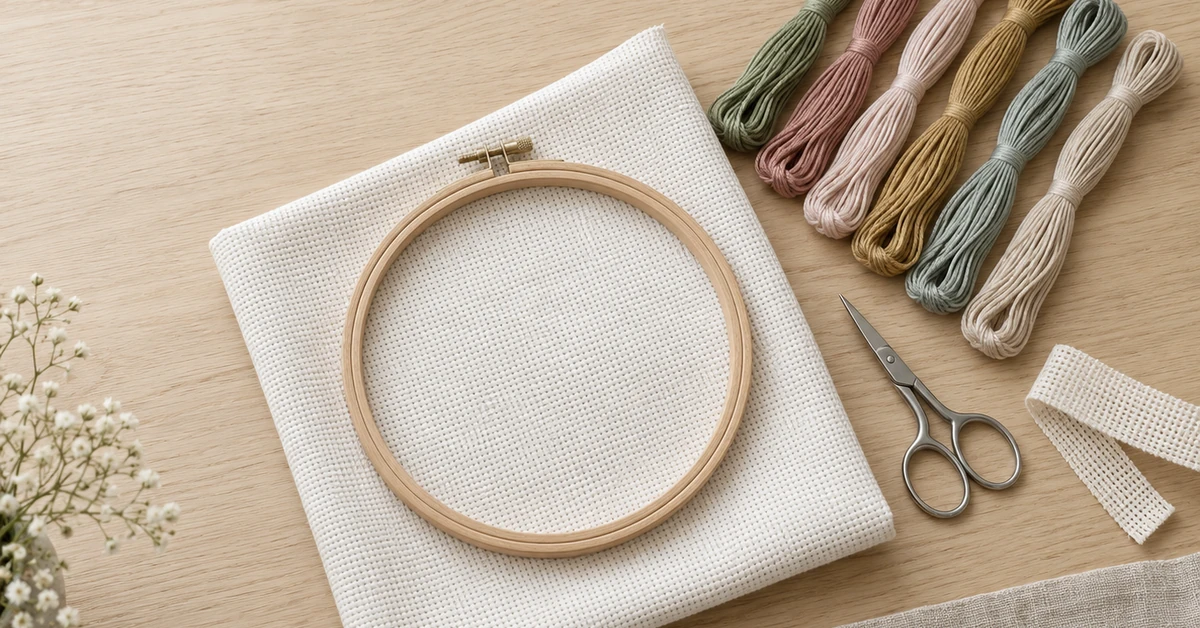

A cross stitch floss color matching guide should protect the appearance of the stitched design, not merely confirm that loose skeins look close on a desk. Buyers need an approved shade hierarchy, controlled lighting, stitched comparison samples and a clear substitution route. Review the colors individually and in their real neighboring combinations, because small shade shifts can erase contrast, flatten a gradient or change the visual balance of the finished motif.
Define which color relationships carry the design
Begin by separating colors according to their job in the artwork. Some shades define outlines or the darkest structural value. Others create a gradual transition, a small highlight or a background field. A mismatch in a large neutral area may be visible but tolerable; a mismatch between two adjacent flower shades may remove the separation that makes the shape readable.
| Color role | Main risk | Approval priority | Review method |
|---|---|---|---|
| Outline or deepest value | Loss of edge definition | Very high | Compare against all touching colors |
| Gradient step | Banding or collapsed transition | High | Stitch the full sequence |
| Accent or highlight | Accent disappears or dominates | High | Review at intended stitch count |
| Large background | Overall cast changes | Medium to high | Use a larger stitched area |
| Isolated detail | Local identity shifts | Depends on motif | Review inside the complete symbol area |
Create a palette map that identifies these relationships. This gives the sourcing and quality teams a reasoned hierarchy when a mill lot changes or a shade becomes unavailable. Without it, every color may be treated as equally replaceable even though the artwork does not use them equally.
Build an approved physical color standard
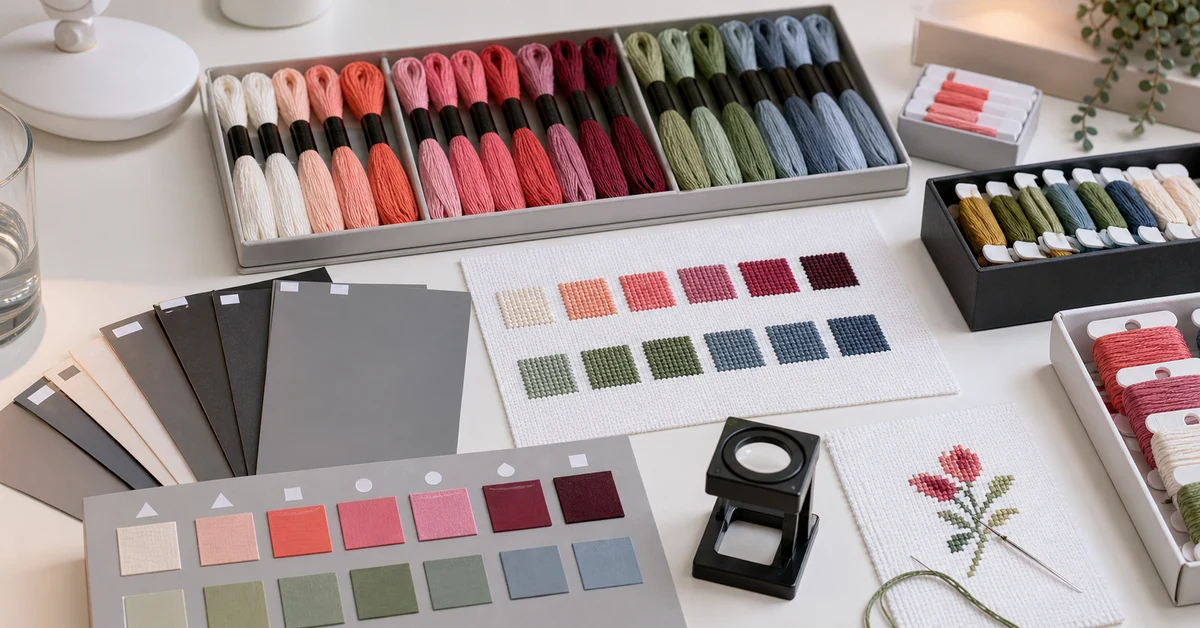
Digital artwork, screen colors and printed keys are useful references but cannot be the only color authority for thread. Establish a physical master using the approved production floss. Mount enough yarn to show the twist and sheen, and include a stitched block on the specified fabric with the specified strand count. Protect the standard from dust, direct sunlight and repeated handling.
- Assign a stable internal shade ID rather than relying only on a supplier description.
- Record supplier, material, construction, lot and approval date.
- Attach a loose-wound sample that shows the yarn body without compression.
- Attach a stitched sample on the approved fabric count and color.
- Photograph the standard for recordkeeping, but mark the physical sample as the authority.
- Set a review or replacement date if fading and handling may change the reference.
Keep working duplicates for routine comparison and protect one master. If every inspector handles the only reference, it gradually becomes a worn standard that no longer represents the original approval.
Control lighting before judging a shade
A floss pair can appear similar under one light and separate under another because the fibers reflect different wavelengths. Review under a defined neutral light first, then under at least one realistic secondary condition such as warm indoor light. Keep the background neutral and remove strong colored objects from the immediate viewing field.
- Allow samples and the reference to remain in the viewing area long enough to share the same conditions.
- Place them in the same orientation so thread direction and sheen are comparable.
- Compare loose floss, stitched blocks and critical neighboring combinations.
- Change to the secondary light without changing sample order.
- Record whether the difference grows, shrinks or changes direction.
Do not judge color through a colored plastic bag or under mixed daylight and warm ceiling light. Packaging can be evaluated later as a separate presentation condition. The first approval should establish whether the thread itself matches under controlled observation.
Use stitched samples to expose optical differences
Floss changes when it is divided, tensioned and crossed over fabric. Twist, sheen and coverage alter the perceived color. Pale fabric may show through an open stitch; a dark fabric can reduce apparent brightness. This is why a loose-skein comparison can pass while the completed motif looks wrong.
Build a compact stitched approval strip with several functions:
- A solid block for each proposed shade.
- Pairs of colors that touch in the actual chart.
- The full sequence of every important gradient.
- A representative outline beside the lightest and darkest fills.
- Any blended-needle combination used by the pattern.
Stitch the strip using the production fabric and the strand count defined by the design. The cross stitch fabric count decision matters because coverage and background visibility can change how close shades appear.
Assess three kinds of match
A useful review separates absolute shade, relationship and material behavior. This keeps teams from rejecting a visually successful palette because one loose strand is slightly different, or approving a numerically close substitute that destroys an important contrast.
| Match type | Question | Evidence | Common failure |
|---|---|---|---|
| Absolute shade | Is this color acceptably close to the standard? | Side-by-side loose and stitched sample | Hue, value or saturation drift |
| Relational match | Does it preserve contrast with neighboring colors? | Paired and gradient stitching | Two steps merge visually |
| Behavioral match | Does the material cover and reflect similarly? | Stitched area under multiple lights | Different sheen, bulk or fabric show-through |
If measurement instruments are available, they can support consistency, but visual approval on the actual stitched system remains necessary. Instrument settings, sample presentation and acceptance tolerances require a controlled method; a single color value copied without context is not a complete decision.
Create a substitution approval path
Substitution pressure can come from unavailable fiber, a changed dye lot, minimum order quantities or timing. Define the route before a production delay makes the team accept the nearest visible skein. The request should identify the affected shade, reason, quantity, proposed material, lot and every neighboring color relationship it may influence.
- Screen the proposed floss against the physical master under controlled light.
- Stitch the solid block and all critical adjacent combinations.
- Compare coverage, strand handling and surface sheen.
- Review the printed color key and organizer identification for downstream effects.
- Approve, reject or request a second option with named evidence.
Update the thread organizer design and the chart symbol key if any code, sequence or visible identification changes. A correct substitute can still create customer confusion if the documentation continues to reference the old shade system.
Check color at incoming and kitting stages
Incoming inspection should verify identity and lot separation before floss is divided into kit quantities. Keep lots controlled through winding, cutting or skein preparation. Mixing two acceptable lots inside one gradient may create a visible shift within a single customer project even when both lots separately pass against the master.
- Confirm shade ID, supplier lot and received quantity.
- Compare a defined sample with the working standard.
- Quarantine unapproved or uncertain lots from usable material.
- Record which lot enters each packing batch.
- Check organizer order and color identification during kitting.
- Retain enough floss and a finished kit for later investigation.
At final inspection, compare a packed kit with the approved content sequence. Similar neutrals and closely spaced gradient shades deserve special attention because a swap may not look obviously wrong until the customer starts stitching.
Test the complete pattern where color carries meaning
A small strip is efficient, but some designs need a full critical-area stitch-out. Choose the portion where color does the most work: a face, shaded petal, letter edge or blended background. Check it at normal viewing distance as well as close range. A palette can look technically separated under magnification but read as flat in the finished display context.
Use the broader cross stitch kit quality checklist to confirm that color approval remains aligned with chart readability, thread quantity, needle compatibility, fabric and packaging.
Where Onehourcrafts fits
Onehourcrafts can help retail buyers connect artwork, floss selection, fabric and packing identification during custom kit development. A useful inquiry includes the design file, intended dimensions, target fabric count, preferred palette, strand use and any color standard already owned by the brand. Buyers can request stitched color comparisons and substitution evidence before bulk material is committed. The final cross stitch floss color matching guide should identify the physical references used for approval.
For repeat orders, reference the approved physical palette and production records rather than asking a supplier to make the colors “the same as last time.” Clear standards make changes visible, reviewable and easier to contain.
Frequently asked questions
Can a digital color code approve embroidery floss?
No. A digital code can communicate design intent, but screens do not reproduce thread construction, sheen or stitched coverage. Use an approved physical floss and stitched sample as the production reference.
Why do matching floss shades look different after stitching?
Strand count, twist, tension, fabric show-through, stitch direction and light reflection affect appearance. Compare proposed colors in the same stitched construction used by the product.
Should every dye lot be checked?
Incoming controls should identify and sample lots according to the product's risk and quality plan. Closely graded palettes and large solid areas deserve particular attention because lot shifts can be more visible.
Can two floss lots be mixed in one kit batch?
Only after the visual effect and traceability are assessed. Avoid placing different-looking lots within one customer project, especially when the thread forms a continuous area or gradient.
What should happen when a shade is discontinued?
Run the defined substitution route: compare the physical floss, stitch critical combinations, assess documentation effects, approve the new reference and record which production batches use it.
Keep palette evidence with the product record
A durable cross stitch floss color matching guide combines the physical master, lighting method, stitched relationship strip, substitution decisions and lot records. That package protects the artwork across sampling, production and reorders while giving teams a practical way to approve necessary change.