
Crochet storage case wholesale sourcing should begin with a closed case, not an empty organizer photographed from above. Onehourcrafts recommends packing the proposed assortment, closing every fastener, carrying it through a realistic route and counting the contents again. This route reveals whether hooks migrate, small notions disappear, elastic loosens or the customer must empty the entire case to reach one tool.

Start with the closed-case promise
The product promise is simple to state: a selected set of crochet tools remains organized, protected and accessible between making sessions. Turn that statement into observable conditions. The zipper closes without forcing the contents, a dropped case does not release loose items, hook sizes remain readable, sharp points do not press through the wall, and a user can retrieve a common tool without disturbing everything else.
Do not approve the case from its outside dimensions alone. The usable interior depends on seam allowances, divider thickness, zipper path and the depth consumed by elastic loops. Record both declared capacity and tested capacity with named tool dimensions.
Give every tool a boarding pass
Create a manifest before the route begins. Photograph and label every hook, needle, marker, gauge, tape and scissor included in the test. Assign each item a home inside the case. If several sizes share one pocket, define their order. The manifest makes migration visible because the team can compare the packed state with every later checkpoint.
| Tool family | Control question | Evidence |
|---|---|---|
| Crochet hooks | Do loops retain all specified diameters? | Before-and-after position photo |
| Stitch markers | Can small pieces escape their pocket? | Recount after each movement stage |
| Scissors | Can tips contact fabric or other tools? | Contact and puncture inspection |
| Tape and gauge | Can flat items be removed independently? | Timed retrieval observation |
Measure the route, not a dramatic stunt
A useful route resembles normal ownership. Move the packed case from a drawer to a tote, carry it to a table, open it, complete a short task, repack it and return it to storage. Add a few controlled orientations and modest impacts that reflect parcel handling or daily travel. A spectacular drop from an arbitrary height may look rigorous while telling the buyer little about ordinary failure frequency.
- Pack from the approved manifest and photograph the open layout.
- Close the case using the intended zipper or fastener path.
- Carry it flat, upright and inside a typical tote.
- Open it at a work surface and retrieve three named tools.
- Repack, close, store overnight and recount the next day.
Crochet storage case wholesale needs three counts
Count at packing, after transport and after use. The first count confirms the manifest. The second exposes items that moved into seams, corners or adjacent pockets. The third reveals whether ordinary use encourages customers to leave tools outside because their assigned positions are awkward. A perfect transport count followed by a poor use count is still a design warning.
Record position as well as quantity. If every item remains present but hook sizes become mixed, the case has preserved inventory while losing organization. That can slow class use and make replacement purchases less certain.
Read zipper behavior around the corners
Test the zipper with the case empty, normally loaded and slightly mispacked. Observe pull force, corner hesitation, fabric capture and whether the slider meets pressure from tall tools. Do not overfill the case merely to claim a larger capacity; a stressed zipper can appear acceptable for several cycles and then fail in customer use.
Inspect the zipper tape attachment after repeated opening. Loose threads near a slider can become functional defects. If the design uses a magnetic closure, snap or buckle, test alignment when the case is lifted by one side rather than placed carefully on a bench.
Let hooks challenge the elastic
Elastic retention must work across the declared hook range. Small metal hooks can slip through loops sized for thicker ergonomic handles, while large handles can permanently stretch loops intended for narrow tools. Test the smallest and largest approved profiles plus a repeated-use middle size. Measure loop recovery after storage rather than judging it immediately after insertion.
A qualified crochet organizer supplier should state the range used during development. Buyers can compare this with the sizing logic in the crochet hook size guide for kits before approving an assortment.
Keep loose notions out of seam caves
Stitch markers, yarn needles and small counters find spaces that fingers cannot. Turn the closed case through several orientations, then open each compartment without shaking it over the table. Note whether pieces collect behind dividers, below zipper ends or inside lining folds. A transparent zipped pocket can improve count visibility, but only if its opening and seam construction retain the smallest declared component.
- Use the smallest component as the escape probe.
- Check every internal seam intersection.
- Open the case in its normal user orientation.
- Recount before moving any displaced item.
Time access without rewarding memorization
Ask a tester who did not pack the case to find a named hook, marker and yarn needle. Time the task and record what must be removed first. Repeat with the case on a small table, where there is no room to spread every component. Access quality is not simply speed; it also includes whether the user can restore the layout without a diagram.
Compare the behavior with the crochet kit unboxing checklist. A storage case has a repeated unboxing cycle, so the opening logic must remain understandable after the first session.
Inspect wall pressure and sharp contact
Load scissors, yarn needles and narrow hooks in their intended positions. Press the closed case as it might be pressed inside a full tote. Inspect inner and outer fabric for concentrated contact, abrasion and visible points. Protective flaps should stay in position when the case is vertical, not only when it lies open.
Risk depends on the exact tools, materials and intended users. Buyers should define product-specific safety requirements and obtain appropriate professional advice. The U.S. Consumer Product Safety Commission provides general business guidance through its business education resources, but a general resource does not replace market-specific assessment.
Use the shelf as another travel stop
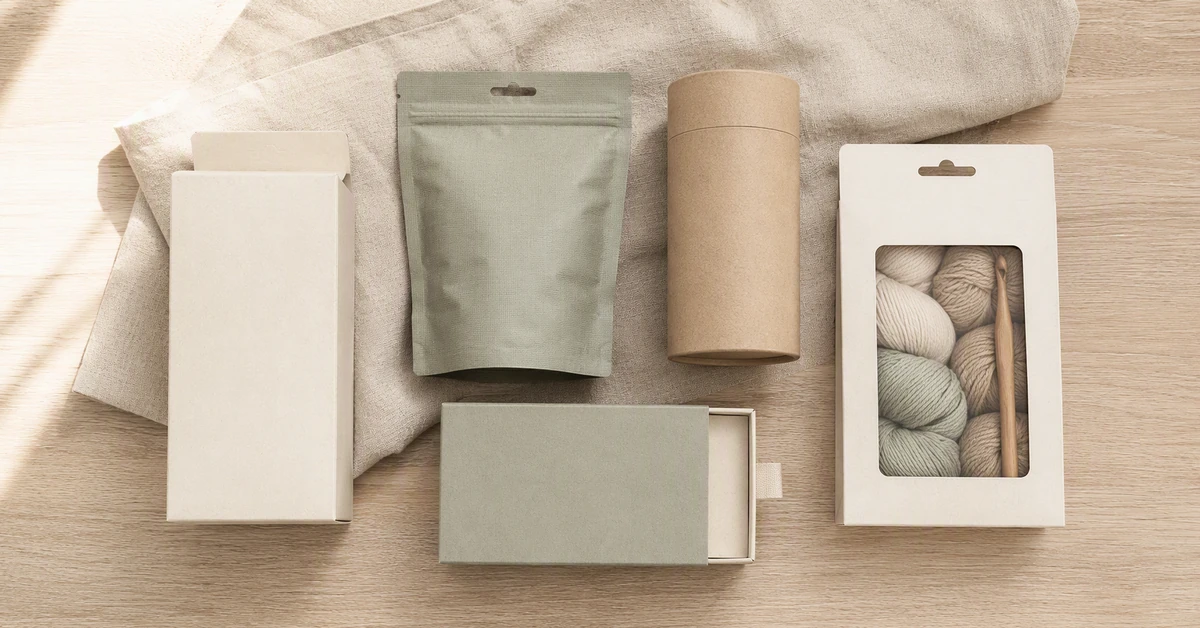
The closed case may hang, stand, lie flat or sit inside an outer carton. Test the intended shelf orientation for slumping, zipper exposure and label visibility. Hanging hardware should not distort the case or pull a tool compartment out of alignment. If the case is sold closed, give shoppers enough truthful information to understand its internal capacity without opening the package.
For crochet tools for craft stores, a clear size list and one interior image can reduce unnecessary handling. Retail ready crochet accessories also need scannable item identity, country and channel information appropriate to the destination market. GS1 explains the role of globally unique identifiers in its identification key overview.
Separate case capacity from assortment strategy
A flexible case can hold many combinations, but the wholesale offer should name the one being evaluated. A hook-only case, a travel repair case and a complete crochet notion case create different loads and customer expectations. Avoid one capacity claim based on the thinnest possible tools if the commercial assortment uses thicker handles.
| Assortment concept | Priority space | Likely route risk |
|---|---|---|
| Hook library | Graduated retention loops | Size mixing after travel |
| Compact travel set | Protected multipurpose tools | Overpacking and wall pressure |
| Class organizer | Fast visual access | Slow return to assigned positions |
| Notion archive | Small closed pockets | Hidden migration and recount errors |
Make receiving repeat the final count
Receiving teams need a method that does not require unpacking every sewn loop. Provide an approved packed image, component manifest, case dimensions, packed weight tolerance and outer label identity. Define a sample opening plan for each incoming lot. If a random case is opened, its internal order should match the approved reference closely enough to reveal missing or substituted pieces.
Connect the result to the craft kit batch traceability checklist. Case, tool set and packing version should be traceable together rather than treated as unrelated purchased parts.
What Onehourcrafts needs for a route sample
Onehourcrafts can prepare a more relevant proposal when an inquiry states the target tool list, largest and smallest dimensions, user setting, shelf orientation, outer packaging, quantity range and destination markets. Include a reference photo of the expected packed state and identify which tools are buyer-supplied, supplier-sourced or still undecided.
- Named component manifest with dimensions
- Required case material and closure preferences
- Retail display and label constraints
- Expected travel and storage conditions
- Receiving evidence and acceptance priorities
Frequently asked questions
Should capacity be stated as a tool count?
Only when the tool profiles are defined. Ten slim metal hooks occupy a very different volume from ten ergonomic handles.
How should small stitch markers be tested?
Use the smallest declared marker, move the closed case through the route and inspect every seam intersection before recounting.
Is a hard shell always better?
No. It may improve crush protection but add weight, reduce flexibility or complicate shelf presentation. Evaluate the intended route.
How many zipper cycles are enough?
Set a cycle plan based on expected use and risk, then inspect both operation and attachment. One smooth demonstration is not evidence of durability.
Should tools be packed by size?
Usually yes when size selection matters, but the best order should also support fast retrieval and reliable repacking.
Can a case be sold empty and filled by the retailer?
Yes, provided the approved capacity, labels, component responsibility and final presentation are clearly divided between supplier and retailer.
What is the most useful receiving check?
Compare one random opened case with the approved manifest, packed image, weight tolerance and item identity.
Does a window improve the product?
It can show contents, but it also changes protection, privacy, material behavior and recyclability. Test it as part of the complete pack.
How are substitutions controlled?
Require written approval against dimensions, material, finish, function and packing position before a substitute enters production.
What should a first inquiry include?
Include the tool manifest, dimensions, target user, case style, display route, order quantity, markets and timing.
Close the case before approving the system
The final approval for crochet storage case wholesale should come after the packed case has travelled, opened, worked and returned to storage. A case that looks orderly only while open is a display prop. A strong product preserves identity and access through repeated movement, and leaves receiving teams with evidence they can verify on the next lot.