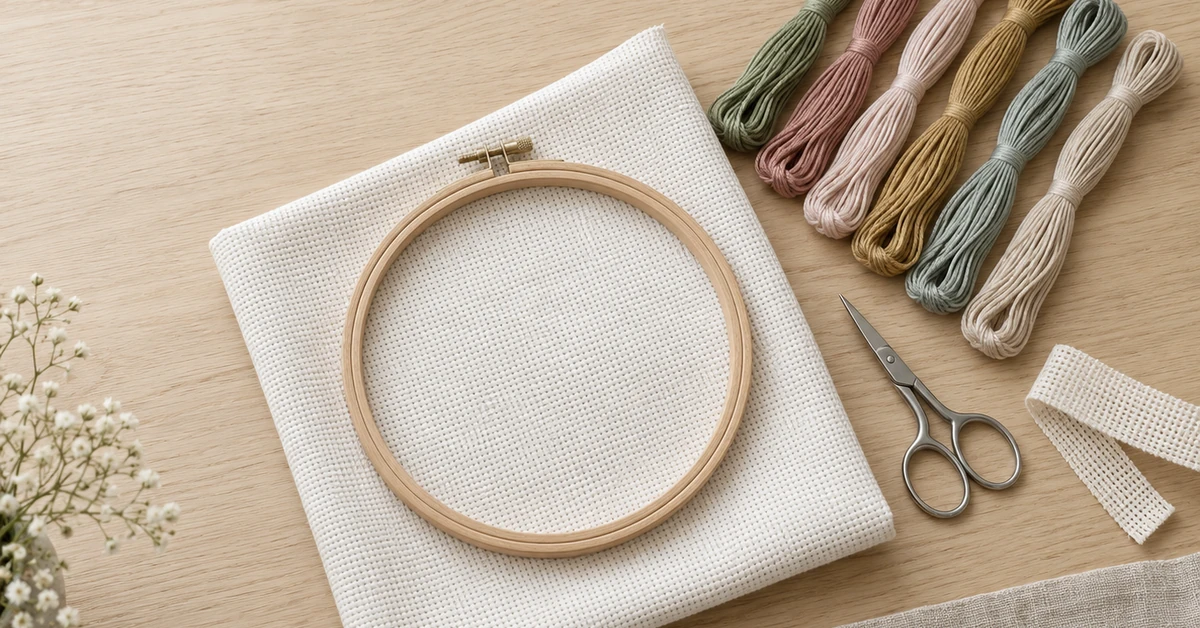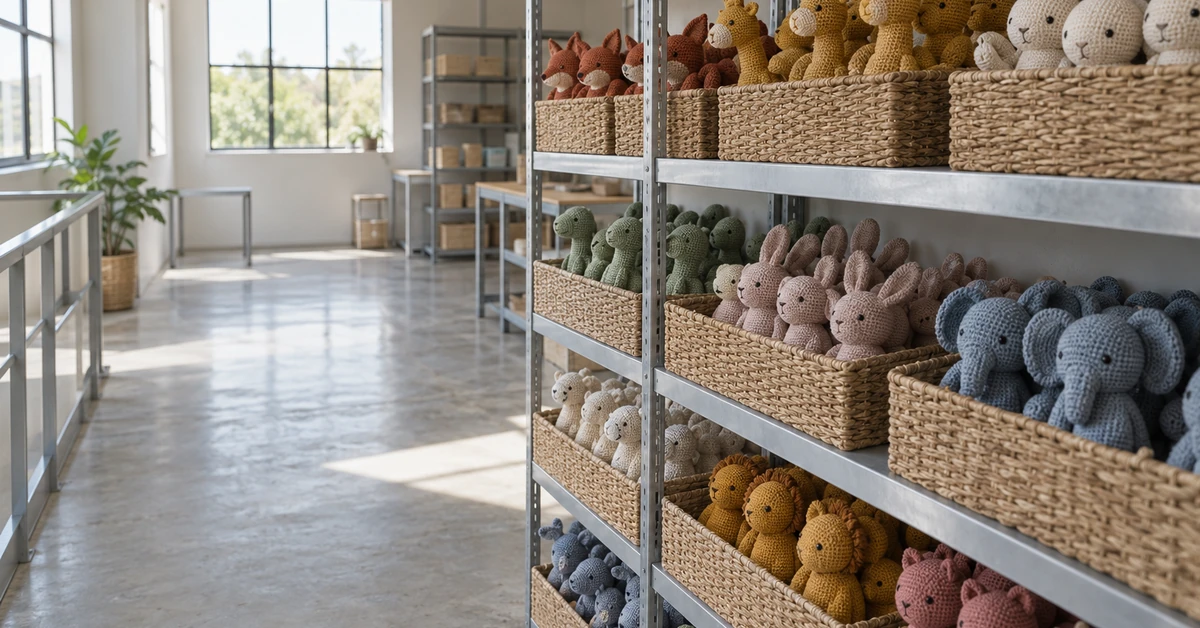

Cross stitch kits for gift shops are opened twice in commercial terms: first by the shopper deciding whether the object is gift-worthy, and later by the recipient deciding whether the project feels possible. Onehourcrafts recommends reviewing those two openings separately. The first needs confidence, occasion and presentation; the second needs component clarity, usable instructions and a believable route to a finished result.
Meet the purchaser before the maker
The purchaser may know the recipient well but know little about cross stitch. At the shelf, that person asks practical questions: Is this complete? Is the design suitable? How difficult is it? What size will the result be? Does the package look substantial enough to give? Make these answers easy to find without requiring specialist vocabulary.
The maker asks different questions after opening: Where do I start? Which symbol matches which thread? Is the fabric orientation clear? What happens if I make a mistake? A pack that satisfies only the purchaser can still become an abandoned gift.
Write two promise columns
Review every pack statement in two columns. One column records what it tells the gift buyer; the other records what it enables for the recipient. If a statement helps neither person, it may be decoration. If it promises a finished experience without giving the recipient the required support, it is a risk.
| Pack element | Purchaser meaning | Recipient meaning |
|---|---|---|
| Finished design image | Shows taste and gift appeal | Defines the target result |
| Skill description | Signals suitability | Sets an honest challenge level |
| Component list | Confirms completeness | Supports opening count |
| Finished dimensions | Shows perceived value | Supports framing or display plans |
Stage the first opening at arm's length
Place the package in the intended display at realistic shelf height. A tester should identify the design subject, approximate finished size, skill expectation and whether major tools are included without opening it. Observe what is visible from a normal standing position and what requires handling or turning the pack.
Do not make every panel compete at equal volume. The front can carry the visual and category cue; a side or back can hold the component list, dimensions, time range and fuller description. The visual hierarchy should work in a crowded gift environment, not only in an isolated design file.
Cross stitch kits for gift shops need an occasion signal
An occasion signal helps a non-specialist purchaser understand why the kit belongs in a gift shop. It may come from subject matter, color, season, locality, celebration or a compact project promise. Avoid relying on a generic ribbon graphic that adds festivity without clarifying who would enjoy the project.
If the design is connected to a place, artist, museum or licensed property, document permission and usage boundaries. WIPO offers general resources on intellectual property for smaller businesses. Buyers should obtain qualified advice for rights and jurisdictions relevant to the actual design.
Protect surprise without hiding suitability
Gift packaging often values reveal, but the buyer still needs truthful information. A sleeve, closed box or tissue layer can create discovery while exterior panels communicate the finished appearance and kit contents. Do not hide critical age, skill, tool or warning information merely to create a clean front.
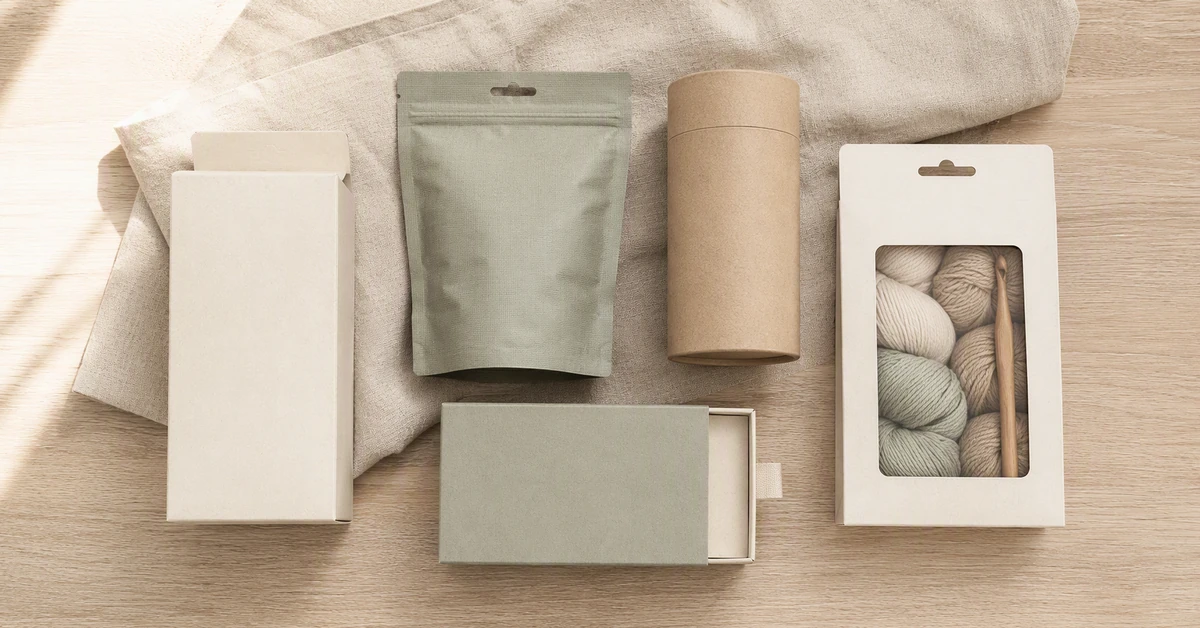
Custom packaging cross stitch kits should be tested as complete systems. Decorative closures, windows and inserts affect protection, opening sequence, freight volume and the ease of returning unused components to the box.
Make the second opening countable
The recipient should be able to compare the contents with one clear list. Group thread, fabric, needle, chart and instructions in recognizable layers. If threads are pre-sorted, identifiers must agree with the chart key. If several needles or accessories are optional, explain their purpose instead of leaving unfamiliar parts loose.
- Open the pack without prior product knowledge.
- Find the component list before moving small items.
- Match every physical component to one listed name.
- Locate the first action in the instructions.
- Repack the unused contents after a short session.
Let the chart introduce itself
A chart should state orientation, center marks or start point, symbol key and stitch types in a visible order. Test whether a new user can distinguish full cross stitches, backstitch and any partial stitches. Color printing may assist recognition but should not be the only distinction when reproduction or visual conditions could vary.
Use the cross stitch chart symbol design guide to review symbol separation and key logic. The chart is the working interface of the gift, not an accessory to the cover image.
Give difficulty more than one adjective
Beginner, intermediate and advanced labels are interpreted differently across brands. Add observable reasons: fabric count, chart size, number of colors, fractionals, backstitch, thread blending or finishing steps. A purchaser can then judge suitability without pretending to know the recipient's exact skill level.
For cross stitch kits for adults wholesale, adult positioning does not automatically imply advanced difficulty. State project demands directly and avoid using age as a substitute for skill.
Describe time as a range with assumptions
Completion time varies with experience, session length and error correction. If time is important to the gift concept, use a cautious range and state the testing basis. A mini project completed by an experienced sample maker is not proof that every recipient will finish it in one evening.
The cross stitch project time estimation guide offers a method for separating stitch count, technique and user pace. Honest time framing protects delight better than an aggressive promise.
Check whether the finished object has somewhere to go
The recipient may want to display, frame, hang, card or use the finished work. State whether a display hoop, backing, frame or finishing material is included. If it is not, show the result without implying that excluded accessories come in the box. Finished dimensions should reflect the stitched area and, where relevant, the supplied display format.
- Name the included finishing components.
- Separate stitched size from fabric cut size.
- Show one accurate finished example.
- Explain any optional finishing route briefly.
Design shelf-ready, not shelf-dependent
Retail ready cross stitch kits need stable identity whether displayed face-out, hung or stacked. Test barcode placement, variant naming, price label space and pack stability. If a gift shop uses shallow shelving or dense seasonal displays, a narrow side identifier can prevent range confusion.
GS1 explains the role of unique product identification in its identification key resources. Exact coding and labeling needs depend on channel and market, so buyers should confirm their own requirements.
Run the two-person handoff test
Give the sealed pack to one person acting as purchaser. After that person explains why it suits a recipient, hand the unopened kit to a different tester who completes the first instruction stage. Compare the purchaser's promise with the maker's experience. Any gap becomes a specific revision question.
| Handoff checkpoint | Pass evidence | Typical gap |
|---|---|---|
| Shelf selection | Suitability explained accurately | Gift appeal hides difficulty |
| Opening count | All contents matched | Loose accessory has no name |
| First stitches | Start point found independently | Chart assumes prior knowledge |
| Session close | Parts return to pack | Packaging cannot support storage |
Keep gift language supportable
Claims such as complete, beginner-friendly, sustainable or locally inspired need accurate scope and evidence. The FTC provides general advertising and marketing guidance for truthful claims. Market requirements vary, and this buying framework is not legal advice.
For product photography, compare every image with the actual included components. The craft kit product photography checklist can help separate styled context from inclusion evidence.
What Onehourcrafts needs for both audiences
Onehourcrafts can evaluate a gift-shop concept when the inquiry identifies the recipient profile, occasion, target price, expected display, finished design, skill basis, market, packaging format and quantity. State whether the shop emphasizes local stories, seasonal gifts, museum themes, travel souvenirs or general creative wellbeing.
- Gift occasion and recipient profile
- Finished design and display expectation
- Skill and time assumptions
- Retail footprint and merchandising route
- Artwork rights, language and market needs
Frequently asked questions
Why treat the gift buyer and maker separately?
They have different knowledge and goals. The purchaser selects suitability; the recipient needs a workable project.
Should the finished design be visible?
Usually yes, because it helps both audiences understand the result. Ensure the image accurately represents the included project.
Is gift-ready packaging necessarily elaborate?
No. Clear, well-proportioned and protective packaging can feel gift-worthy without complex materials or decorative layers.
How should difficulty be shown?
Use a level plus observable factors such as fabric count, stitch types, color count and chart scale.
Can the package promise a completion time?
Use a cautious, tested range with assumptions. Individual pace and experience vary.
What should be included for finishing?
State exactly whether a hoop, frame, backing or hanging element is supplied and what the user must source separately.
How many designs should a gift shop launch?
Choose a range that creates visible choice while allowing each variant to earn clear shelf space and reorder data.
Should a barcode go on the back?
Place it where the retailer can scan reliably without damaging the visual hierarchy or confusing adjacent variants.
How can returns be reduced?
Make contents, difficulty, dimensions, included tools and finished appearance clear before purchase.
What belongs in the first inquiry?
Include the occasion, user, design, skill level, pack route, display footprint, quantity, market and timing.
Approve the promise at both openings
The commercial strength of cross stitch kits for gift shops comes from agreement between two moments. The shelf presentation helps one person choose with confidence; the inner experience helps another person begin without disappointment. Approve the kit only when those promises match, because the recipient's first successful stitches complete the gift-shop sale.