
Cross stitch kits for kids wholesale should be evaluated by the moments when a young maker needs adult help, not only by the age printed on the package. Onehourcrafts recommends a timed trial from opening to safe storage. Every pause, request and uncontrolled component becomes evidence for the product brief.
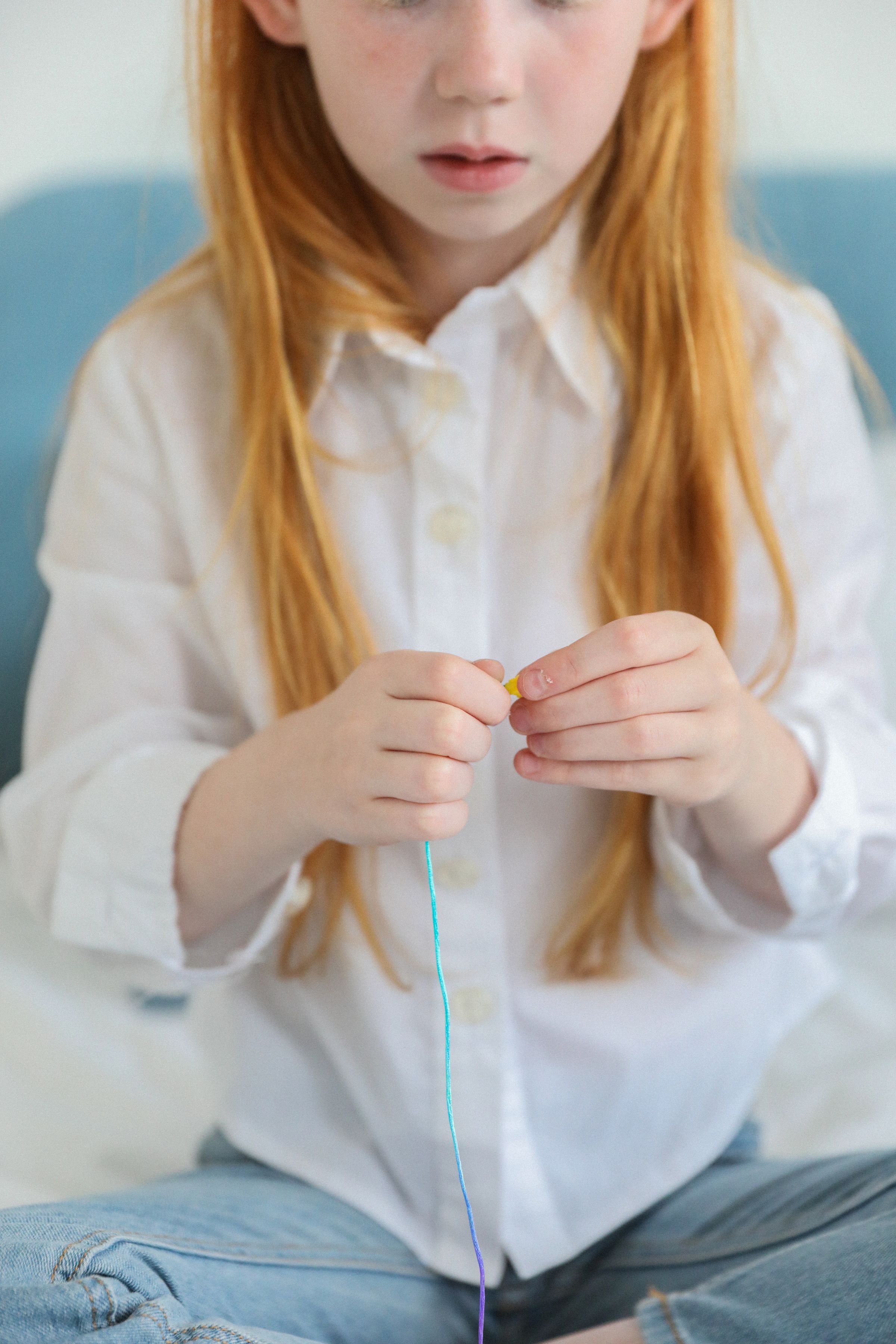
Put a clock beside the first opening
Start timing when the sealed pack reaches the child. Do not arrange the contents or explain the front panel first. Observe how the package is opened, which item is touched, and whether the project goal is understood. The clock is not a speed contest; it creates a shared coordinate for every intervention.
Use representative children only with appropriate permission and adult supervision. Record behavior without turning uncertainty into failure. A pause can show healthy caution, while a rushed action may reveal that a sharp or small component becomes available before the instruction establishes control.
Define intervention before the trial
Different observers will help at different moments unless the study defines intervention. Agree on categories such as safety stop, comprehension prompt, physical assistance and encouragement. A safety stop ends the action immediately; a comprehension prompt asks what the maker thinks comes next; physical assistance completes part of the task.
- S: adult stops an unsafe or uncontrolled action.
- C: adult clarifies text, symbol or sequence.
- P: adult manipulates the tool or material.
- E: adult reassures without changing the task.
Cross stitch kits for kids wholesale need a help map
Plot interventions against elapsed minutes and project stages. A cluster at opening points to packaging or orientation. A cluster during chart reading suggests symbol or counting problems. Repeated physical help at threading may indicate a needle-eye mismatch rather than a child-skill problem. The map converts a vague statement such as “needs supervision” into a useful design record.
| Minute band | Likely task | Evidence to capture |
|---|---|---|
| 0-3 | Open and identify | Component release and first choice |
| 3-8 | Thread and locate start | Eye size, chart orientation, knot method |
| 8-20 | Repeat stitch cycle | Counting, tension and error recovery |
| Pause | Secure work | Needle custody and loose thread storage |
Release components in a deliberate order
The package should not expose every small item at once. Consider an internal sequence that reveals the project card and fabric before the needle. The needle can sit in a clearly labeled holder connected to the instruction step that requires it. This does not remove the need for supervision, but it reduces uncontrolled handling during orientation.
Compare the needle and fabric relationship using the cross stitch needle-size guide. A blunt tapestry point, suitable eye and stable fabric opening can reduce unnecessary force, yet destination-market safety requirements still govern the final choice.
Measure the first successful stitch
The first successful stitch is a meaningful milestone because it joins chart, fabric, needle and thread. Record how long it takes, how many prompts occur and whether the child can explain the next stitch. A trial should also note false success, such as a correct-looking cross made in the wrong grid location.
- Ask the maker to identify the chart start.
- Watch the transfer from symbol to fabric square.
- Observe front-to-back needle control.
- Check whether the second stitch can be repeated independently.
Reduce chart translation steps
Every translation adds cognitive load: symbol to color, color to thread bundle, chart square to fabric square, and stitch direction to hand movement. Use distinct symbols, adequate contrast and a visible center or start marker. If the project uses very similar shades, separate their symbols more strongly.
The chart symbol design guide offers a detailed verification method. For children, add an observer check: can the maker relocate the correct position after looking away for ten seconds?
Design error recovery before adding decoration
A child will miscount, split a thread or enter the wrong hole. The product should make a small error recoverable without damaging confidence or fabric. Show how to remove one stitch, mark the current chart position and restart. Avoid language that treats normal correction as failure.
- Use short thread lengths that limit tangles.
- Provide extra thread for realistic correction.
- Keep the starting area away from a visually confusing edge.
- Include an adult note for knots that cannot be released safely.
Give every pause a needle location
Ask the child to stop without warning and watch where the needle goes. The kit needs an explicit pause state: a reusable holder, a designated fabric parking area if appropriate, or an adult-controlled container. “Put it somewhere safe” is not a procedure. The instruction and packaging should name the allowed place.
General guidance from the U.S. Consumer Product Safety Commission can help teams frame safety questions, but the buyer must define applicable rules, age grading, warnings and test requirements for every destination market.
Separate age claim from skill claim
Age can relate to safety, reading and motor development, while skill level describes project experience. Do not collapse them into one badge. A child within the stated age band may still be new to counting a grid. A familiar maker may handle the pattern confidently but still require adult control of tools.
| Claim | Question it must answer | Evidence source |
|---|---|---|
| Age | Who may use it under defined supervision? | Applicable assessment and use trial |
| Skill | What prior project knowledge is assumed? | Independent completion trial |
| Time | How long is a normal work session? | Timed observations |
| Contents | What must an adult provide? | Controlled pack specification |
Make the pack honest at retail distance
Retail ready cross stitch kits should show the actual finished design, approximate size, main components, supervision statement and a readable skill cue. Do not let a large lifestyle image hide the scale of the stitched area. The front creates expectation; the back should explain what the first work session involves.
For custom packaging cross stitch kits, reserve warning, barcode, language and traceability zones before decorative artwork. Late compliance additions often cover instructions or reduce type below a useful size.
Use cross stitch starter kits as a progression system
Cross stitch starter kits should lead somewhere. Define a small progression across grid size, stitch count, color count and chart complexity. The next kit should add one meaningful challenge while preserving familiar controls. This lets retailers recommend a follow-on product using evidence rather than age alone.
- Stage 1: large grid, short path and few colors.
- Stage 2: longer sequence with simple chart movement.
- Stage 3: more colors and a modest outline or detail step.
- Stage 4: independent pause, resume and finishing routine.
What Onehourcrafts should receive for development
Send the destination markets, target age statement, supervision model, retail price position, design theme, expected session length, language needs, package format and any required test protocol. The development team can use those boundaries to align chart scale, fabric, thread lengths, needle presentation and instructions before the first sample.
Include a reference to the desired quality level, such as the checks in the cross stitch quality checklist. Do not assume that a simplified design permits weaker component control.
Frequently asked questions
What is the most important observation in a child use trial?
Record when and why adult intervention occurs. The reason is more useful than completion time alone because it points to a design response.
Should the needle be visible through the package?
Visibility can support content confirmation, but custody and release order matter more. The needle should remain controlled until the relevant instruction step.
How many colors should a first project use?
Use enough to make the design recognizable without creating frequent matching decisions. Test the actual chart and thread organizer with new makers.
Is larger fabric count always easier?
Larger openings can reduce precision demands, but stiffness, needle fit and design scale also matter. Evaluate the complete system.
How long should one work session be?
Set a realistic session based on observed attention and hand comfort. The project can span several sessions if pause and resume are designed clearly.
Can printed color replace chart symbols?
Color may help, but symbols provide a stable reference across lighting and printing variation. Use both when that improves clarity.
What extra material is useful?
Provide a controlled allowance for threading loss, knots and normal correction. The allowance should be verified by test rather than guessed.
How should adult supervision be described?
Use wording supported by the product assessment and destination-market requirements. Avoid vague language that leaves tool custody undefined.
What should a retailer check on arrival?
Check seals, warnings, barcode readability, component containment, lot identification and whether the finished-design image matches the SKU.
When is the kit ready for approval?
Approve after representative users complete the timed trial, interventions are reviewed, safety requirements are addressed and production packs match the sample.
Turn every request for help into a design decision
Strong cross stitch kits for kids wholesale do not pretend children will work without support. They define when help is expected, keep components controlled and reduce avoidable confusion. Give Onehourcrafts a clear supervision model and approve the project against the timed intervention map, not only the finished sample.