
A needle felting kit manufacturer must control a system built around sharp tools, compressible wool, repeated hand motion and three-dimensional shaping. Buyers should define the intended user, supervision, needle protection, wool specification, work surface, instruction checkpoints and destination-market review before requesting a price. The finished sample matters, but the safest and most repeatable learning path matters more.
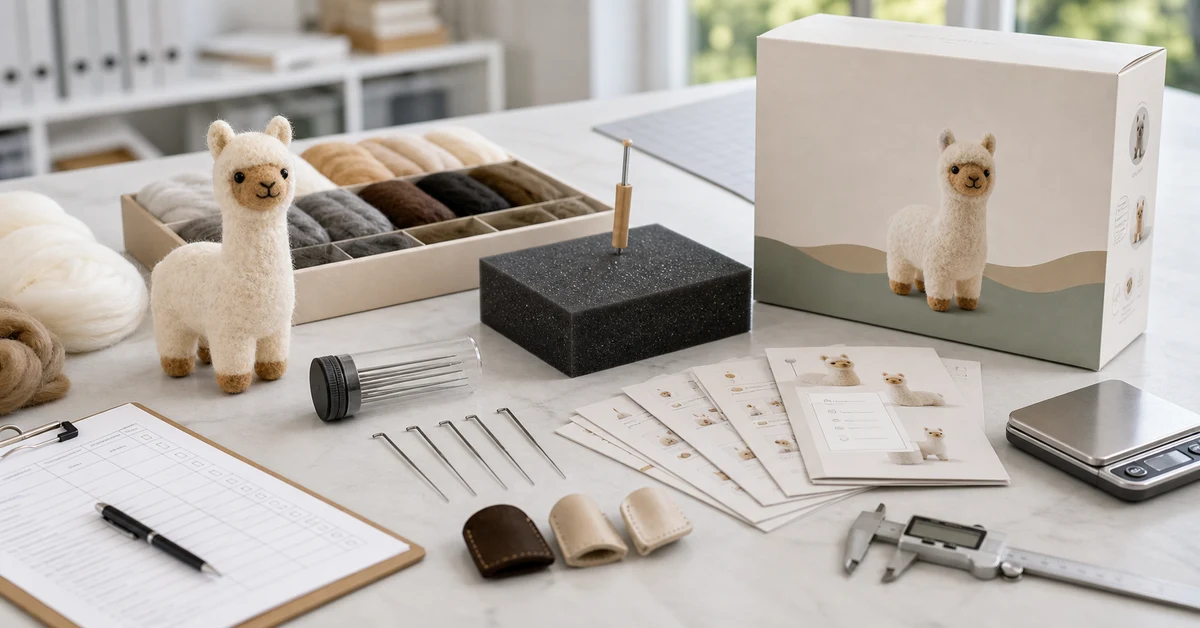
Decide who the kit is for and who it is not for
Needle felting uses barbed needles that are designed to enter fibers repeatedly. Age claims and sales language therefore require careful judgment. A kit for experienced adult crafters differs from a supervised teen workshop and should not inherit the same imagery, warnings or instruction assumptions.
| User profile | Design implication | Support expectation | Risk control |
|---|---|---|---|
| Adult beginner | Simple form and limited colors | Visual basics and troubleshooting | Needle holder, guards and stable pad |
| Experienced maker | More detail and specialist tools | Technique notes and material data | Clear tool identification |
| Supervised workshop | Short modules and easy count-out | Leader guide and spare policy | Issue-return needle control |
| Gift retail | Strong outcome and organized opening | Self-contained instructions | Prominent use and storage guidance |
State exclusions honestly. If the project requires advanced shaping, glue, wire armatures or difficult assembly, it should not be presented as a universal starter kit.
Specify wool by behavior, not only color
Fiber type, preparation, staple characteristics, color and quantity affect how quickly the shape firms and how smooth the surface becomes. Two rovings that look similar can felt at different rates. Approve production-intent material through a complete project, not a hand sample alone.
- Fiber description and supplier code.
- Color standard under agreed lighting.
- Preparation type, cleanliness and consistency.
- Net quantity by color and total allowance.
- Packaging method that limits contamination and tangling.
Weigh wool before and after the independent trial. Record leftover quantity by color so the bulk pack can include a reasoned allowance for shaping variation and small mistakes.
Build a needle and accessory specification
“Felting needle” is not a complete description. Define needle length, gauge or functional profile, barb configuration where controlled, handle compatibility, surface condition, quantity and protective pack. If several needle types are included, identify them visually and explain when each is used.
| Item | Specification | Approval test | Failure risk |
|---|---|---|---|
| Felting needle | Dimensions, type, finish, count | Visual, dimensional and use test | Breakage, poor felting or confusion |
| Needle holder | Fit, grip, closure and material | Retention and repeated-use test | Loose or exposed needle |
| Finger guards | Size, material and pair count | Fit trial across intended users | False confidence or poor dexterity |
| Work pad | Material, density, size, thickness | Penetration and recovery trial | Needle contact with table or rapid wear |
| Assembly parts | Eyes, thread, findings or adhesive | Count, attachment and classification review | Missing part or unsuitable use |
Control sharp tools from receipt to sealed pack
Establish a written needle-control procedure. Count reconciliation, line clearance, damaged-tool handling and secure retention should be visible in production records. The goal is to prevent missing needles, excess needles and loose sharp points.
- Receive each needle lot with identification and quantity records.
- Inspect finish, straightness and protective packaging.
- Issue controlled quantities to the assembly line.
- Verify the required count and holder position in every pack.
- Reconcile unused, damaged and rejected needles at line clearance.
- Test the sealed retail package for migration after handling.
Finger guards are supplementary equipment, not proof that any user or motion is safe. Instructions should demonstrate hand position, work direction, pad use and storage without promising that injury is impossible.
Classify materials and claims for each market
The U.S. CPSC Art and Craft Safety Guide provides an overview of art-material hazards, labeling and precautions, including sections on children's use and textiles. Use it as a starting point, not as a substitute for product-specific legal review. If a kit is marketed to children or contains small accessories, the CPSC's small-parts guidance shows why intended age and component behavior matter.
Ask a qualified specialist to determine applicable rules based on intended user, destination, claims and every supplied material. Wool, adhesives, plastic eyes, wire, coatings and packaging may create different documentation needs. Freeze the compliance route before mass printing warnings or age marks.
Design instructions around hand position and shape checkpoints
Needle felting instructions need more than a sequence of attractive photographs. Show how much wool to begin with, where fingers should be, how the pad supports the work, how the needle enters and exits, and how the object changes from soft bundle to stable form.
- Photograph the scale of each wool portion before shaping.
- Use front, side and top checkpoints for three-dimensional forms.
- Explain gradual firming and the risk of overworking one area.
- Separate needle steps from gluing or assembly steps.
- Show safe storage during breaks and after completion.
Independent users should follow the production layout without coaching. Their questions become revision inputs, just as in the craft kit instruction testing workflow.
Approve the complete project with material-use evidence
Make at least one full sample using the exact wool, needles, pad, guards and instructions planned for sale. Record time, needle changes, breakage, wool consumption, finished dimensions and difficult steps. Compare the result with approved photographs from standard angles.
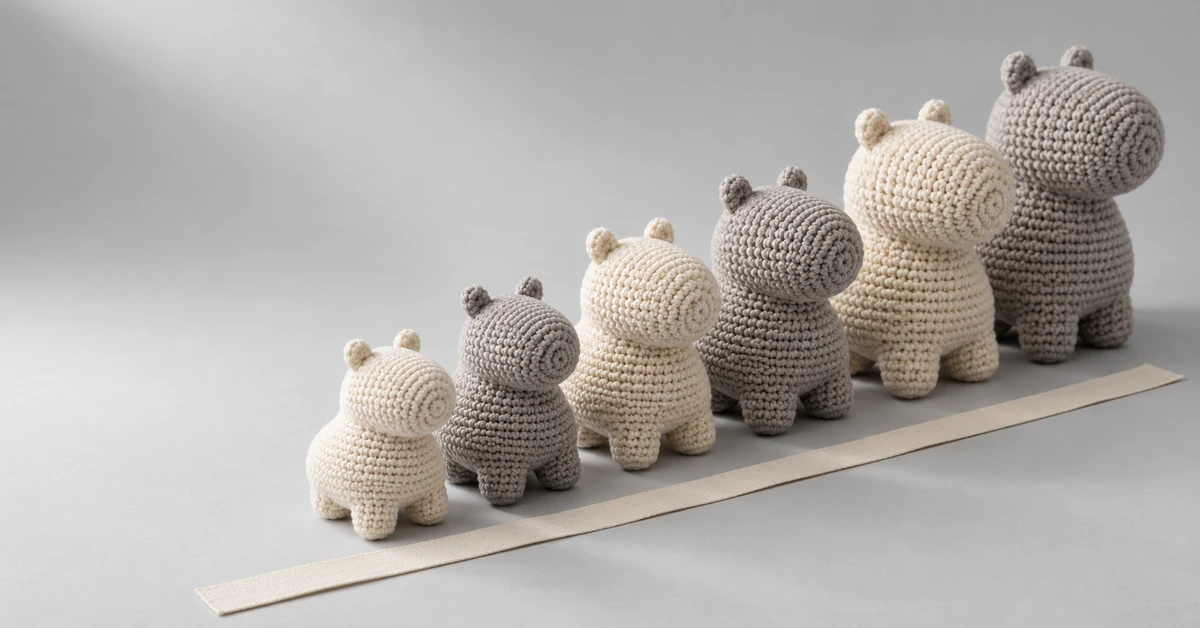
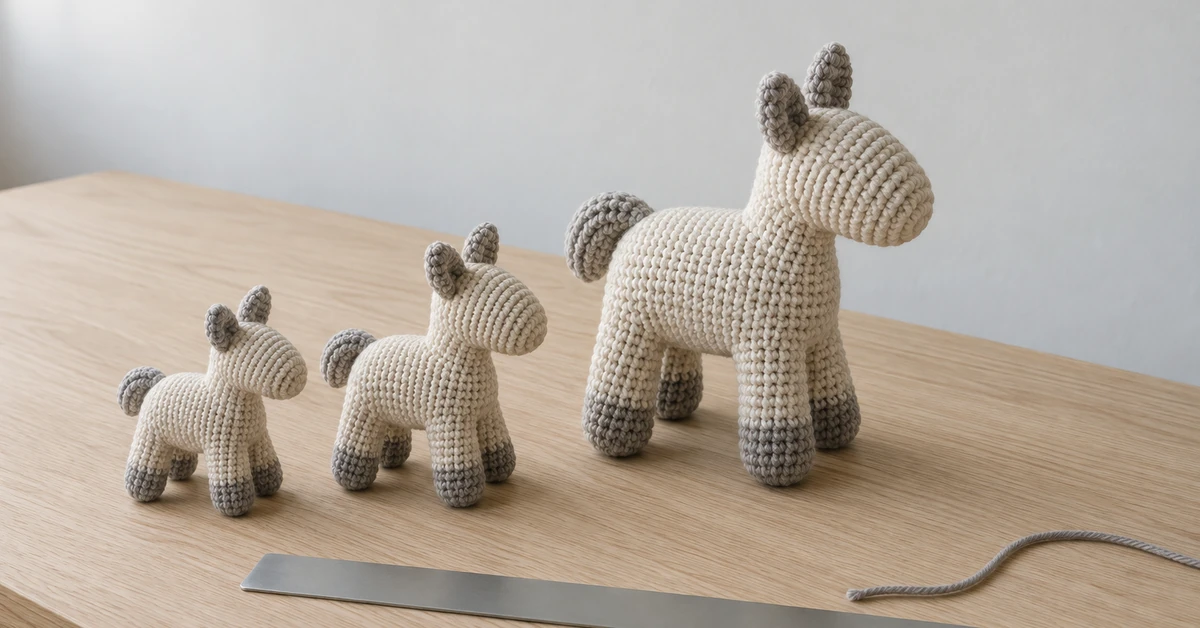
Classify variation before correcting it. Some surface texture is a normal handmade outcome; a body shape that cannot be reproduced from the stated wool portions or viewpoints is an instruction problem. Decide which dimensions are functional and which may have an acceptable handmade range.
Set incoming, in-process and final checks
Incoming inspection should verify wool identity, color, cleanliness, weight and needle condition. In-process checks should focus on needle count, accessory count, color allocation and instruction revision. Final inspection should confirm closed-pack tool retention, barcode, warnings, package appearance and carton assortment.
| Control point | Record | Escalation trigger |
|---|---|---|
| Wool receipt | Lot, color, weight and visual standard | Color drift, contamination or inconsistent preparation |
| Needle issue | Issued, packed, damaged and returned count | Any unreconciled quantity |
| Kit assembly | Component checklist and revision | Missing tool, wool color or instruction |
| Final pack | Retention, label and appearance check | Loose sharp point or incorrect market text |
Compare foam, brush and alternative work surfaces
Work pads affect safety, needle life, noise, project support and pack volume. Dense foam may provide stable support but can degrade and retain fibers. Brush-style pads may suit repeated use but add cost and different maintenance. Some natural-fiber pads change the product story but need consistent density and cleanliness.
Test penetration depth, needle contact with the underlying table, surface recovery, debris and user stability. Approve the pad together with the needle length and project size. A pad selected only to reduce cost can create premature wear or awkward hand positions.
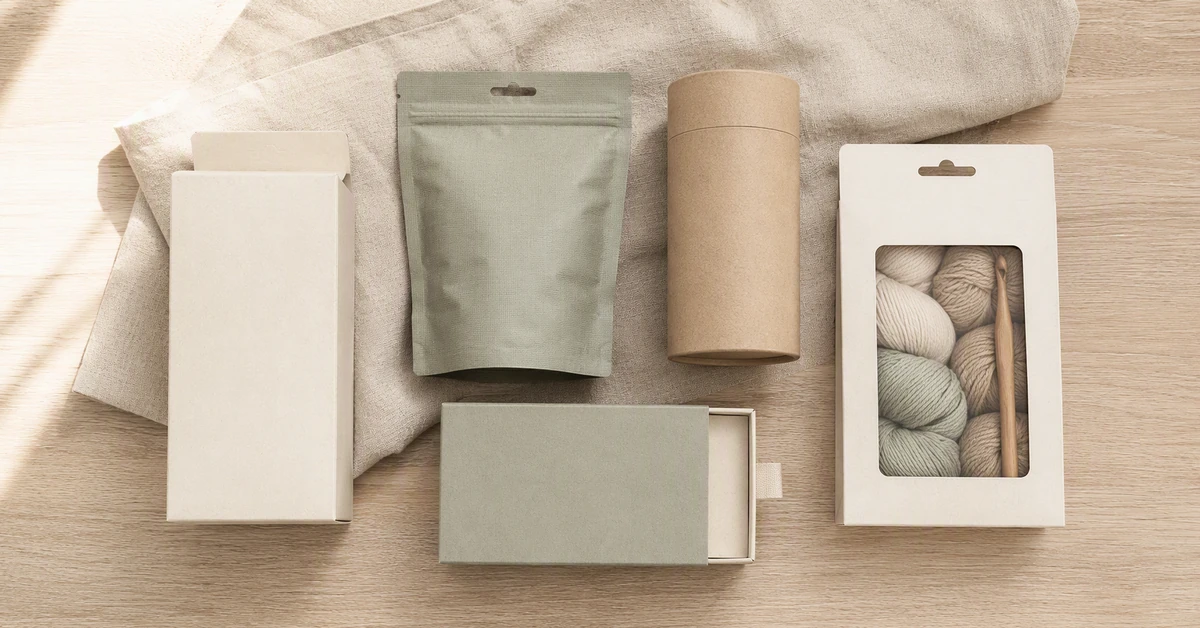
Plan packaging for retention and reuse
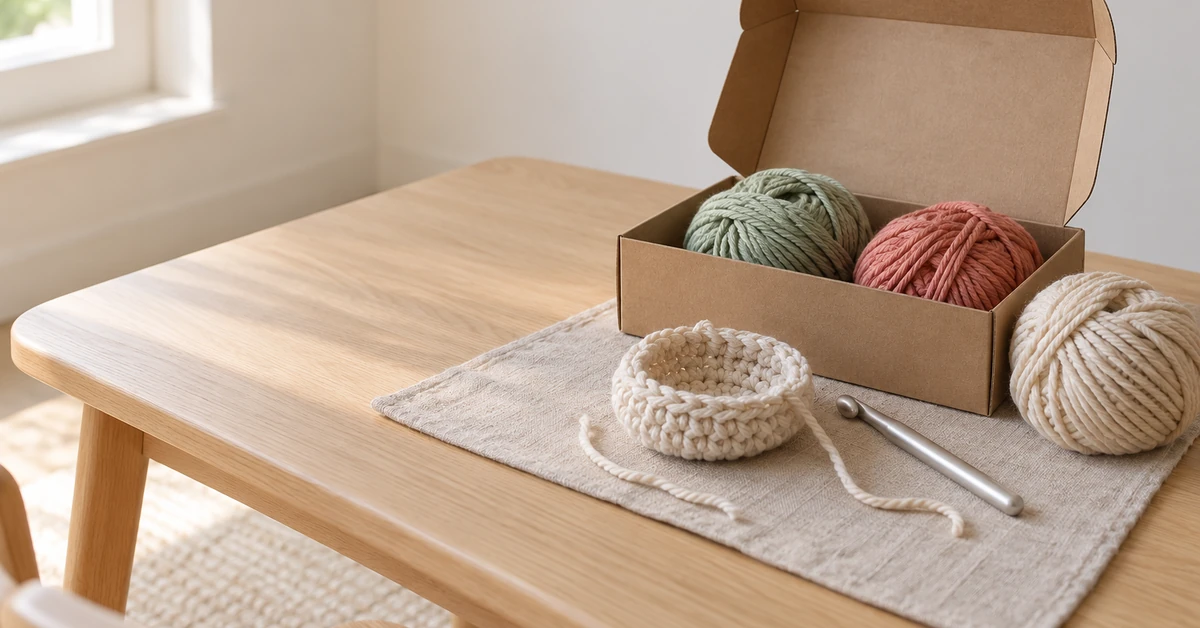
Packaging should keep needles secured, wool separated and instructions visible when the customer reopens the kit. A tray can improve presentation but may waste space; pouches reduce volume but may allow compression and mixing. Include a deliberate location for sharp tools after first use.
Needle felting kits wholesale also need barcode, market text, assortment and carton checks that remain tied to the approved technical kit.
For ecommerce distribution, consider a representative parcel test. The ISTA 3A overview explains that the procedure is a general simulation for individual packaged products in parcel delivery systems. Select testing according to the actual route and pack; it does not replace market compliance or misuse analysis.
Separate MOQ from development complexity
Wool colors, custom molded holders, printed boxes, accessory bags and manual assembly can each set a different minimum. Ask for stock-material, custom-material and finished-SKU MOQs. A small initial order may still require a larger purchase of printed packaging or custom colors held for later releases.
For private label felting kits, separate reusable common components from branded print commitments to reduce obsolete inventory when artwork changes.
Use staged samples: concept form, technical kit, independent user-test kit, packaging sample and pre-production sample. Lead time begins after the controlled bill of materials, warnings and artwork are approved, not when the first attractive felt figure is photographed.
Compare total cost, not the visible component count
Cost includes wool quality, needle protection, user testing, packaging, inspection, freight and support. Kits with many low-value accessories may look competitive on a checklist while weakening the actual felting experience.
- Core material performance and allowance.
- Needle and protective-holder reliability.
- Instruction development and translation.
- Testing, inspection and traceability.
- Packaging volume and transit damage exposure.
- Replacement, complaint and recall readiness.
Where Onehourcrafts fits
Onehourcrafts can support buyers working with a needle felting kit manufacturer by coordinating concept development, wool colors, tools, sample making, instructions and private-label packaging. A useful RFQ identifies intended user, destination market, project image, finished dimensions, color count, included tools, packaging, forecast and required documents. Ask for written needle control, wool specifications and complete-project approval evidence.
Custom needle felting kits should preserve design ownership, material codes, warning revisions and approved shape checkpoints in one controlled file set.
Related sourcing context is available in the Onehourcrafts felting category, batch traceability checklist and unboxing test checklist. Supplier-level experience should always be followed by SKU-level validation.
Frequently asked questions
What should a beginner needle felting kit include?
It normally needs suitable wool, identified needles, a stable work pad, protective storage, clear instructions and only the assembly parts required by the design.
Are finger guards enough for safe use?
No. Guards complement, but do not replace, suitable users, hand-position guidance, controlled needles, a stable pad, warnings and careful supervision where required.
How much wool should be packed?
Use complete-project consumption by color, then add a documented allowance for shaping variation and minor user loss.
How many needle types are necessary?
Include only types the instructions explain and the project uses. Multiple unlabeled needles can confuse beginners and complicate replacement.
Should plastic eyes be included?
That depends on design, user, attachment method and destination-market classification. Review small parts, retention and age claims before approval.
What is the best work pad?
There is no universal choice. Test density, penetration, stability, recovery, debris, durability, pack volume and compatibility with the supplied needles.
What drives MOQ?
Custom wool colors, printed packaging, molded accessories and manual assembly may each set minimums. Request a component-level explanation.
How long does sampling take?
Allow for material matching, complete making, instruction revision, user testing, compliance review and packaging approval.
Can designs and packaging be exclusive?
Use written ownership and confidentiality terms for artwork, patterns, photographs, molds, packaging files and permitted supplier use.
What should an inspector check first?
Prioritize exposed or loose needles, unreconciled counts, wrong warnings, missing components, wool contamination and incorrect instructions before cosmetic issues.
Release a controlled making experience
A qualified needle felting kit manufacturer should prove that wool, needles, pad, guards, instructions and packaging work together for the defined user. Product-specific safety review, complete-project trials and strict sharp-tool reconciliation create a stronger approval basis than assortment size or presentation alone.