
A workable seasonal embroidery kits wholesale plan starts with the final useful selling day, not the first design sketch. Seasonal inventory loses relevance on a visible calendar, so every approval must have a date, an owner, and a consequence for missing it. Work backward from shelf exit through delivery, packing, production, material booking, sampling, artwork, and concept approval.

Put the last selling day on the calendar
Define when shoppers stop valuing the theme at full price. A winter motif may sell beyond a single holiday, while a dated event design can expire immediately. The last selling day determines how much selling time remains after delivery and how much delay the program can absorb.
Then set three commercial dates: desired first shelf day, latest acceptable shelf day, and forced exit or markdown review. These are different. Treating them as one date hides the cost of late arrival.
| Calendar marker | Decision it controls | Evidence to keep |
|---|---|---|
| Last full-price day | Maximum useful selling window | Sales assumption and event date |
| Latest shelf day | Go, reduce, or cancel | Signed launch rule |
| Required warehouse date | Freight and receiving plan | Booked appointment and buffer |
| Production release | Material and capacity commitment | Approved sample and purchase order |
Build the reverse calendar in gates
Begin with the required warehouse date and subtract receiving, domestic transfer, import clearance where applicable, international transit, export preparation, packing, production, incoming material inspection, material lead time, and approvals. Add buffers where variation is real. A single optimistic lead-time total does not show which missed approval caused the delay.
- Lock the commercial selling window.
- Reserve warehouse and channel launch time.
- Select a freight path with a documented fallback.
- Set pack completion and production completion dates.
- Place sample, artwork, and material approvals before release.
- Assign an owner and escalation rule to every gate.
Choose a theme that can survive a delay
Specificity creates appeal but also expiry risk. A design with a printed year, named event, or narrow message may become unsellable. A broader botanical, winter, celebration, or gifting theme can sometimes remain useful for longer. Score theme strength against residual value rather than treating every seasonal idea alike.
Separate the permanent craft platform from the seasonal layer. Hoop size, needle, backing method, instruction format, and basic packaging construction may remain stable while thread palette, motif, sleeve, or insert changes. Reusing a validated platform can shorten development without pretending that the new artwork needs no review.
Freeze design variables in the right order
Lock decisions that affect other work first. Finished dimensions influence fabric, stitch count, thread quantity, hoop size, packaging, shipping volume, and photography. Color count affects sourcing and assembly. Instruction format affects translation and layout. Decorative copy should not hold up these structural choices.
| Freeze first | Then approve | Leave flexible longest |
|---|---|---|
| Technique and finished size | Fabric, hoop, thread palette | Supporting campaign copy |
| Stitch map and difficulty | Instructions and consumption | Minor decorative graphics |
| Pack footprint | Insert folds and component layout | Photography crops |
| Destination markets | Required labels and languages | Channel-specific stickers |
Reserve color-critical materials early
A seasonal palette often depends on precise relationships between several colors. Request physical thread cards or production materials under the lighting used for approval. Screen displays are poor evidence for subtle dye differences. Note fiber content, supplier color code, approved lot, substitution rule, and quantity allowance.
For embroidery kits wholesale, demand planning should include assembly loss, sampling, replacements, and possible rework. Ask which materials are stock, which are dyed or made to order, and when reserved inventory becomes a noncancelable commitment.
Use three samples for three different questions
A concept sample answers whether the motif is attractive. A functional sample answers whether the chart, thread lengths, needle, hoop, and instructions work together. A preproduction sample answers whether normal materials, printing, packing, and workmanship match the approved system. Calling all three "the sample" invites accidental approval.
- Concept gate: theme, size, palette direction, stitch style.
- Functional gate: complete one project from the provided contents.
- Preproduction gate: verify final components, artwork, labels, and pack-out.
- Shipment gate: inspect a defined sample from the finished lot.
Give artwork its own critical path
Packaging and instructions involve dielines, barcodes, claims, images, translations, warnings, and legal marks. Set separate deadlines for content complete, first layout, corrections, proof, and print release. Require reviewers to consolidate comments so contradictory changes do not circulate in parallel.
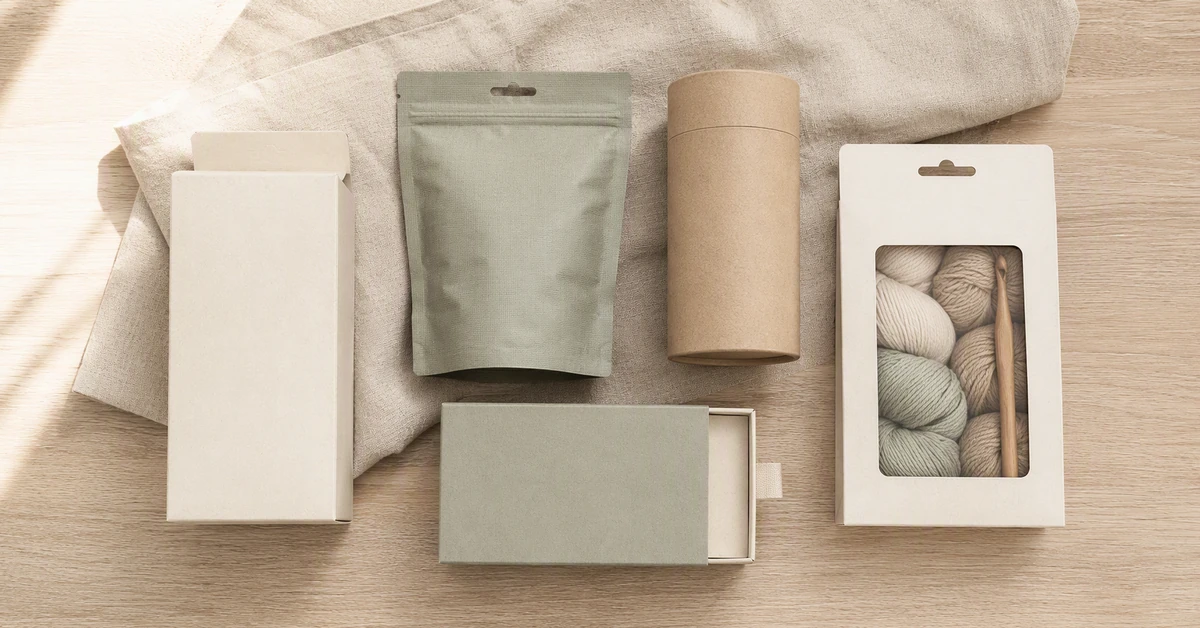
With custom packaging embroidery kits, confirm the final packed dimensions before printing. A late change in hoop, organizer, or folded insert can create bulging, hidden text, or a carton that no longer fits the planned case count. The retail packaging ideas guide helps teams evaluate communication and protection together.
Book freight against a decision deadline
Do not wait for production completion to discuss transport. Compare routes based on door-to-door timing, capacity risk, cutoffs, customs requirements, and the value of the remaining selling window. Set the last date on which an expedited option still makes commercial sense.
| Status at checkpoint | Possible action | Commercial question |
|---|---|---|
| On plan | Keep standard route | Is buffer still intact? |
| Minor delay | Prioritize packing or booking | Which gate can recover time? |
| Material delay | Approve tested alternative or reduce quantity | Will the product still match? |
| Window at risk | Split, expedite, postpone, or cancel | Does margin justify recovery? |
Plan regions as separate calendars
Countries and channels can have different event dates, climates, delivery networks, language needs, and promotion calendars. A single global launch date may create unnecessary urgency in one region and late stock in another. Maintain a shared product core, then attach market-specific artwork and shipment gates.
Confirm applicable product and labeling requirements by destination. The EU summary of the General Product Safety Regulation is a useful official starting point for EU planning, while U.S. sellers can consult the CPSC's art and craft safety guide. Qualified specialists should determine the actual obligations for the finished product.
Decide the late-launch rule before you need it
Write down what happens if the latest shelf date cannot be met. Options include reducing quantity, replacing dated packaging, shifting to another region, using the platform for an evergreen design, moving to a later season, or canceling. Each option needs a cost and approval owner.
- Never hide a forecast miss by silently changing the launch date.
- Do not expedite automatically; compare freight cost with recoverable margin.
- Do not ship obsolete claims or dates because artwork is already printed.
- Preserve traceability when repacking or changing market allocation.
Design the markdown decision with the launch
Seasonal planning is incomplete without an exit. Set review points for sell-through, weeks of supply, reorder viability, and markdown. The first review should occur early enough to change replenishment, not after the season has passed.
Use conservative demand scenarios. If one early channel sells faster, avoid draining stock needed for a committed second launch. Conversely, do not reorder simply because initial units moved quickly if the replenishment arrival would land near the end of relevance.
Keep traceability through a themed assortment
Seasonal ranges often share components, making substitutions easy to miss. Give each design and revision a unique finished-goods code, and each thread shade, fabric cut, insert, and pack piece a component code. Record which lots entered each production batch.
The craft kit batch traceability checklist provides a practical record structure. Keep approval dates, material lots, artwork revisions, inspection results, and shipping records connected rather than scattered across email threads.
Make completion time part of the calendar
A customer may buy before an event but need time to finish the project. Estimate completion using representative target users, not the fastest internal stitcher. Communicate skill level and approximate project commitment honestly. This affects gifting, workshops, promotional photography, and when retailers should begin selling.
When selecting a custom embroidery kit supplier, ask for a stitched sample produced from the actual instructions and portioned materials. A flat visual proof cannot reveal confusing stitch order, insufficient thread, or a hoop that loses tension. The embroidery hoop kit assortment guide adds practical checks for sizing and pack balance.
How Onehourcrafts can anchor the dated gates
Onehourcrafts can translate a launch window into sample, material, artwork, packing, and shipment checkpoints. A productive seasonal embroidery kits wholesale brief should include markets, shelf dates, theme lifespan, forecast range, target skill level, pack format, required languages, inspection expectations, and the decision rule if a gate slips.
Frequently asked questions
How far ahead should a seasonal kit be planned?
Work backward from the required warehouse date using real lead times for the specific materials, approval rounds, production capacity, packing, and route. There is no reliable universal number.
What is the most important date?
The last commercially useful shelf date is the anchor because it shows whether delays reduce selling time or eliminate the opportunity entirely.
Should the design include a printed year?
Only when that specificity creates enough value to justify leftover risk. A dated design has less opportunity for carryover or regional reallocation.
Can an approved evergreen kit shorten development?
Yes. Reusing a validated hoop, instruction format, pack structure, and component system can reduce uncertainty, but new artwork and materials still require appropriate checks.
When should packaging artwork start?
Content planning can begin early, but final dielines and claims should follow stable product dimensions, components, destination requirements, and photography.
How should late material substitutions be handled?
Evaluate color, function, labeling, safety, consumption, and customer expectation before approval. Record the change and update the bill of materials and reference sample.
Is faster freight always the best recovery action?
No. Compare the added freight cost with the selling time and margin it can recover. Quantity reduction, regional reallocation, postponement, or cancellation may be more rational.
What should a preproduction sample contain?
It should use intended production materials, final instructions, final artwork, labels, packaging construction, and pack-out so the complete offer can be approved.
How can retailers reduce leftover risk?
Use staged commitments where feasible, conservative scenarios, early sell-through reviews, adaptable themes, and predetermined markdown or reallocation rules.
Who owns the reverse calendar?
One accountable program owner should maintain it, while named approvers own individual gates. Everyone needs the same current version and escalation rules.
Let the calendar make the final decision
Approve seasonal embroidery kits wholesale only when the remaining timeline still supports a useful selling window, the functional sample works, materials are controlled, artwork is accurate, freight has a credible route, and the team knows what to do if the next dated gate is missed.