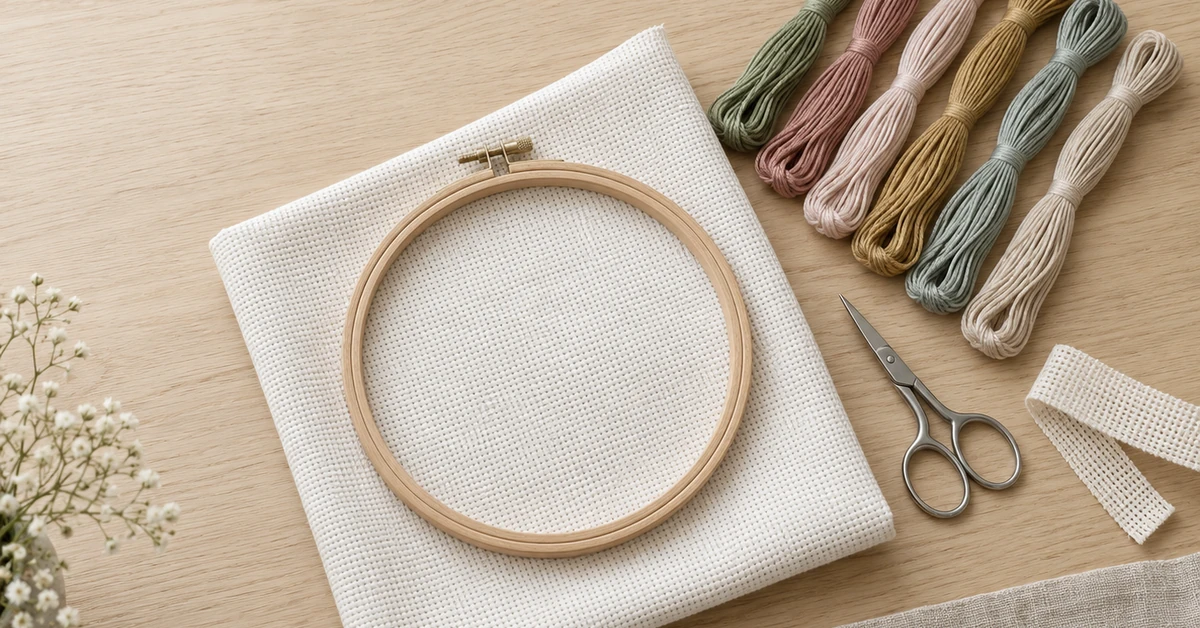

Choosing a yarn needle supplier wholesale program should begin with one practical question: can a strand travel through the eye, across the shaft, and out of the project without snagging, splitting, or forcing the user to fight the tool? A blunt label alone cannot answer that. Buyers need samples, representative yarns, simple repeatable tests, and pack-level evidence before approving a needle assortment.
Follow the strand, not the catalog label
Imagine the yarn's route as a continuous profile. It enters the eye, bends around the inner edge, rests against the shoulder, slides along the shaft, and follows the tip through fabric or stitches. A fault anywhere on that route can damage a soft yarn even when the needle looks polished in a product photograph.
Ask a supplier to submit needles from normal production, not only a hand-selected presentation set. Number the samples, record the lot, and test each with the same yarn lengths. The aim is not laboratory theater. It is a purchasing method that converts "smooth" and "easy to thread" into observations another reviewer can repeat.
- Photograph each needle beside a scale and note the stated size.
- Thread the same three yarn types through every sample.
- Pull a fixed length through the eye ten times.
- Inspect the yarn for fuzzing, flattened fibers, or broken plies.
- Record passes and failures by sample number and lot.
Draw the complete strand path
A profile drawing prevents the review from concentrating on the tip while ignoring the eye. Mark five zones: eye entry, inner eye, shoulder transition, shaft, and terminal tip. Photograph each zone under consistent light. When a strand frays, the team can return to the exact contact point rather than debate the general finish.
| Zone | Question | Useful evidence |
|---|---|---|
| Eye entry | Does bulky yarn enter without crushing? | Threading time and successful yarn range |
| Inner eye | Is any edge sharp or burred? | Repeated pull test and magnified photo |
| Shoulder | Does the yarn meet an abrupt ridge? | Slow-motion hand pull and fiber inspection |
| Shaft | Is the surface straight and consistent? | Roll test and diameter measurements |
| Tip | Does it separate stitches without piercing yarn? | Use test on specified materials |
Measure eye entry with real yarn
Eye dimensions are useful, but usable clearance matters more. Test smooth acrylic, loosely plied wool, and a structured cotton cord near the upper end of the promised range. Cut clean ends and frayed ends because customers encounter both. Record whether threading works by hand, requires a threader, or becomes impractical.
The smallest needle need not accept the bulkiest strand. The supplier does need to state a truthful range. A simple size-to-yarn matrix is more useful to support teams than an unqualified claim that every needle works with every yarn.
Make the inner edge reveal itself
A needle can appear bright and smooth while hiding a rough inner eye. Pull a dark strand through light-finished needles and a light strand through dark-finished needles, then inspect against contrasting paper. A repeatable tuft at the same position points to an edge problem. Rotate the strand through both sides of the eye to catch asymmetrical finishing.
- Reject any sample that visibly cuts a ply during normal hand tension.
- Separate cosmetic discoloration from a raised defect that catches fiber.
- Keep failed needles and yarn segments in a labeled evidence bag.
- Repeat the check after simulated transport, not only on fresh samples.
Check the shoulder under tension
The shoulder is where the narrow shaft widens around the eye. If that transition is abrupt, it can enlarge holes in a knitted piece or resist passage through plastic canvas. Test forward and reverse travel. Some profiles enter cleanly but snag when the user pulls the yarn back to correct a stitch.
Compare similar sizes from the same proposed assortment. Large visual differences may signal multiple tooling sources or weak dimensional control. That is not automatically a failure, but it should trigger a request for tolerances and lot-level consistency evidence.
Test shaft straightness and controlled flex
Roll straight needles on a flat glass surface and watch for wobble. Then apply a modest, defined side load that represents normal use. The needle should not stay bent after routine handling, yet an excessively brittle tool creates another risk. Do not improvise destructive strength claims from a few pieces; agree on a sampling method and acceptance criteria with the factory.
| Observation | Likely concern | Buyer response |
|---|---|---|
| Visible roll wobble | Bent shaft or uneven profile | Measure more samples across lots |
| Permanent bend in normal use | Insufficient stiffness | Review material and heat treatment |
| Sudden break under modest load | Brittleness or damage | Escalate safety and process review |
| Finish flakes after flexing | Coating adhesion problem | Pause approval and inspect residue |
Do not confuse a blunt tip with a finished tip
"Blunt" describes geometry, not surface quality. A rounded end can still carry a burr, a flat, or plating buildup. Run the tip gently over a tightly stretched scrap that matches the intended craft. It should separate spaces without shaving fibers. Test on knitting, crochet finishing, needlepoint canvas, or weaving according to the claimed use.
For adjacent tool comparisons, the crochet stitch marker wholesale guide shows how small finishing details affect handling. The same principle applies here: a low-cost accessory can determine whether the whole project feels controlled.
Turn sizes into a usable system
Numbers, colors, and length descriptions should remain consistent across the product, insert, web page, and replacement order. If two needle materials use different numbering conventions, explain the difference. Do not make the customer infer scale from a photograph.
- Print a full-size silhouette when packaging space allows.
- List length and approximate eye dimensions in one unit system, with a conversion if needed.
- Use color coding only as a secondary identifier because finishes can vary.
- Give each assortment position a stable internal component code.
Match needle material to the use case
Steel, aluminum, and molded plastic needles create different tradeoffs in weight, rigidity, eye size, price, and recovery if dropped. A metal needle may feel precise for seaming; a large plastic eye may be more approachable for chunky yarn. The right assortment can include more than one material if the packaging explains why.
For a companion review of yarn behavior, use the crochet kit yarn selection guide. Needle approval should use the actual yarn families the buyer sells, because a tool that passes with a smooth test cord may abrade a soft, loosely twisted strand.
Specify the assortment by jobs, not counts
Five needles are not automatically more valuable than three. Build the mix around tasks: joining medium yarn, weaving in fine ends, handling bulky yarn, or working through open canvas. Map each needle to at least one job and remove unexplained duplication.
| Assortment role | Desired trait | Validation task |
|---|---|---|
| Fine finishing | Slim shaft, controlled eye | Weave a tail through compact stitches |
| General seaming | Balanced length and grip | Join two swatches with mattress stitch |
| Bulky yarn | Large smooth eye | Thread and pull a thick soft strand |
| Canvas work | Appropriate tip and stiffness | Pass repeatedly through target mesh |
When evaluating tapestry needles wholesale, confirm whether the term describes a consistent geometry or merely a merchandising category. For bulk yarn needles, request the size distribution per carton, not just the total unit count.
Protect the needle after production
A clean needle can arrive scratched, loose, or missing if storage is an afterthought. The holder should retain every size through shaking while letting the customer remove one without scattering the rest. Moisture exposure, adhesive residue, and hard plastic contact can also affect finish over time.
Run a closed-pack shake test, a drop sequence appropriate to the retail pack, and a humid storage screen based on the selling environment. Then recount components. The craft kit storage stability test offers a useful framework for turning shelf-life assumptions into observations.
Inspect packs with a defect map
Define defects before the purchase order. Critical concerns can include sharp unintended edges, breakage during ordinary use, or missing warnings required for the market. Major defects might include wrong sizes, blocked eyes, corrosion, or missing pieces. Minor defects can cover small cosmetic variation that does not change use.
- Draw samples across the beginning, middle, and end of a packed lot.
- Verify count and size identity before functional testing.
- Test eyes, shoulders, shafts, and tips in the same order.
- Record defects by category, location, and sample number.
- Retain an approved reference set and the failed pieces.
Separate safety review from marketing language
Needles are functional pointed tools even when tips are rounded. Age grading, warnings, materials, packaging, and market classification require product-specific review. The U.S. Consumer Product Safety Commission provides an art and craft safety guide and separate information about children's products. These sources are starting points, not a substitute for qualified testing or legal advice.
Claims such as child-safe, unbreakable, rustproof, or hypoallergenic need suitable evidence. If the product is marketed to children, involve compliance specialists early and confirm the rules for every destination market. Keep documentation linked to the exact material, finish, supplier site, and production lot.
Build private-label information before artwork
For private label crochet tools, settle the assortment codes, dimensions, material names, country-of-origin information, warnings, barcode position, and replacement logic before visual design is locked. Artwork cannot repair an unstable component specification.
- Approved physical sample with signed date and revision
- Needle drawing or dimensional table
- Pack bill of materials and count standard
- Inspection method with defect examples
- Traceable artwork and labeling approval
How Onehourcrafts supports a repeatable approval
Onehourcrafts can organize samples around a strand-path review, align needle roles with the intended yarn range, and document assortment and packaging decisions before bulk approval. A useful yarn needle supplier wholesale inquiry should state the target customer, craft applications, yarn range, preferred pack, destination markets, estimated quantity, and evidence required from production samples.
Frequently asked questions
What makes a yarn needle eye easy to use?
Usability depends on the opening size, inner-edge finish, shoulder shape, yarn stiffness, and the user's ability to prepare the strand end. Test the promised range rather than relying on eye width alone.
Are plastic or metal yarn needles better?
Neither material wins every use. Plastic can provide a large eye and light feel; metal can offer a slimmer, stiffer profile. Choose by task and verify finish, strength, and storage.
How many sizes should a retail assortment include?
Include enough sizes to cover distinct jobs without unexplained duplication. Three clearly differentiated needles can be more useful than a larger mix with overlapping dimensions.
How can buyers find burrs inside the eye?
Pull contrasting yarn through both sides repeatedly, inspect the fibers, and photograph the eye under magnification. A repeatable catch or tuft deserves investigation.
Should every needle carry a printed size?
Direct marking is useful when feasible, but the holder and instructions can also create a reliable identification system. The system must survive removal and replacement.
What should be included in a golden sample?
Retain approved needles, holder, insert, packaging, printed color reference, measurements, revision data, and signatures. Store it so later lots can be compared consistently.
How should a buyer test needle strength?
Agree on a controlled method appropriate to the material and normal use. Compare multiple production samples and do not turn an informal bend check into an unsupported performance claim.
Can a blunt needle still damage yarn?
Yes. Burrs, rough plating, abrupt shoulders, or an undersized eye can abrade fibers even when the terminal tip is rounded.
What information belongs on the retail pack?
Show count, dimensions or sizes, intended tasks, material where relevant, warnings and age information as required, origin information, and a way to identify the product revision.
When should bulk production be approved?
Approve only after representative samples pass the defined checks, packaging survives handling, artwork matches the final bill of materials, and required compliance evidence is reviewed.
Make the purchase decision from recorded passes
Do not approve a yarn needle supplier wholesale program because a sample is shiny or inexpensive. Approve it when representative needles thread the stated yarns, protect fibers along the complete path, retain their shape in normal use, stay identified in the pack, and arrive with traceable evidence that purchasing and quality teams can use again.