
A crochet kit yarn selection guide should begin with the finished project and the beginner's hands, not with a supplier's color card. The right yarn must create the intended shape, pass through the selected hook comfortably, survive packing and storage, and remain consistent enough for repeat orders. Buyers can make that decision with a controlled swatch test instead of relying on fiber names alone.
Start with a project behavior brief
Write down what the finished object must do before asking for yarn samples. An amigurumi figure needs structure and controlled stitch definition. A scarf may need drape and softness. A small basket needs body, while a beginner flower kit benefits from clear stitches and short, manageable color changes. These requirements are more useful than a vague request for "good quality yarn."
The brief should name the target user, expected completion time, finished dimensions, hook size range, number of colors, care expectation and acceptable appearance variation. It should also state whether the project is decorative or handled frequently. A material that looks attractive in a supplier photo may pill, split or stretch when a novice works it.
- Shape: rigid, softly structured or flowing.
- Surface: smooth, fuzzy, matte, glossy or textured.
- User demand: easy stitch visibility, low splitting and comfortable tension.
- Commercial demand: stable shades, practical packing volume and repeat availability.
Build a small swatch laboratory
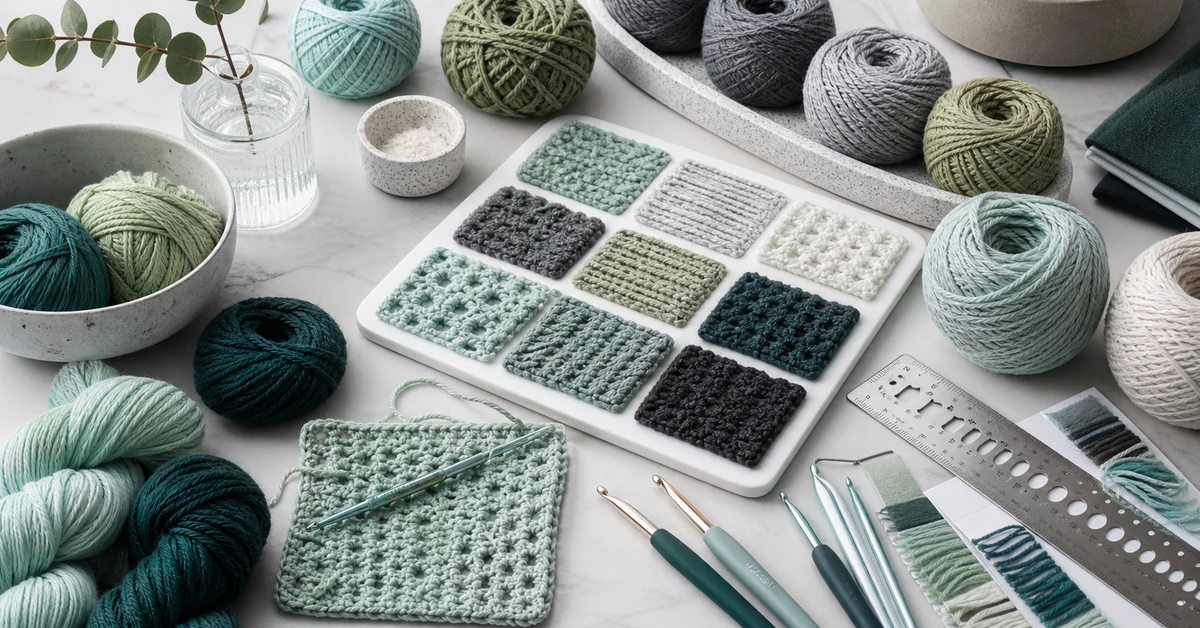
Ask the supplier for several candidates in the intended production colors and make the same test piece from each. Use the hook that would ship in the kit, the same stitch pattern and the same person where possible. Record starting yarn weight, number of stitches, number of rows, finished dimensions and time to complete. Photograph each swatch under the same light.
A useful swatch is large enough to reveal handling behavior. Ten quick stitches will not show whether the strand twists, whether a dark shade hides stitch placement or whether the fabric grows after resting. For shaped projects, create one representative curved or joined section as well as a flat square. The goal is not to produce a perfect object; it is to expose differences before the specification is locked.
Compare fiber by consequence, not reputation
Acrylic is common in retail kits because it offers broad color choice and can support consistent, accessible assortments. Cotton can provide crisp stitch definition and a natural hand, but its lower elasticity may feel less forgiving to some beginners. Wool and wool blends can feel warm and resilient, yet care instructions, sensitivity claims and shade variation deserve attention. Chenille or other plush yarns create an appealing soft surface but can hide stitches and make unraveling difficult.
No fiber is automatically best. The decision depends on the project, price position and user promise. Buyers should request the actual composition and avoid turning a material category into an unsupported performance claim. If a sustainability or safety statement will appear on the package, confirm the evidence and applicable market requirements separately.
| Candidate | Potential advantage | Watch point in a kit |
|---|---|---|
| Acrylic | Color breadth and accessible range building | Static, pilling and heat sensitivity vary by construction |
| Cotton | Clear stitches and firm surface | Weight, drag and limited stretch |
| Wool blend | Resilience and warm hand | Care, sensitivity and lot variation |
| Plush yarn | Soft, high-impact finished look | Hidden stitches and difficult correction |
Match yarn weight to hook and instruction math
The printed weight name is only a starting point. Two yarns described in the same broad category can produce different gauges because of twist, loft and fiber. Measure the actual candidate with the intended hook and use the result to calculate the supplied length. The kit needs enough yarn for normal variation in tension, joining and correction, not only the exact amount consumed by an expert sample maker.
Test the lowest and highest practical tension within the target user group. If a small tension change makes the finished piece too large for the supplied stuffing, frame or accessory, the system has little tolerance. Either revise the material, adjust the pattern or increase the component allowance. This is especially important when a kit combines yarn with fixed-size parts.
- Make a reference swatch with the proposed hook.
- Measure gauge after the swatch rests.
- Complete a full sample and record actual yarn consumption.
- Add a documented allowance for novice tension and minor rework.
- Confirm that the ball or skein format fits the package without damaging presentation.
Score beginner handling during use
Invite at least a few people close to the intended skill level to use coded yarn samples. Do not tell them which option is preferred. Observe where the hook catches individual plies, where the strand becomes fuzzy, whether the yarn pulls smoothly from its ball and how easily a mistake can be undone. Ask testers to describe the problem in their own words before giving them a checklist.
Score splitting, visibility, friction, knot frequency, unraveling recovery and hand comfort on the same scale. A slightly more expensive yarn may reduce instruction confusion and customer frustration; a cheaper yarn may still be suitable for a simple project with large, obvious stitches. The score makes that tradeoff visible instead of leaving it to personal preference.
Control shade and lot consistency
Approve physical standards for every color, then define how production lots will be compared. Review colors under consistent lighting and beside the finished project, because a small shade shift can be more obvious when adjacent pieces are joined. For multi-color characters or motifs, evaluate the relationship among colors as a group rather than approving each shade independently.
Ask how the supplier identifies dye lots, handles substitutions and keeps reference samples. A repeat order may use new lots, so the acceptable boundary should be documented before the first production run. Where exact shade continuity is critical, hold enough material for the planned batch or define a formal reapproval process. Digital screens are useful for discussion but should not be the only color standard.
Use a decision tree before approval
The final choice can follow a simple sequence. First reject any candidate that does not create the required project behavior. Then reject options that repeatedly split, snag or conceal stitches for the target user. Next check length allowance, color consistency, packing condition and commercial feasibility. Only compare small price differences after these gates are passed.
This version of a crochet kit yarn selection guide turns subjective impressions into an auditable product decision. Keep the winning swatch, full sample, yarn label, lot reference, measured gauge and approved color standard together. They become the control set for instructions, photography, incoming checks and future reorders.
Write a yarn approval record
Close the trial with one page that another team member can follow without interpreting the sample maker's memory. State the selected supplier reference, composition, construction, measured gauge, approved hook, shade standards, consumption allowance and packing format. Attach dated photographs, but identify the retained physical swatch as the governing appearance reference.
Use the record for every later sample and repeat order. If a requested substitution changes fiber, twist, source or shade, return to the relevant tests rather than accepting a similar description. A practical crochet kit yarn selection guide should leave the team with these controlled outputs:
- One signed swatch and one completed project sample.
- Measured gauge, finished size and yarn consumption data.
- Approved hook, color and ball-format references.
- Written rules for lot review, substitution and reapproval.
Where Onehourcrafts fits
Onehourcrafts presents its OEM crochet DIY kits as configurable sets with assorted yarn colors, hooks, yarn needles, measuring tools and organized storage. Product teams can use a swatch brief to discuss yarn color combinations and hook-set customization with a concrete reference rather than an open-ended request.
Before an inquiry, review the crochet kit MOQ guide, the crochet product sampling process and the guide to questions for a crochet kit supplier. Then send the project behavior brief, candidate yarn requirements, target hook, colors, estimated order volume and packaging concept through the contact page. Final material, claims and compliance decisions still need written approval for the destination market.
Frequently asked questions
How many yarn candidates should a buyer test?
Three to five well-chosen candidates are usually enough for a first comparison. Include meaningful differences in fiber, construction or weight rather than many nearly identical colors. Eliminate clear failures, then run full-project tests on the strongest one or two.
Should the yarn label weight determine the hook size?
No. The label provides a reference, but the proposed pattern, yarn construction and target fabric determine the working hook. Test the exact production candidate with the hook that will ship and revise the instructions from measured gauge.
How much extra yarn should a kit include?
There is no universal percentage. Complete multiple samples, include novice tension and reasonable correction, then set an allowance supported by measured consumption. Color changes, joins and shaped sections can affect the required reserve.
Is softer yarn always better for beginner kits?
No. Very soft or fuzzy yarn can conceal stitch structure and make mistakes difficult to reverse. Balance touch with visibility, splitting resistance and project behavior, then validate the choice with target users.
What should be kept as the approval standard?
Keep the approved yarn sample, dye-lot reference, color standard, measured swatch, completed project, hook specification and consumption record. Together they provide a stronger production reference than a digital photograph alone.