
International sourcing does not end when the factory finishes production. The buyer still needs a product classification, importer arrangement, commercial documents, freight plan, customs entry, payment of charges, destination delivery and a release decision for the received goods.
The safest way to understand how to import craft supplies from China is to map responsibility at every handoff. Write down who decides, who prepares the evidence, who submits information, who pays each cost and who can stop the shipment when a requirement is unresolved.
This guide is general operational information, not legal, customs or tax advice. Product rules and import procedures depend on the item, intended use, materials, origin, destination, value and current law. Use qualified customs brokers, compliance specialists and official government tools for the actual shipment.
Handoff 1: Define the imported product
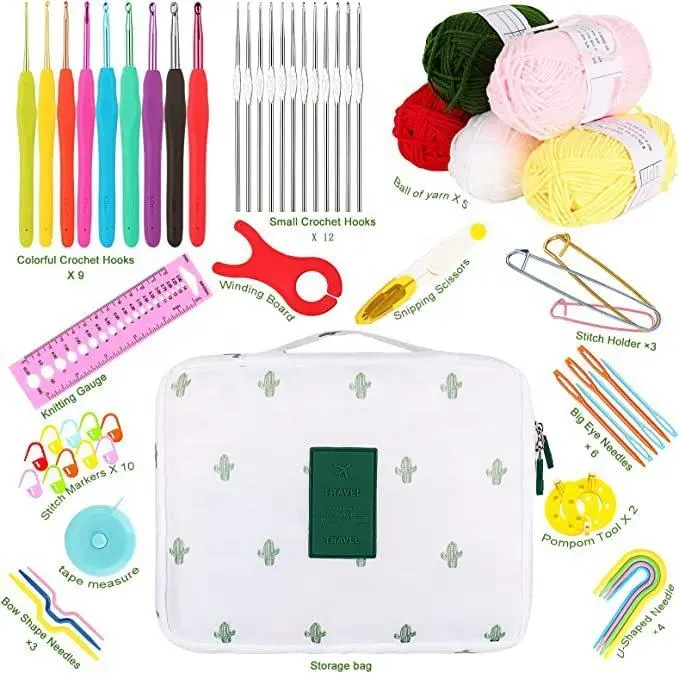
Do not begin with the supplier's broad catalogue description. Create a product file that describes the actual imported unit. A "craft kit" might contain yarn, tools, printed instructions, filling, small accessories and retail packaging. A "sewing set" might contain needles, scissors, thread, fasteners and a case.
Record:
- Product name and intended use.
- Intended and foreseeable user, including age positioning.
- Complete bill of materials and component quantities.
- Material composition and construction.
- Finished unit, set or kit relationship.
- Packaging, instructions and commercial claims.
- Country of origin and production site.
Classification and product compliance are related but not identical. A customs code supports tariff and entry decisions. Product classification for safety or labeling determines another evidence layer. Both should describe the same physical product.
Handoff 2: Confirm the importer and specialist roles
Identify the party that will act as importer of record or perform the equivalent legal role in the destination market. Do not assume the supplier, freight forwarder, marketplace or delivery company automatically accepts that responsibility.
Build a contact and responsibility map:
| Role | Typical responsibility | Decision to document |
|---|---|---|
| Buyer or brand | Product definition, market plan and commercial approval | What is being imported and under which sales model |
| Supplier | Production, packing and source documents | Which facts and files must be supplied before shipment |
| Importer of record | Entry accuracy, declarations and charges as required | Who accepts the legal importer role |
| Customs broker | Entry preparation and customs communication | What information and authorization the broker needs |
| Freight forwarder | Transport booking and shipment coordination | Route, mode, schedule and document cutoffs |
| Compliance specialist or laboratory | Market-specific product evidence | What must be completed before production or shipment |
For the United States, US Customs and Border Protection states that CBP and the importing community share responsibility for compliance and notes that particular commodities may have requirements from partner government agencies. Confirm current obligations for the product.
Handoff 3: Determine classification, duties and restrictions
Ask a qualified customs professional to review the product description and proposed classification. Do not select a code because a similar online listing used it. Sets, mixed materials and the component that gives a kit its essential character can create classification questions.
Use official tools as research inputs:
- The US International Trade Commission Harmonized Tariff Schedule for US tariff references.
- The European Commission's Access2Markets tool for EU trade conditions and rules of origin information.
- The official UK Trade Tariff for UK commodity and duty research.
Check current duty, tax, trade-remedy, quota, licensing, origin and agency requirements. A low-value shipment rule or simplified process may change; do not build a long-term purchasing model around an unverified threshold.
Handoff 4: Complete the market-readiness file
Before shipment, confirm that the product, labels, instructions and documents meet the destination-market plan. A customs release does not prove that a product is legally ready for sale.
The file may include:
- Product definition and intended user.
- Bill of materials and controlled specifications.
- Risk assessment and test plan.
- Test reports and sample identification.
- Required declarations, certificates or registrations.
- Labels, warnings, instructions and translations.
- Importer, responsible-party or other economic-operator information.
- Origin marking, traceability and production records.
Use the craft product compliance requirements decision tree to organize classification and evidence questions. Obtain market-specific professional advice before production release.
Handoff 5: Agree the commercial and shipping term
The delivery term affects cost, control and responsibility, but it does not automatically transfer every legal obligation. Record the named place, version of the agreed term, included charges and handoff point in the purchase order or contract.
Ask for a written cost and task breakdown covering:
- Product and packaging.
- Export packing and origin handling.
- Export documentation.
- Main freight and fuel or security surcharges.
- Insurance if arranged.
- Destination handling and terminal charges.
- Brokerage, duties, taxes and government fees.
- Inspection, storage, demurrage or delay exposure.
- Final delivery and unloading.
Do not compare a factory price with a delivered quotation as if they include the same scope. Normalize the cost and responsibility before selecting the offer.
Handoff 6: Build a document pack before booking
The broker and forwarder should review the information before the shipment deadline. Typical commercial documents may include the commercial invoice, packing list, transport document, origin information and product-specific files. Exact requirements vary.
The commercial invoice should use a clear product description, quantity, unit value, total value, currency, origin and agreed terms. The packing list should reconcile units, cartons, dimensions and weights. Product descriptions should be consistent across documents.
Create a pre-booking document review rather than waiting until the goods reach the port. Missing or inconsistent information can cause delays, amendments and storage costs.
Handoff 7: Inspect against the approved order
Customs documents do not replace product inspection. Define the inspection plan before production. Check quantity, assortment, workmanship, dimensions, kit completeness, labels, barcode, packaging, master cartons and shipment marks.
For custom crochet or craft kits, compare production with the sealed sample and approved bill of materials. Use the amigurumi quality scorecard for character products and product-specific checklists for tools or kits.
State who can approve concessions and what happens to rejected goods. A shipment should not leave merely because the booking date has arrived.
Build a landed-cost worksheet
A practical plan for how to import craft supplies from China should compare the cost per sellable unit at the destination, not only the factory unit price.
| Cost layer | Working input | Control question |
|---|---|---|
| Product | Unit price, tooling, samples and packaging | Are all quoted products equivalent? |
| Origin | Handling, documents and inland transport | Which charges are included in the term? |
| Freight | Air, sea, rail or courier charges | What volume, weight and surcharge assumptions apply? |
| Border | Duty, tax, fees and brokerage | Has classification been professionally reviewed? |
| Destination | Handling, delivery, storage and receiving | Who pays when clearance or delivery is delayed? |
| Quality risk | Inspection, damage, rework and shortage allowance | What loss assumptions are visible? |
Divide the total by expected sellable units, not merely shipped units. Include realistic damage, shortage or quality assumptions where relevant. Update the worksheet after the packed sample confirms carton dimensions and gross weight.
Use four shipment release gates
- Product gate: final specification, sample and inspection criteria approved.
- Market gate: required evidence, labels and instructions approved.
- Import gate: importer, classification, broker data and document plan confirmed.
- Logistics gate: booking, cost, insurance, cartons and delivery plan confirmed.
Give each gate a named owner. When a gate is incomplete, record the risk and decision rather than assuming another party will resolve it later.
Common import planning mistakes
Using a vague invoice description
"Craft goods" may not give the broker enough information. Describe the actual product and materials consistently.
Letting freight timing override product approval
A missed vessel is visible; an uncontrolled product problem can be more expensive. Keep release authority clear.
Assuming delivered shipping removes buyer responsibility
Commercial delivery scope and legal importer obligations are not the same question. Confirm both.
Calculating duty from the wrong value or code
Use qualified advice and current official sources for valuation and classification.
Ignoring package volume until production
Package and carton dimensions can materially change freight cost. Estimate early and confirm with packed samples.
Where Onehourcrafts fits
Onehourcrafts supports OEM/ODM development for crochet DIY kits, crocheted products, sewing sets and other craft formats. Buyers can define materials, contents, instructions, packaging, labels, cartons, samples and inspection requirements before shipment.
The craft kit sourcing guide covers supplier and quotation decisions, while this import map focuses on the handoff from approved order to destination release.
Frequently asked questions
Do all craft supplies use the same customs code?
No. Classification depends on the actual product, materials, set composition and applicable rules. Ask a qualified specialist.
Can the supplier choose the customs code?
The supplier can provide product facts and a suggested code, but the responsible importer should confirm entry accuracy with its broker or adviser.
Does customs clearance prove the product can be sold?
No. Customs release and product-market compliance are separate responsibilities, even though they use some of the same product information.
When should a freight quote be requested?
Estimate during development, update after the packed sample, and confirm before booking with current carton, route and schedule information.
Should small shipments skip inspection?
Order size changes the inspection approach, not the need for control. Use risk, product complexity and supplier evidence to choose an appropriate method.
Control every handoff
The operational answer to how to import craft supplies from China is to connect product definition, importer responsibility, classification, market evidence, documents, freight, inspection and landed cost. A written handoff map prevents critical tasks from disappearing between the buyer, supplier, broker and forwarder.
Contact Onehourcrafts with your product, quantity, destination market, packaging, delivery term and document requirements to discuss an OEM/ODM production and shipment plan.