
A private-label kit is not a standard product with a logo added at the end. The customer experiences the contents, instructions, package, brand promise and finished project as one offer. If those parts are developed separately, the sample may look complete while the launch still has missing decisions.
The most reliable way to learn how to source private label craft kits is to run five workstreams together: product, learning experience, packaging, market readiness and supply planning. Each workstream needs an owner, an approval document and a clear dependency on the others.
This launch canvas helps retailers, subscription programs, gift brands, educators and eCommerce sellers move from an idea to a controlled sample without turning the supplier into the default decision-maker for every part of the offer.
Begin with a one-page commercial brief
Before discussing yarn colors or box shapes, define the customer and the commercial job. The brief should answer:
- Who is the intended user and what experience do they already have?
- What will the customer make, repair or learn?
- How long should the project take?
- Where will the kit be sold and stored?
- What retail price, margin and first-order quantity are being tested?
- Which launch markets, languages and channels are included?
A useful brief describes the outcome rather than prescribing every component. "A giftable beginner crochet kit that produces one recognizable character in a weekend" gives the development team a clearer target than "put yarn and hooks in a box."
Workstream 1: Define the product system
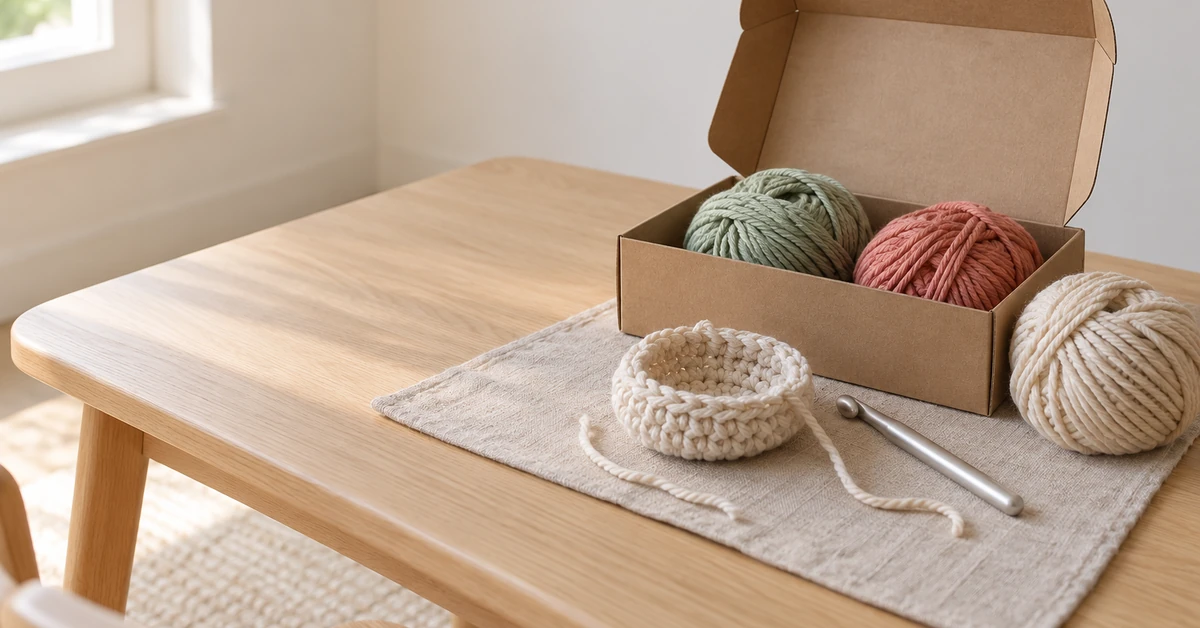
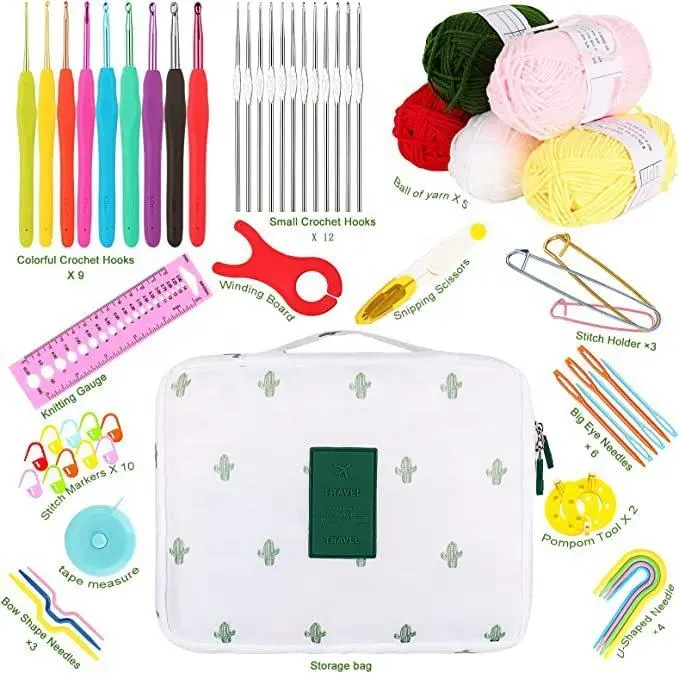
Build a bill of materials that connects every component to the customer task. For a crochet kit, this may include yarn, hooks, needles, stitch markers, filling, accessories, instruction cards and storage. For a sewing or repair kit, it may include thread, needles, fasteners, scissors, measuring tools and a case.
For each component, record:
- Function in the project.
- Material, dimensions, color and finish.
- Quantity per kit.
- Approved supplier or substitution rule.
- Quality check and acceptance limit.
- Relationship to testing, claims or labeling.
Separate essential contents from promotional extras. A lower-cost accessory is not useful if it confuses the project or creates another quality failure point. The product owner should approve the full list before the package dieline is locked.
Workstream 2: Design the learning experience
Instructions are part of the product. Define the starting skill, expected project time, techniques, finished size, care, troubleshooting and the point at which a beginner is most likely to stop.
Choose the teaching format intentionally:
- Printed step-by-step booklet.
- Folded card for a short project.
- Pattern sheet with diagrams and abbreviations.
- Video or QR support combined with essential printed information.
- Multilingual inserts for several markets.
Test the instructions with someone who matches the intended user and has not seen the sample process. Record where the tester hesitates, uses the wrong component or interprets the image differently. A successful maker is stronger evidence than a beautiful instruction layout.
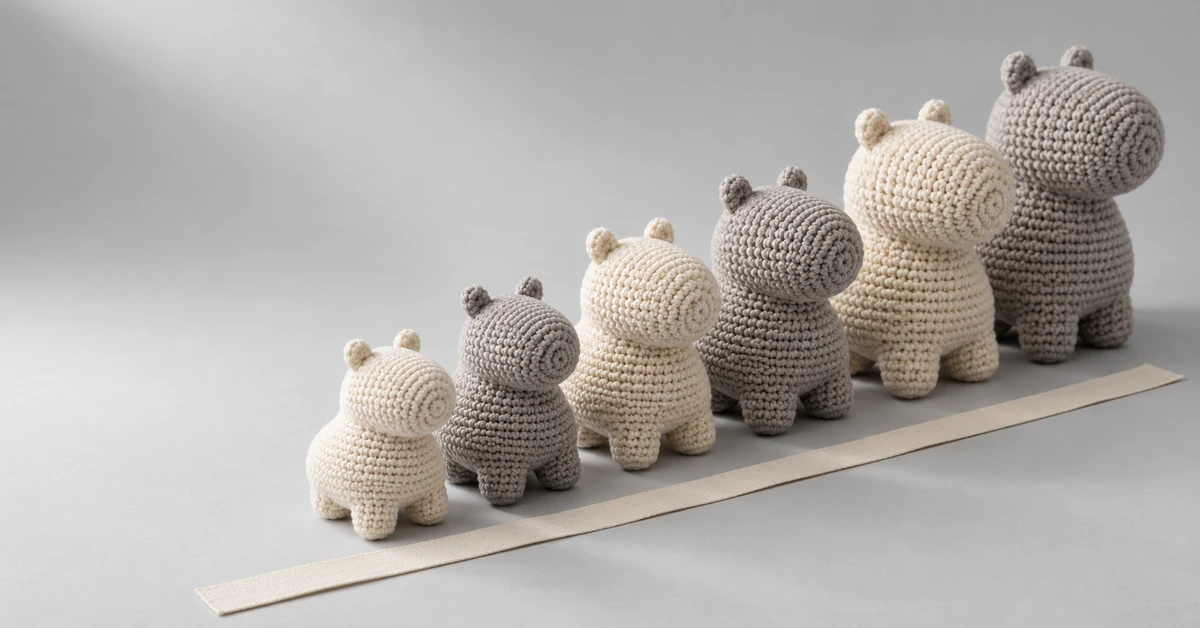
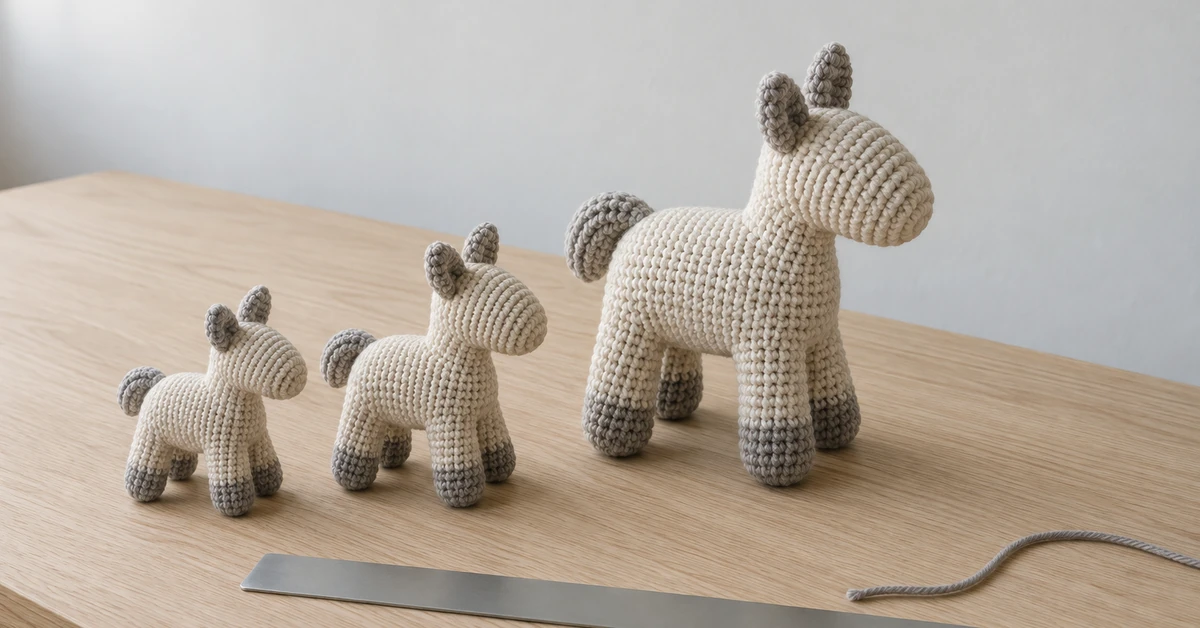
When the finished result is visible on the package, confirm that the supplied materials and directions can reasonably produce that result. Photography should not promise a scale, texture or detail level the kit cannot deliver.
Workstream 3: Engineer the package
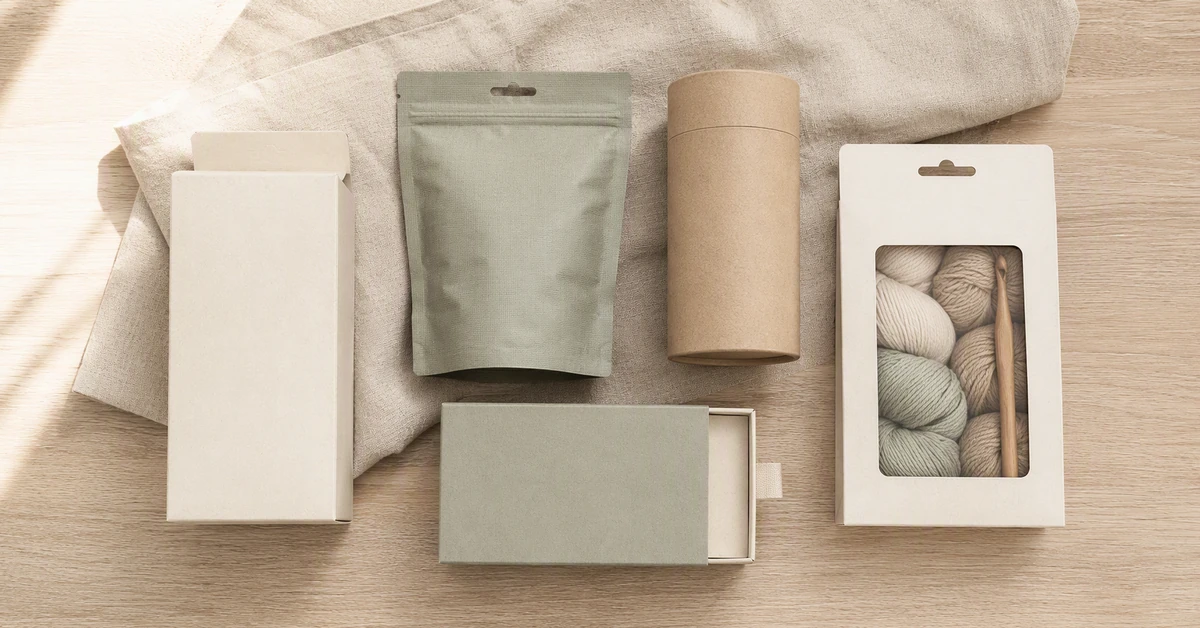
The package must contain, explain, protect, brand and transport the kit. Start from the physical contents and sales channel, then choose the format. A compact pouch may support portability; a window box may improve shelf communication; a reusable organizer may add value for tool-heavy kits.
Approve a packed sample and check:
- Component organization after normal handling.
- Visibility of the finished project and key contents.
- Space for instructions, barcode, labels and required information.
- Protection against crushing, abrasion, moisture or tool movement.
- Master-carton efficiency and eCommerce shipping needs.
The retail packaging ideas guide compares customer-facing formats. The new package specification should also define board, pouch or case material, dimensions, print process, finish, insert structure and sealing method.
Workstream 4: Map market readiness
Classification, intended user, market, components and claims determine the evidence plan. A supplier can provide material and process information, but the brand should define legal roles and obtain qualified advice for the destination market.
Create a market-readiness file containing the product definition, age positioning, bill of materials, risk questions, test plan, labels, instructions, importer or responsible-party information, country-of-origin marking where applicable and the final listing copy.
Do not treat a social audit as product compliance. The craft product compliance requirements decision tree explains how classification connects to testing and documents. Factory due diligence, quality control and product compliance should support one another without being confused.
Workstream 5: Build the supply and cost plan
Private-label cost is created by several minimums: finished kits, custom colors, printed items, components and packaging. Ask the supplier to separate them. One component may create leftover stock even when the finished-kit MOQ looks acceptable.
Build three scenarios:
| Scenario | Purpose | Key decision |
|---|---|---|
| Focused launch | Test one design or a narrow color range | Reduce SKU and printed-material complexity |
| Balanced range | Offer meaningful choice without excessive inventory | Share components and package structures |
| Growth range | Prepare repeat orders and seasonal expansion | Book materials and protect replenishment timing |
Include sample charges, artwork, printing, inspections, testing, freight, duties, storage and potential leftover materials in the decision. The crochet kit MOQ guide provides a framework for comparing finished-product and component minimums.
Give every workstream an owner and release document
A launch canvas for how to source private label craft kits should make ownership visible. The supplier may support several activities, but the buyer still needs an internal decision owner.
| Workstream | Primary release document | Typical owner |
|---|---|---|
| Product system | Approved bill of materials and product specification | Product or buying team |
| Learning experience | Tested instruction master and language files | Content or product team |
| Packaging | Packed sample, dieline and print approval | Packaging or brand team |
| Market readiness | Evidence, labels and listing approval | Compliance or legal owner |
| Supply plan | Costed quantity scenario and purchase plan | Buying and operations |
When the same person owns several workstreams, keep the documents separate. A change to yarn color can affect product approval, photography, packaging artwork, testing coverage and the purchase plan.
Run three dependency reviews
Review 1: Before the first sample
Confirm the commercial brief, preliminary contents, intended user, market, instruction direction and package concept. Record assumptions that still affect price or timing.
Review 2: Before the printed package sample
Confirm the working product, finished result, dimensions, bill of materials, instruction space, required labels and package structure. Do not print final artwork around an unstable product.
Review 3: Before production release
Confirm the sealed sample, final documents, packaging, barcode, master carton, inspection criteria, quantities, delivery terms and change-control rule.
These reviews prevent a common pattern: one team approves the product while another is still changing the package or instructions.
Use change control after approval
List the changes that require written approval: yarn, fabric, filling, tool, accessory, color, supplier, construction, instructions, packaging, claims, age positioning and production site. Ask whether the change affects tests, cost, lead time, photography or listing content.
A supplier should not substitute a component merely because it appears similar. The buyer should not change the package promise without checking whether the product and evidence still support it.
Separate standard, modified and fully custom decisions
Mark every element as standard, modified or fully custom. A standard hook, existing yarn color or proven storage case can reduce development time. Modified instructions, selected color combinations and branded inserts create differentiation without rebuilding the entire system. Fully custom patterns, tools, colors or structures need additional sampling, minimums and control.
This classification improves quotation comparison. One supplier may quote an existing product with branded packaging while another assumes new materials and construction. Record which decisions are included in the price and which remain provisional.
Review the classification again after the first sample. A custom feature that adds little customer value may be simplified, while a standard component that weakens the experience may require tighter control. Private label should concentrate customization where the customer can understand and value it.
Where Onehourcrafts fits
Onehourcrafts supports OEM/ODM development for crochet DIY kits, sewing products and other craft formats. Projects can include custom contents, materials, color combinations, instructions, branding inserts, retail packaging, labels and production support.
For the wider sourcing sequence, see how to source craft kits from China. That guide covers early supplier and quotation decisions, while the launch canvas above coordinates the connected private-label deliverables.
Frequently asked questions
Should the logo be added before the product is finalized?
Brand direction can begin early, but final artwork should follow stable product dimensions, contents, claims and required information.
Who should write the instructions?
The supplier can provide technical process input, while the brand should control customer language, learning level, translations and final approval.
Can several designs share one package?
Yes, when dimensions, contents and required information remain compatible. Use labels or inserts carefully so customers can identify the exact project.
What is the best first-order range size?
It depends on channel, price, MOQ and customer demand. A focused group with shared components is often easier to test than many unrelated SKUs.
When should freight be estimated?
Estimate it during package development and update it after the packed sample and master-carton configuration are confirmed.
Launch one connected offer
The core method for how to source private label craft kits is to coordinate the product, learning experience, package, market evidence and supply plan. When those workstreams share owners and release documents, the final sample represents a launchable offer rather than an attractive collection of parts.
Contact Onehourcrafts with your target user, project, quantity, market, contents, branding and launch date to discuss a private-label kit development plan.