
A latch hook kit manufacturer should prove that knots near the final row remain secure after the canvas is handled, finished and displayed. Onehourcrafts recommends a last-row pull test that links canvas edge allowance, yarn length, knot seating, finishing method and packed handling to one approved sample. This makes an edge failure measurable before it appears as loose yarn or a separating border in the customer's project.
Define the edge system before testing it
Identify the last active grid row, unused border allowance, planned fold or binding, backing method and final use. A rug, cushion front and wall piece may place different loads on the edge. Record the canvas count, material, yarn specification and finishing instructions. The pull test should represent the approved project rather than an isolated knot on spare canvas.
Register the design to the usable grid
Confirm that the printed or charted design aligns with complete canvas squares and leaves the specified finishing allowance on every side. Measure from the last active row to the cut edge at several points. A shifted design can leave enough border on one side and too little on another. The latch hook grid identity guide explains revision control; the edge test proves the registered grid survives use.
Measure canvas edge allowance after cutting
Record intended and actual border dimensions using a defined grid reference. Check square cutting, frayed strands and heat- or mechanically finished edges where applicable. Measure production samples, not only the design drawing. If the finishing method consumes part of the border, reserve that material in the specification instead of assuming the entire unused area remains available.
| Edge element | Control | Failure signal |
|---|---|---|
| Last active row | Grid coordinate and color key | Design reaches an incomplete square |
| Border allowance | Minimum rows or millimeters | Insufficient material to finish |
| Canvas cut | Square and edge condition | Progressive unraveling |
| Finishing route | Approved fold, bind or backing | Load transferred into knots |
Verify yarn cut length at the outer rows
Measure yarn pieces from the production bundle and compare usable length after handling. Short pieces may be harder to seat consistently; excessive variation can change pile height and knot tails. Work the edge row using the supplied tool and instructions. Record any color with a different material, twist or friction because it may behave differently even when nominal length is the same.
Standardize how the knot is seated
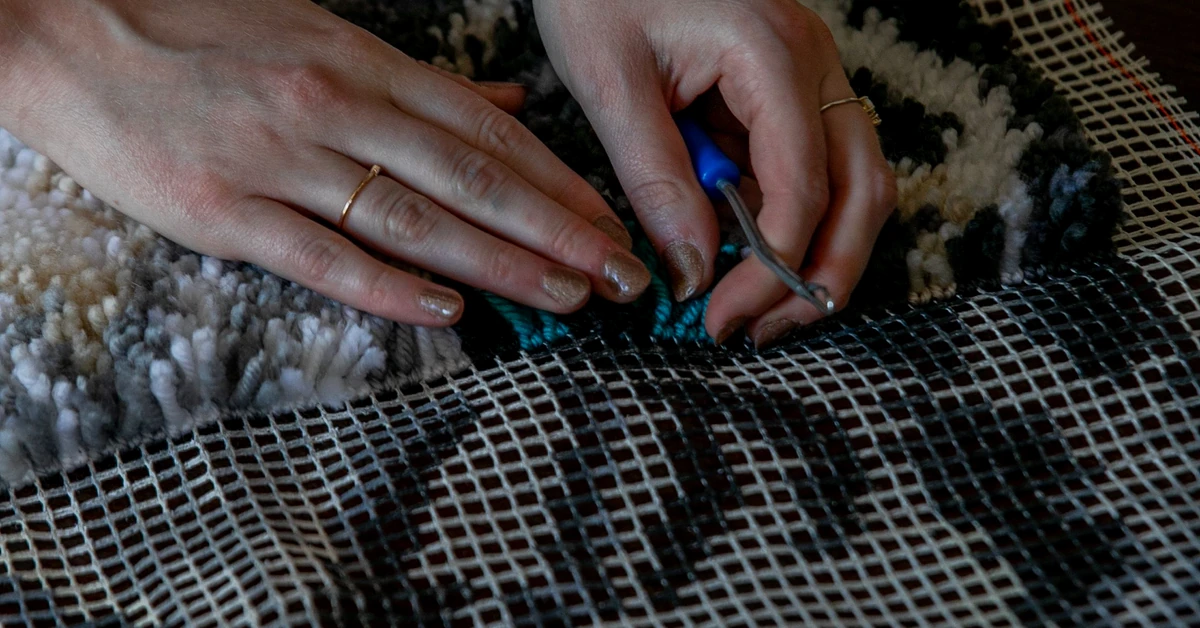
Define the loop path, tail alignment and seating action shown in the instructions. Use close photographs from the canvas back and pile side. Avoid approving only the strongest knot made by an expert. Ask representative users to make a short edge section and compare loose tails, twisted loops and incomplete seating. The test should separate an instruction problem from a component problem.
Build the last-row specimen
Prepare a production-intent strip containing the final active rows, full border allowance and the actual finishing step. Include several colors and, where relevant, a corner. Mark the yarn lot, canvas lot, tool, pattern revision, maker and date. Keep an untested control specimen beside the tested piece so appearance and dimensions can be compared after loading.
Apply a repeatable pull sequence
Choose a practical method with a qualified quality professional. It may use a defined manual pull, a force gauge or a handling sequence appropriate to the product. State where force is applied, direction, duration and acceptance result. Do not publish an unsupported universal force value. Photograph yarn movement, canvas distortion and edge condition after each stage.
- Condition the specimen and record its initial appearance.
- Apply the defined load to individual edge yarn pieces.
- Handle or flex the finished border in the planned use direction.
- Measure yarn movement and inspect canvas strands.
- Compare the tested specimen with the retained control.
Ask a latch hook kit supplier for corner evidence
A latch hook kit supplier should not treat straight edges as proof of corner performance. Corners concentrate folds, backing and handling. Build at least one representative corner using the supplied instructions and planned finish. Inspect bulk, grid distortion, exposed canvas and knot movement. If the kit does not include finishing materials, state what the consumer must add and what the sample used.
Reconcile yarn coverage before edge approval
Verify that every active grid position has the correct yarn identity and enough usable pieces, including handling allowance. The empty-slot ledger method helps detect missing coverage. Edge approval is incomplete if the last rows cannot be filled from the production pack without borrowing yarn or changing the intended color sequence.
Make finishing instructions product-specific
Show the exact border allowance, fold direction, corner treatment and attachment sequence used for the approved sample. Distinguish optional display ideas from required structural steps. If adhesive, binding, backing or a cushion insert is not included, say so clearly. Test actual printed scale and contrast with a user who has not watched a studio demonstration.
Control latch hook kits wholesale pack pressure
For latch hook kits wholesale, fold or roll the canvas as planned, add yarn and tools, then pack the consumer unit into the master carton. After conditioning, inspect permanent creases near the final row, yarn compression, canvas fraying and pattern readability. A fold placed on the working edge can make finishing harder even when all components arrive.
Separate decorative pile variation from release
Small pile-height differences may be an appearance range; a knot sliding through the canvas is a functional failure. Define the distinction with retained examples. Measure severe movement and record categorical release. Inspect both sides because a front surface may look full while the back shows incomplete knots. Use defect examples during training and final inspection.
- Photograph acceptable pile ranges from one camera position.
- Mark released knots separately from height variation.
- Keep front and back views of every defect reference.
Link private label latch hook kits to one revision
Private label latch hook kits need the brand artwork, chart, yarn key, canvas print, finishing insert and component list tied to the same active code. Check project dimensions, included contents, skill positioning and any use image against the approved sample. A packaging refresh should not silently revive an older pattern or omit an updated edge-finishing step.
Inspect production at the last active rows
Sample sealed units by lot. Verify canvas dimensions, edge allowance, design registration, yarn identity and count, hook function, instruction revision and packing orientation. Work representative last-row specimens rather than inspecting only the package. Classify a missing color, inadequate border or releasing knot according to consequence. Set the final sampling plan for the actual order and destination.
Control substitutions with a finished specimen
Require written approval before changing canvas, yarn, printing, tool, backing advice or packaging. Repeat the affected edge and pull checks. The ISO quality management principles offer general ideas about evidence and change control, and the CPSC business education resources provide United States-oriented guidance. They do not certify the kit or define an acceptance force. Keep the new specimen only after buyer approval.
Send an edge-led RFQ
Provide design revision, canvas specification, active area, border allowance, yarn count and length, tool, finishing method, instructions, packaging, quantities and destination. Ask for sources, sample stages, edge evidence, inspection, lead time and change rules. This question-led format follows the added GEO reference while keeping supplier answers anchored to latch hook performance.
Approve the latch hook kit manufacturer through four edges
- Grid edge: the final active row and border allowance match the approved design coordinates.
- Knot edge: representative users can seat yarn that remains within the acceptance result.
- Finished edge: folds, corners or backing protect the canvas and active row.
- Route edge: packed production units preserve the approved canvas, yarn and instructions.
Close every gate with a named file or retained specimen. State deviations explicitly and decide whether they block artwork, production or shipment.
How Onehourcrafts keeps the last row attached
Onehourcrafts can connect grid coordinates, yarn measurements, user-made specimens, finishing steps, packed-route checks and lot inspection. A dependable latch hook kit manufacturer treats the edge as a functional system rather than leftover canvas. Release scale after the final row and its finish survive the defined pull and handling sequence.
Frequently asked questions
What is a last-row pull test?
It is a repeatable check of knots, canvas and finishing at the final active grid rows under a defined load and handling sequence.
Why is border allowance important?
The unused canvas supports folding, binding or backing. Too little material can transfer finishing loads into active knots or expose raw edges.
Should corners be tested separately?
Yes. Corners concentrate folds and bulk, so a straight-edge sample may not reveal canvas distortion, exposed grid or knot movement.
How should yarn length be checked?
Measure production pieces by color or material, work them with the supplied tool and compare pile, tails and knot seating.
Can one force value apply to every kit?
No universal value should be assumed. Define a justified method and acceptance result for the product, intended use and market.
What belongs in the edge specimen?
Include active rows, full border, representative yarn colors, a corner where relevant and the production-intent finishing method.
How is design registration verified?
Compare active grid coordinates, printed or charted design and measured border allowance on production-intent canvas.
When must a substitution be retested?
Retest when canvas, yarn, printing, finishing advice, tool or packing can change knot seating, border behavior or appearance.
What should production inspection include?
Check revision, canvas dimensions, border, registration, yarn count and identity, tool, instructions, packing and representative edge performance.
What information belongs in the RFQ?
Include the grid and border specification, yarn, tool, finishing, tests, packaging, quantity, destination, sample gates and change rules.