
Latch hook pillow kits wholesale offers should be approved as complete six-sided objects, not as attractive hooked fronts. The pile surface, four edges, backing, closure, insert relationship and retail pack determine whether the customer can turn a craft panel into a usable cushion without hidden sewing steps or fit problems.
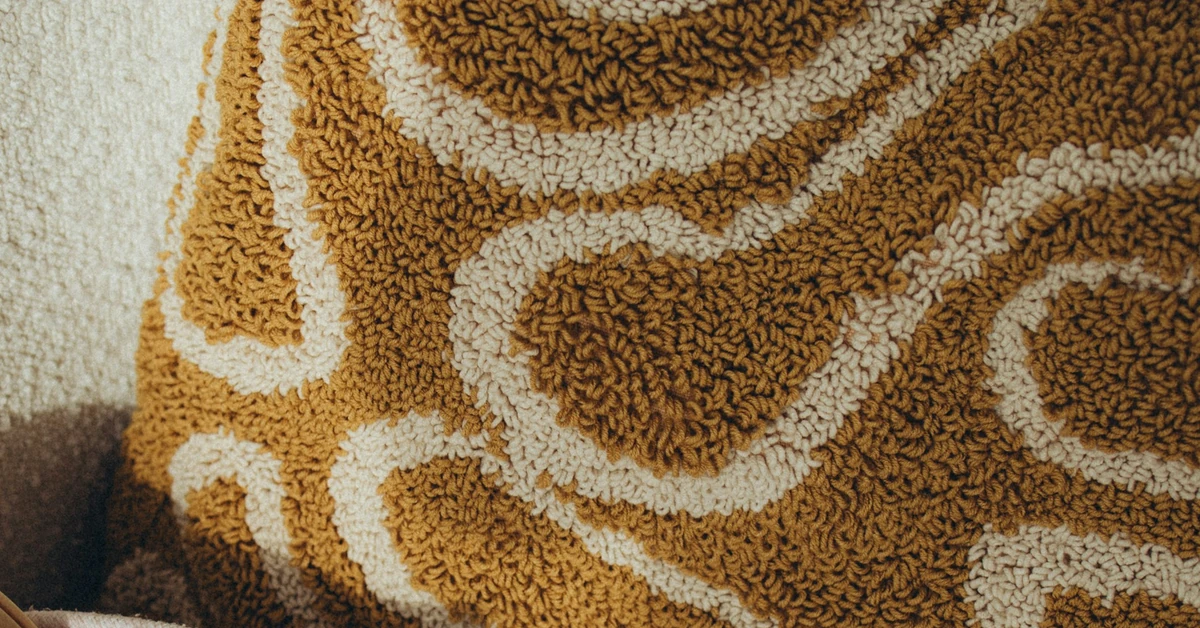
Turn the finished sample over
Start the review from the back. Confirm whether the kit makes a pillow cover, a stuffed pillow or only a latch-hook panel. List everything required after the hooking ends: trimming, edge finishing, joining, closure, insert, filling and care. If the customer must sew a backing or buy an insert, that requirement belongs on the package before purchase.
A plush front can distract a buyer from an unfinished perimeter. The first approval photo set should therefore include front, back, all four edges, closure, interior and packed components.
A range of latch hook kits wholesale can reuse yarn and tool controls from flat projects, but the pillow format needs separate evidence for the seam, closure and insert. Treat those added operations as product requirements rather than optional finishing advice.
Side one: the hooked face
Measure finished dimensions, pile height, density and design centering at named reference points. Brush the surface consistently before visual comparison. Check bare canvas, uneven knots, mixed yarn lengths, color contamination and rows that lean because the canvas was distorted. The inspection must distinguish unfinished customer work from defects in factory-prepared components.
Compare tool, mesh and pre-cut yarn using the latch hook rug kit manufacturer guide, while recognizing that a pillow adds joining and fit requirements beyond a flat rug or wall panel.
Sides two through five: the perimeter
Each edge manages cut canvas, yarn pile and the transition to backing. Define the margin beyond the hooked area, the fold or binding method and the corner construction. Pull lightly along each finished edge and inspect whether canvas threads spread, knots loosen or binding exposes sharp mesh ends.
| Edge zone | Construction question | Failure to watch |
|---|---|---|
| Top | Does the closure interrupt the hooked panel? | Pile caught in zipper or seam |
| Bottom | Will weight sit on a secure seam? | Canvas margin pulls free |
| Left and right | Are yarn and backing aligned? | Twisted cover or exposed mesh |
| Corners | Is bulk controlled consistently? | Open point, hard lump or short seam |
Side six: the backing panel
Specify fiber, weave or knit construction, color, weight, dimensional behavior and seam performance. The backing should support the intended use without overpowering the handmade face. Test color transfer and visible contrast where the fabric can be seen between loops or at the closure.
If the backing is pre-attached, inspect production seams. If the customer attaches it, provide holes, guides or components that make the method achievable at the stated skill level.
Choose the closure by customer promise
An envelope back, zipper, buttons or permanent seam creates a different workflow. A removable cover needs enough opening width for the stated insert and repeated operation without catching yarn. A permanently filled pillow needs controlled fill quantity and a credible closing method. Do not photograph a removable insert if the kit does not include the matching closure construction.
- Opening width measured after the cover is assembled
- Zipper tape and slider protected from pile
- Buttons and loops aligned under normal tension
- Envelope overlap remains closed with the approved insert
- Customer assembly steps match included tools and skill claim
Define the insert relationship
State whether the insert is included, optional or customer-supplied. Approve the cover against a defined insert dimension, fill profile and compression behavior. A nominal 40 cm insert can differ in loft and corner fill. Test the minimum and maximum acceptable profiles rather than relying on one studio prop.
| Insert condition | Fit observation | Customer message |
|---|---|---|
| Low loft | Loose face or empty corners | Minimum supported profile |
| Target | Design centered without seam stress | Recommended size and type |
| High loft | Closure strain or distorted pile | Maximum practical profile |
Reconcile canvas size with pillow size
The printed or marked working area, seam margin and finished cover dimensions must share one calculation. Record expected take-up from knots and finishing. Make a full sample using production-equivalent canvas and yarn, then measure before hooking, after hooking, after assembly and after any approved care process. A custom latch hook kit supplier should explain which dimension appears on the package at each stage.
Count yarn by color and pile zone
Calculate pre-cut yarn from the approved design, then add a controlled allowance based on knot trials, handling loss and color-specific risk. Weighing the total mixed bundle is insufficient when one small color forms an essential facial or border detail. Organize shades so users can distinguish adjacent colors under household light.
- Count design cells by approved color reference.
- Confirm cut length and construction for each yarn group.
- Build the complete face with representative users.
- Record unused and rejected pieces by color.
- Set an allowance and verify every production bundle.
Test the pillow as it will be handled
Open and close the cover, insert and remove the cushion, compress the finished item and perform use simulations appropriate to the stated decorative or household role. Inspect edge seams, pile recovery, closure and dimensional change. Do not claim load-bearing or heavy-use performance from a decorative sample trial.
Make care instructions construction-specific
Yarn face, backing, thread, closure and any filling must support the same care method. Run the method on the complete assembled sample and check color transfer, shrinkage, pile matting, seam distortion and closure operation. The craft kit storage stability test can also reveal whether folded canvas, yarn and backing change before purchase.
Review textile labeling without assumptions
For products sold in the United States, the FTC Textile Fiber Products Identification Act overview explains mandatory content disclosures for covered textile fiber products. The detailed Textile Fiber Rule and exemptions should be reviewed for the actual kit, cover or finished product. Coverage and required presentation depend on what is sold; a supplier's generic fiber statement is not a complete market determination.
For EU consumer products, the General Product Safety Regulation summary describes risk assessment factors including product characteristics, packaging, instructions and user categories. Obtain qualified market-specific advice before approving labels and documents.
Let packaging show the completion burden
The front can celebrate the finished pillow, but another panel should show the supplied state and list what is not included. State finished cover dimensions, insert status, closure type, skill level and approximate work scope based on trials. Private label latch hook kits need artwork control that keeps those claims aligned with the exact canvas and backing version.
The retail packaging ideas guide offers formats that can show materials while keeping mesh, tools and yarn organized.
Approve the carton by fold order
Canvas and backing can take persistent creases. Define the fold direction, protective layers and position of the tool. Run distribution testing on the final pack, then make a sample from conditioned components. A carton that arrives intact can still fail if a hard fold cuts through the design or the hook deforms the closure.
| Packing layer | Protection job | Post-transit check |
|---|---|---|
| Outer pack | Resist retail and distribution damage | Crush, hang and print condition |
| Canvas fold | Protect design and margins | Permanent crease or broken mesh |
| Tool position | Prevent puncture and pressure marks | Movement and component damage |
| Yarn organization | Preserve color count and cut length | Tangles, mix-ups and compression |
The Onehourcrafts six-side approval file
For latch hook pillow kits wholesale development, Onehourcrafts can organize specifications around design area, canvas, yarn, perimeter, backing, closure, insert status, instructions, care, labeling and packaging. Buyers can request front-back-edge photography, dimension records, full-build trials and sealed production samples before approving the range.
Frequently asked questions
Does a latch hook pillow kit include the insert?
It depends on the offer. The package should state clearly whether an insert, filling or only the cover materials are included.
Why measure after hooking?
Knotting and tension can change canvas dimensions, which affects centering, seam margins and insert fit.
What is the easiest pillow closure?
Ease depends on the user, tools and construction. Test the complete assembly rather than selecting by name alone.
How much extra yarn is needed?
Set the allowance from the approved design and full-build trials, then verify each color separately.
Can a rug kit become a pillow kit?
Only after adding and testing perimeter, backing, closure, fit, instructions, care and packaging requirements.
Should the backing be pre-attached?
Pre-attachment reduces customer assembly, while a separate backing changes skill and instruction needs. Test the chosen model.
How should finished size be stated?
Name whether the dimension refers to the hooked panel, finished cover or filled pillow and provide units clearly.
Can the cover be washed?
Only claim the care method validated on the complete construction with its yarn, backing, seams and closure.
What belongs in a golden sample?
Retain the full sealed kit, finished cover, approved insert reference, specifications, artwork and test records.
What should buyers send in an inquiry?
Provide artwork, finished format, size, components, insert decision, market, quantity, packaging and required evidence.
Approve all six sides of the promise
A strong latch hook pillows program begins where the attractive front ends. For latch hook pillow kits wholesale, validate the pile face, perimeter, backing, closure, insert fit and packaged workflow as one construction. Customers should discover a planned cushion project, not an unfinished panel with hidden decisions.