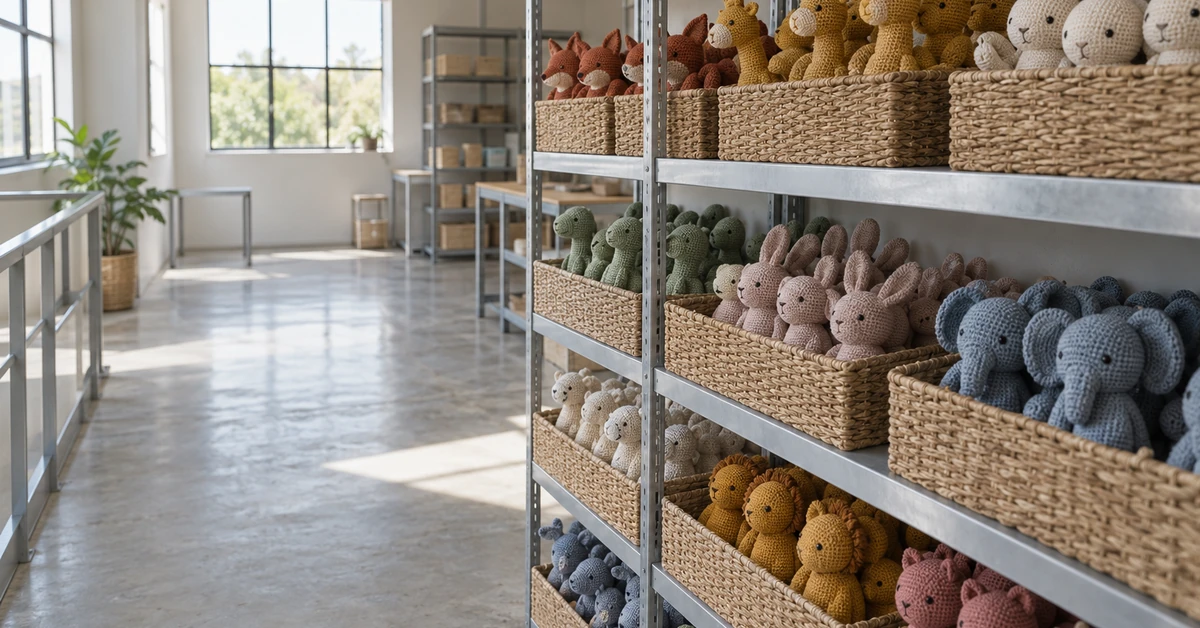

Retail display solutions for craft products should be specified before packaging artwork begins. Fixture width, hook spacing, shelf depth, shopper reach, replenishment method and store labor all shape the pack that can succeed. When the display is treated as an afterthought, buyers pay for empty space, hidden products, unstable shippers and assortments that are difficult to maintain.
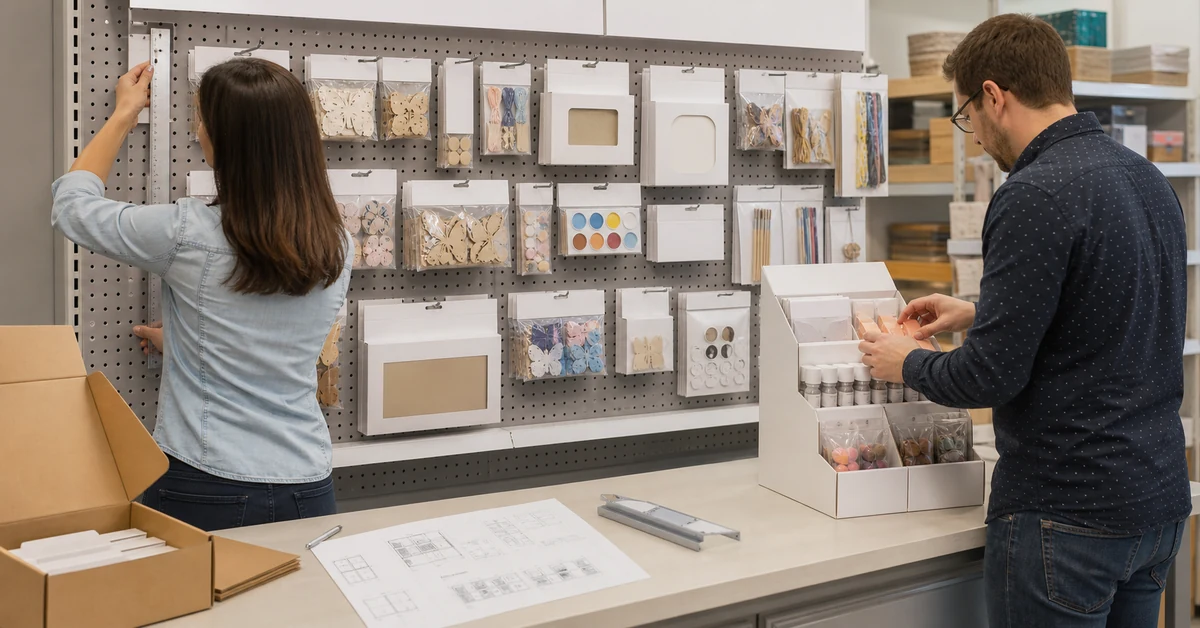
Shelf space is a measurable input
Start with the physical environment. Obtain fixture drawings, photos with scale, planogram rules and retailer packaging standards. Measure usable width and height, shelf depth, hook length, hook spacing, label-strip position, kick space, maximum pack weight and required clearances.
Do not design from the nominal bay size alone. Uprights, shelf brackets, security devices, price labels and neighboring categories reduce usable space. Record the measurement owner and date because store formats can vary across regions and remodel cycles.
| Fixture input | Measurement | Pack consequence | Pilot check |
|---|---|---|---|
| Peg spacing | Horizontal and vertical centers | Header width and hanging-hole position | Load several facings |
| Hook length | Usable depth after label | Units per facing | Remove front unit repeatedly |
| Shelf depth | Front edge to back panel | Pack depth and overhang limit | Push, pull and restock |
| Counter footprint | Approved width and depth | Display base and assortment size | Place beside real checkout equipment |
| Shopper reach | Lowest and highest positions | SKU allocation and readability | Observe target shoppers |
Decide whether the fixture or the pack carries the message
A wall bay can use repeated packs to build category recognition. A compact counter unit may need a stronger header because fewer facings are visible. A shelf-ready tray can carry navigation while individual items remain simple. Assign messaging responsibility deliberately.
List the questions a shopper must answer: What can I make? What skill is required? What is included? How long might it take? Is it a gift? Which design is this? Decide which answers belong on every unit and which can live on the display.
Choose a display format by shopping behavior
| Display format | Best behavior | Strength | Risk |
|---|---|---|---|
| Pegboard wall bay | Compare many small SKUs | High visibility and easy browsing | Hook imbalance and mixed facings |
| Shelf-ready tray | Shop a coordinated range | Fast replenishment and fronting | Tray collapse or hidden lower artwork |
| Countertop unit | Impulse or add-on purchase | Compact storytelling near checkout | Limited assortment and strict footprint |
| Floor-standing shipper | Seasonal event or launch | Independent placement and campaign impact | Transit stability and store approval |
| Clip strip or sidekick | Cross-merchandise with related items | Uses secondary space | Weight, swing and pack damage |
Make the hanging hole part of structural design
A Euro slot or round hole must support the packed weight through transport, store loading and customer handling. Its position affects balance and how the pack sits beside neighbors. Reinforcement, board grain, pouch seal and insert stiffness can all influence tearing.
A craft supplies wall display should be tested with the full assortment, not one ideal pack. Load hooks to planned capacity, remove units from the front and middle, mix weights, and observe whether packs rotate, overlap price labels or conceal adjacent designs.
Let pack dimensions build the planogram
Use modular dimensions where the product allows it. Shared widths and hanging positions can make the bay easier to plan, while controlled depth prevents small packs from disappearing behind large ones. Modularity should not force every product into excess packaging.
Compare structural options with the retail packaging ideas guide before committing the assortment to one box, pouch or hanging format.
Create a dimension library with pack width, height, depth, weight, orientation, units per facing and carton quantity. The planogram should calculate facings from real dimensions rather than from artwork rectangles.
Build assortment architecture around shopper decisions
Group SKUs by the way customers choose: technique, skill, project type, age, theme, price or occasion. Do not mix all dimensions equally. A bay with five unrelated navigation systems looks broad to the buyer but confusing to the shopper.
- Use clear entry SKUs that explain the category quickly.
- Place comparable variants together.
- Reserve eye-level positions for strategic products, not random case order.
- Limit duplicate themes that compete for the same customer.
- Use color coding only when it has one consistent meaning.
- Plan how discontinued and new items enter the module.
Use a live category example such as the crochet DIY kit range to test whether entry, intermediate and theme variants remain understandable when placed together.
Protect barcode scanability inside the design
Barcode placement should be allocated before artwork becomes crowded. The GS1 General Specifications provide the global framework for GS1 identification and barcode use; the current reference is available through the official GS1 standards site. Buyers should also follow retailer-specific requirements and obtain verification appropriate to the printed symbol and packaging surface.
Keep the barcode away from folds, seals, curves, perforations, reflective interruptions and areas routinely covered by display parts. Test the final printed pack, not only the digital file. If a display carton carries a different identifier from the consumer unit, control both records.
Use packaging to control replenishment errors
Custom packaging craft supplies can include large SKU identifiers, orientation marks, color blocks or display-ready tear lines that help store teams replenish correctly. Those features must be visible at the moment of handling, not hidden under the product.
Inner packs should match the replenishment unit. If a hook holds eight items but the inner contains twelve, stores may keep open stock in back rooms. Align case quantity, facing capacity and expected sales velocity where practical.
Engineer the countertop unit as a small fixture
A craft supplies countertop display competes with payment equipment, impulse products and limited staff attention. Confirm footprint, height, sightline, stability, access and restocking from the staff side. The display should remain understandable when partly sold down.
Test the unit on the actual or simulated counter. Repeatedly remove front and back products, bump the surface, open nearby drawers and view it from the customer queue. A dramatic header is not useful if it blocks staff sight or exceeds retailer limits.
Design display shippers for the distribution journey
A prefilled display can save store labor, but its structure must handle manufacturing, warehouse stacking, transport, opening and store placement. Separate removable transit protection from the display structure and make setup steps obvious.
The International Safe Transit Association describes Test Procedure 3A as a general simulation for packaged products moving through parcel delivery systems. A shipper may require a different or expanded test based on weight, freight mode, retailer handling and pallet configuration. Approve the display after both transit and store setup trials.
Long storage can also change adhesives, plastics, paperboard and packed materials. Use the craft kit storage stability test to plan aged-sample checks before a long rollout.
Calculate display economics beyond print cost
Compare the complete program: unit packaging, display material, assembly, packing labor, added freight volume, store setup, replenishment, damage, markdowns and recovery. A more expensive shelf-ready tray can be justified if it reduces store labor and improves availability; a decorative display can fail if it reduces units per shipment without measurable sales value.
| Cost layer | Measure | Decision question |
|---|---|---|
| Pack | Cost and cubic volume per unit | Does the format earn its space? |
| Display | Material, print and assembly | Can it survive setup and sell-down? |
| Freight | Units per carton and pallet | How much air is being shipped? |
| Store labor | Minutes to place and replenish | Does the system simplify handling? |
| Commercial result | Availability, sell-through and markdown | Did the display improve the range? |
Run a store pilot with observation, not only sales data
Sales numbers show outcome but not the reason. During a pilot, observe setup, shopper navigation, pack handling, replenishment, mixed facings and sell-down appearance. Photograph the display at regular intervals with store permission and record interventions.
Use several store conditions when possible: high and low traffic, experienced and new staff, full bay and constrained placement. A display that succeeds only when the project team maintains it personally is not rollout-ready.
Create a change system for ranges that keep moving
New designs, seasonal themes and discontinued SKUs can break a carefully planned module. Maintain a live item file with dimensions, images, barcode data, carton quantity, launch status and approved display positions. Require dimension and hanging-hole approval before a new SKU enters the planogram.
For flexible ranges, design replaceable headers, modular trays or controlled blank positions. Do not print fixed product names across a long-life fixture unless the assortment is equally stable.
How Onehourcrafts develops the pack and fixture together
Onehourcrafts can support retail display solutions for craft products by connecting product assortment, packaging dimensions, private-label artwork, display prototypes, pack-out and production controls. A strong brief includes retailer fixture standards, store count, assortment, unit forecast, replenishment method, delivery route, barcode ownership and pilot timing.
Onehourcrafts states manufacturing experience since 1988, BSCI certification and OEM/ODM support. The buyer and retailer should approve final fixture fit, branding, barcode, structural performance and store operating requirements for each program.
Frequently asked questions
Should packaging be designed before the planogram?
No. Develop pack dimensions and the planogram together using real fixture constraints and assortment priorities.
What measurements are needed for a pegboard bay?
Record usable width and height, peg spacing, hook length, label position, clearances, pack weight limits and neighboring obstructions.
When is a countertop display appropriate?
Use it for a focused impulse or add-on range that can communicate quickly within a retailer-approved footprint and height.
How many SKUs should a display contain?
The number should follow fixture capacity, sales velocity and clear shopper choice. More SKUs are not useful when facings become too narrow to understand or replenish.
What should a display pilot measure?
Measure setup time, stability, availability, mixed facings, shopper handling, replenishment errors, damage, sell-through and sell-down appearance.
How should barcodes be tested?
Follow applicable GS1 and retailer guidance, print production samples and verify the finished symbol on the actual package material and shape.
Can a shipping carton become the display?
Yes, when the structure protects products in transit and opens into a stable, understandable display with a simple store setup process.
How can buyers reduce display freight?
Reduce unnecessary void, use efficient knock-down structures where practical, align pack and carton modules, and compare delivered cost rather than display print cost alone.
What belongs in a display RFQ?
Include fixture data, assortment, pack dimensions, unit forecast, display type, store count, logistics route, setup method, artwork, testing and pilot date.
How should seasonal updates be handled?
Use modular components and a controlled item file. Approve new dimensions and artwork against the live fixture before production.
Design from the fixture backward
The most effective retail display solutions for craft products treat shelf space, packaging, assortment, logistics and replenishment as one specification. Measure the fixture, assign the message, test the complete range and observe real stores before rollout. That makes the display operational, not merely attractive.