Engineered Reliability: Braided Elastic for Waistbands & Underwear (The "Workhorse")
Apparel lines stand or fall on the durability of their foundational components. When sourcing narrow trims, apparel brands and supply managers frequently encounter edge curling, unpredictable modulus drop-off, or stitching degradation in internal channels. Implementing dependable Braided Elastic for Waistbands & Underwear (The "Workhorse") resolves these structural vulnerabilities at the production level. As an industry-standard trim, braided elastic delivers the structural grip and rebound needed to hold lightweight undergarments, sleepwear, and everyday apparel securely against the body without adding unnecessary bulk.
Product Overview & Visible Construction Details
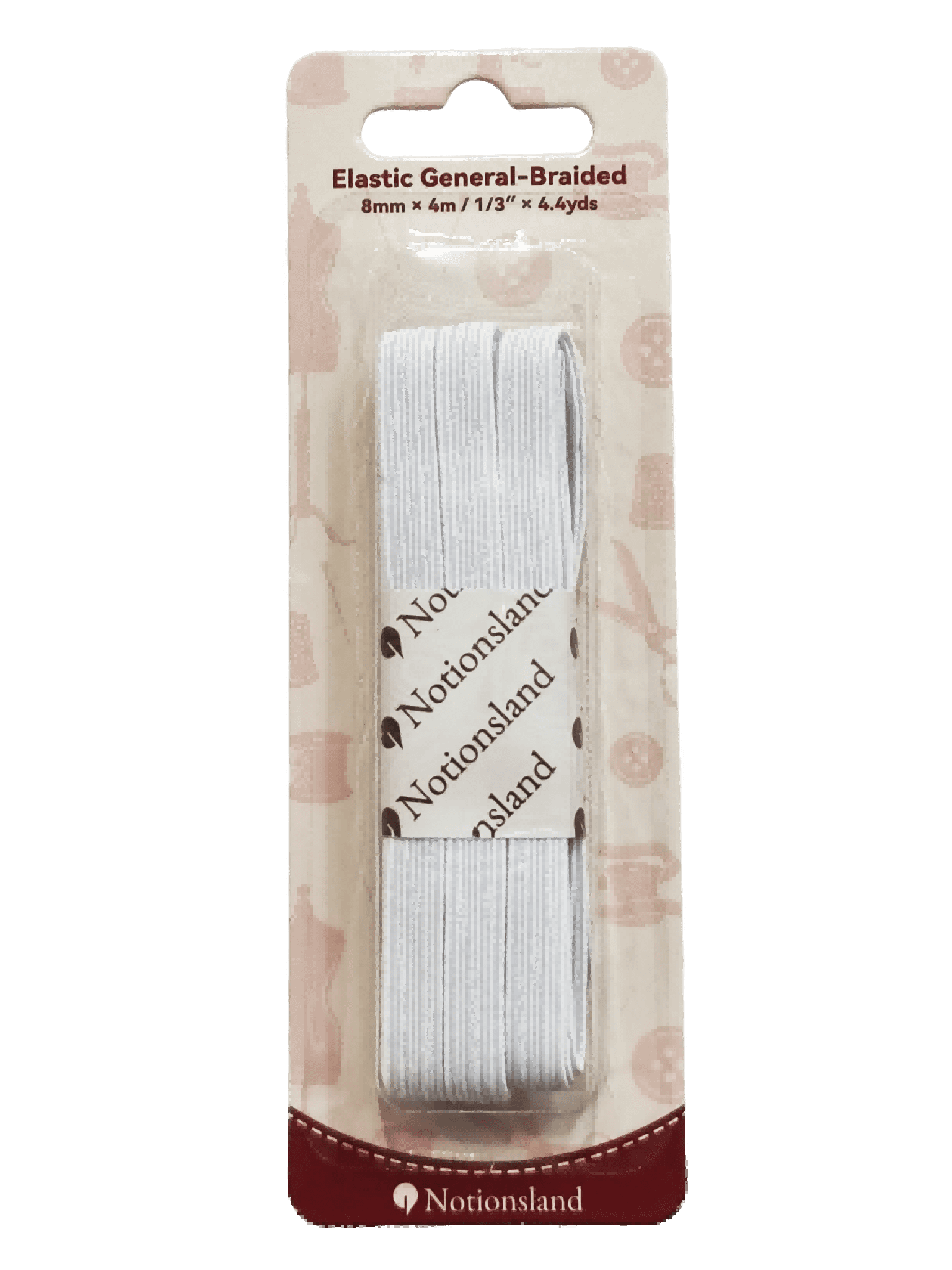
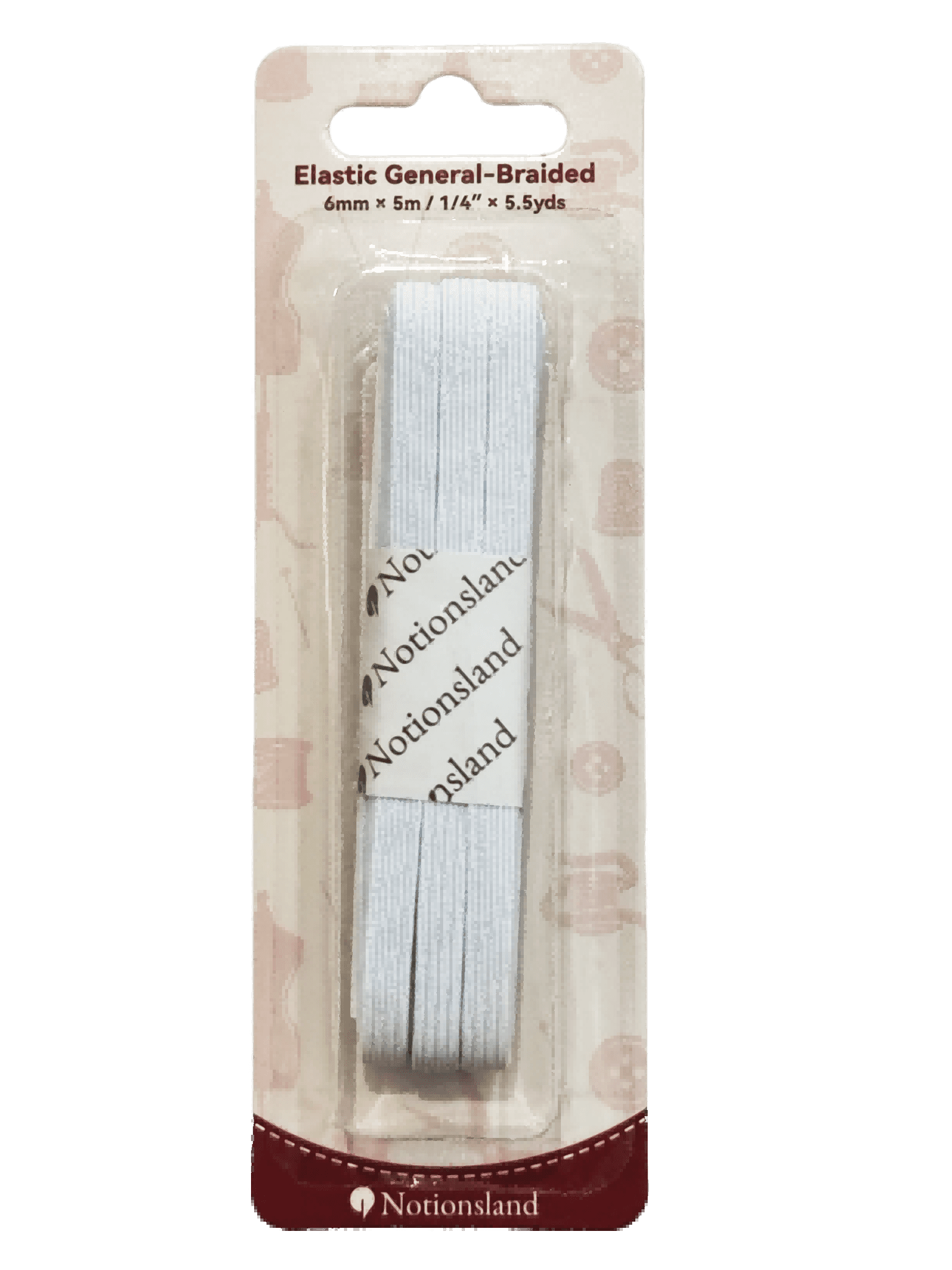
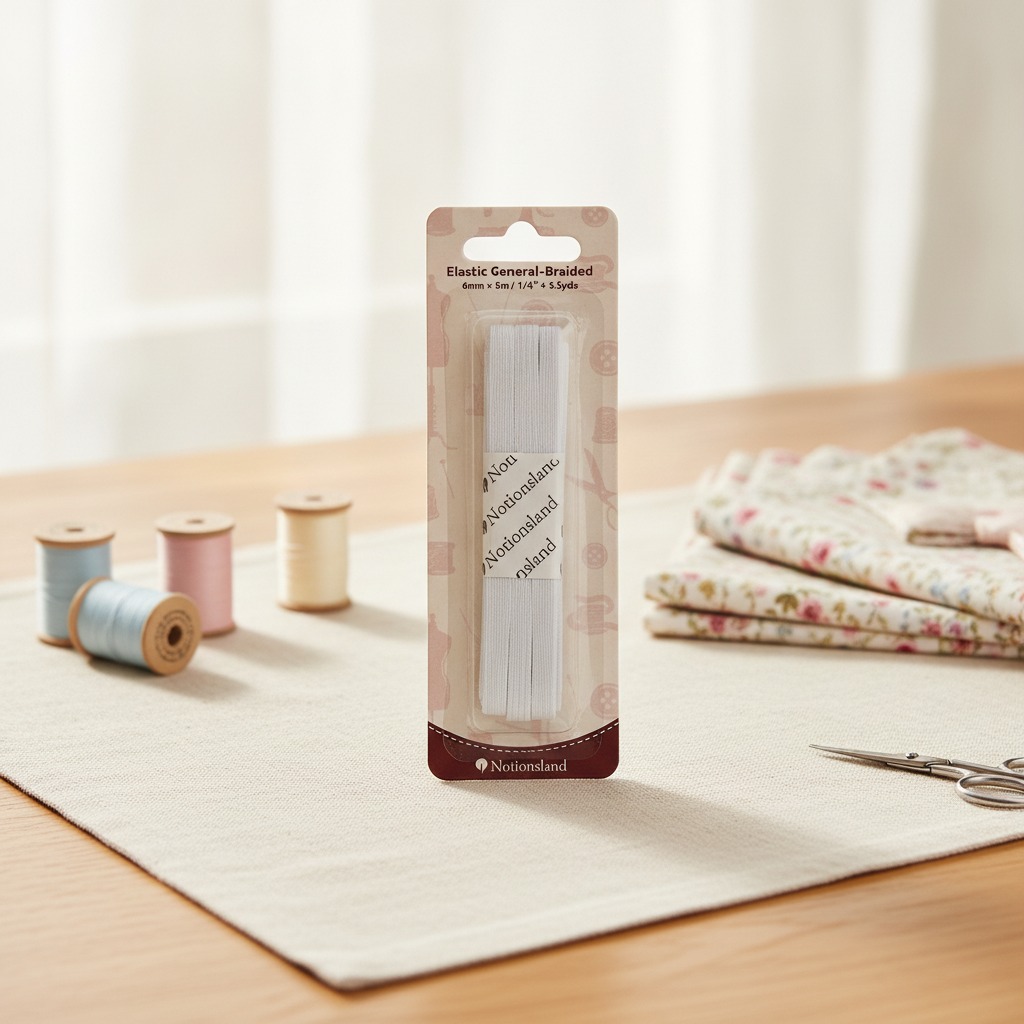
Braided elastic gets its distinctive properties from its interlaced weave structure. The visible sample features a clean, narrow 6 mm (1/4 in) width with distinct longitudinal parallel ribs across its face. Packaged in a pre-cut 5 m (5.5 yd) bundle mounted on a retail-ready hanging card, this format caters directly to haberdashery distribution, sampling rooms, and localized repair units.
Visual analysis confirms a compact, white-to-light-colored braided textile construction. Unlike plain woven or knit webs, the cross-axial braiding envelops internal tension elements to safeguard against immediate friction wear inside channeled fabric tunnels.
Material Realities and Manufacturing Methods
Standard industrial braiding machines interlace external textile yarns—commonly synthetic filaments—over inner elastomer cores. While the external surface presents uniform longitudinal ribbing, raw polymer compositions vary depending on target wash cycles and chemical tolerances. Specific elastomeric cores (such as natural rubber vs. synthetic elastane) and carrier yarn materials cannot be confirmed solely from visual packaging inspections. Production managers must define these specifications according to end-use requirements.
Because braided constructions naturally narrow slightly when extended lengthwise, they perform with superior structural tension when enclosed within stitched casings. This narrowing action concentrates holding power, making it a reliable staple across high-turnover garment manufacturing programs.
Trims Comparison: Sourcing the Right Elastic Format
Different textile applications call for distinct tension delivery mechanisms. While Braided Elastic for Waistbands & Underwear (The "Workhorse") serves as an enclosed channel staple, other sections of a technical apparel catalog demand specialized engineering:
- Seamless Circular Knitting: Where continuous tubular garments eliminate cut-and-sew operations, manufacturers deploy Knit-In Elastic Yarn for Socks & Cuffs (Specialty Fiber) rather than flat trims to secure ankle bands and seamless hems.
- Rigid Headwear Integration: For structured caps requiring tailored fitment without fabric bunching, production teams specify an Adjustable Hat Sweatband & Visor Insert (Functional Hardware) rather than flexible ribbon elastics.
Choosing the correct functional trim prevents casing blowouts and minimizes garment return rates across production seasons.
Key Application Scenarios
The 6 mm format serves several standard assembly and sewing scenarios:
- Undergarment & Sleepwear Casings: Inserted into folded waist and leg bands for boxers, loungewear, and lightweight briefs.
- Sleeve & Leg Gatherings: Providing flexible recovery for childrenswear, dress cuffs, and ruffled decorative hems.
- Craft & Garment Maintenance Notions: Pre-packaged lengths on hanging cards provide quick solutions for haberdashery retailers and repair workrooms.
Technical Specifications (Observed & Verified)
| Attribute | Specification Detail |
|---|---|
| Product Type | Braided narrow elastic trim |
| Nominal Width | 6 mm (approx. 1/4 inch) |
| Packaging Unit | 5 meters (approx. 5.5 yards) bundled on slotted hanging card |
| Surface Appearance | White / light tone, fine longitudinal ribbing |
| Inner Elastomer & Fiber Blend | Customizable per batch specification (unverified from visual packaging) |
Procurement Criteria: Securing Consistent Output
When transitioning from packaged consumer yardage to large-volume apparel runs, purchasing agents must evaluate several key performance metrics directly with the manufacturer:
- Elongation Profile: Confirming precise stretch ratios (typically 100% to 150%) to balance wearer comfort against retention.
- Laundering Durability: Defining wash temperatures, chlorine resistance, and tumble-dry limits suited to industrial laundering standards.
- Spool Configuration: Deciding between carded display units for resale and bulk spools designed for automatic feeding systems.
Optimize Your Apparel Trims Sourcing
Avoid mid-season factory delays caused by unstable notions. Whether your project calls for standard braided elastic, Knit-In Elastic Yarn for Socks & Cuffs (Specialty Fiber), or specialized hardware like an Adjustable Hat Sweatband & Visor Insert (Functional Hardware), aligning the technical weave to your exact assembly method is vital. Reach out to our technical sales team today to request material samples, define core compositions, and lock in contract pricing for upcoming production runs.