Product Overview: Engineered Resilience for Daily Apparel
Apparel manufacturers and contract stitchers routinely face the costly challenge of waistband fatigue, seam puckering, and elastomeric breakdown after laundering. Specifying a dependable Braided Elastic for Waistbands & Underwear (The "Workhorse") provides the mechanical stability necessary to prevent edge rollover and maintain consistent recovery across high-wear apparel lines. While specialty garments often call for niche narrow fabrics, standard everyday bottom-weight pieces, loungewear, and undergarments demand a balanced tension profile that withstands repetitive cycling without losing modulus.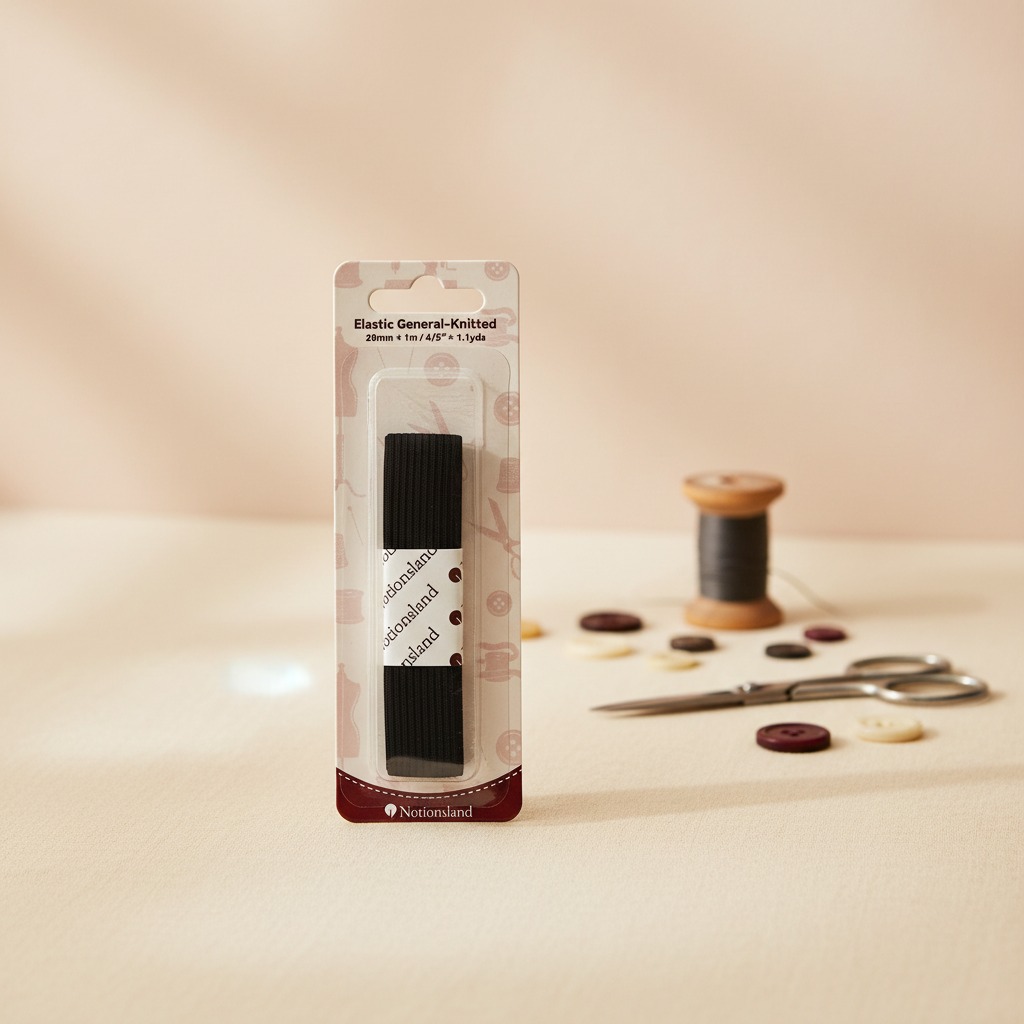
Our foundational elastic programs bridge the gap between retail-packaged notions and commercial-volume production. Whether you are staging initial prototype runs using discrete cut lengths or scaling factory floors with continuous spools, utilizing a reliable narrow elastic prevents costly product returns driven by sagging waistbands.
Technical Specifications and Dimensional Capabilities
Every production run requires tight control over width, thickness, and elongation properties. Our baseline inventory includes standard consumer and sample sizing alongside commercial bulk rolls:
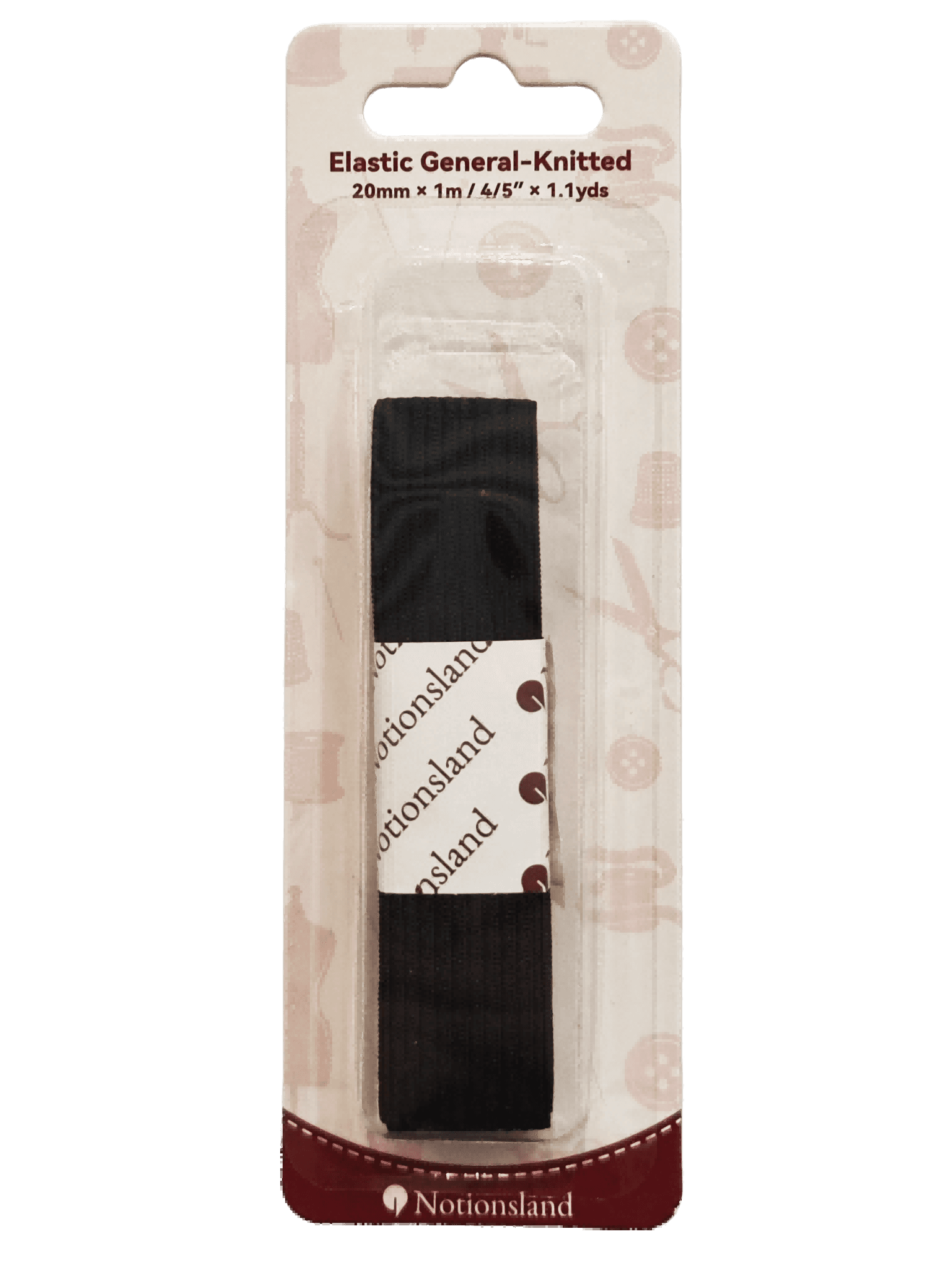
- Standard Width Profile: 20 mm (approximately 4/5 in), an industry-standard dimension suitable for medium-duty garment channels and internal casings.
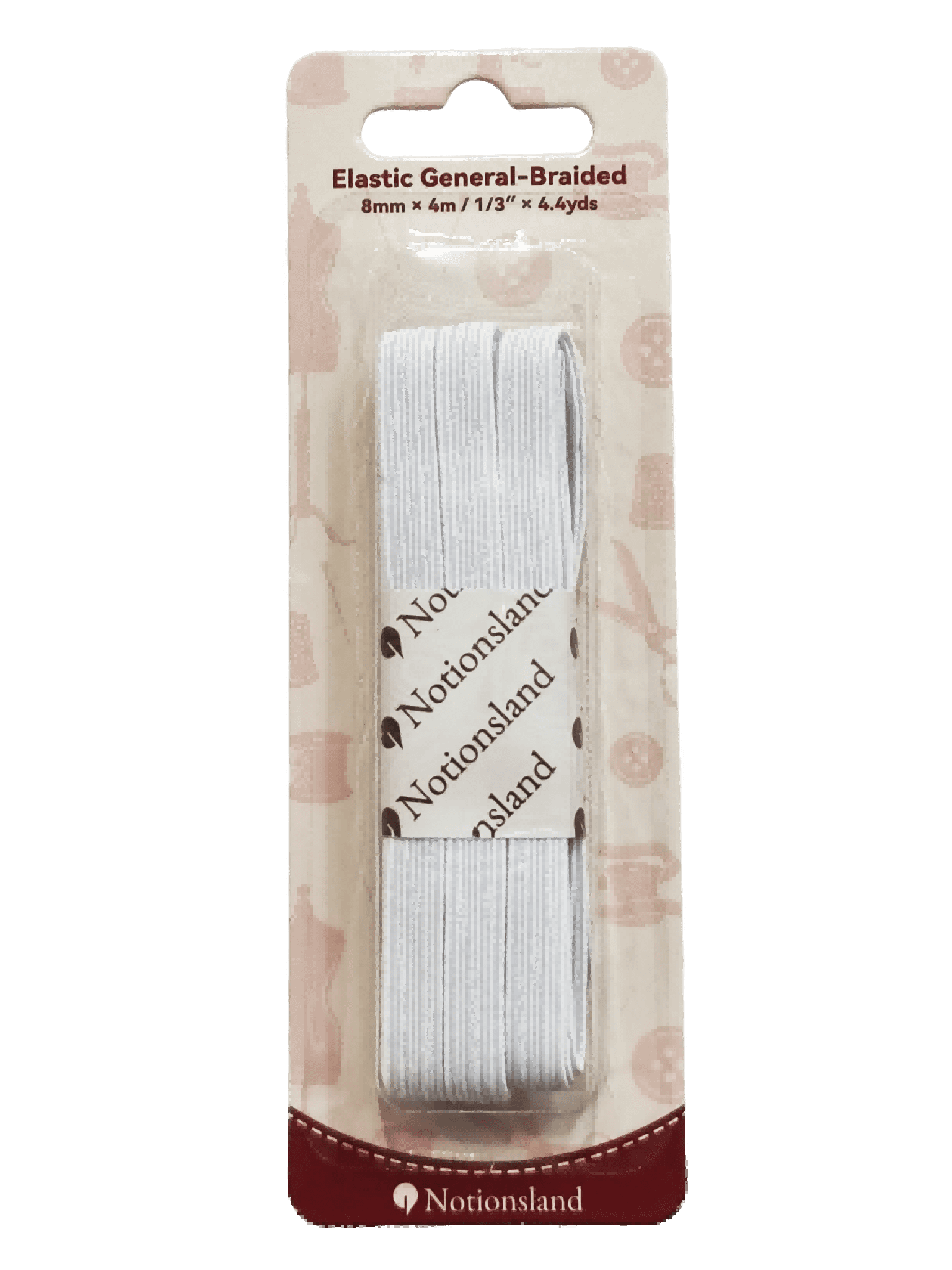
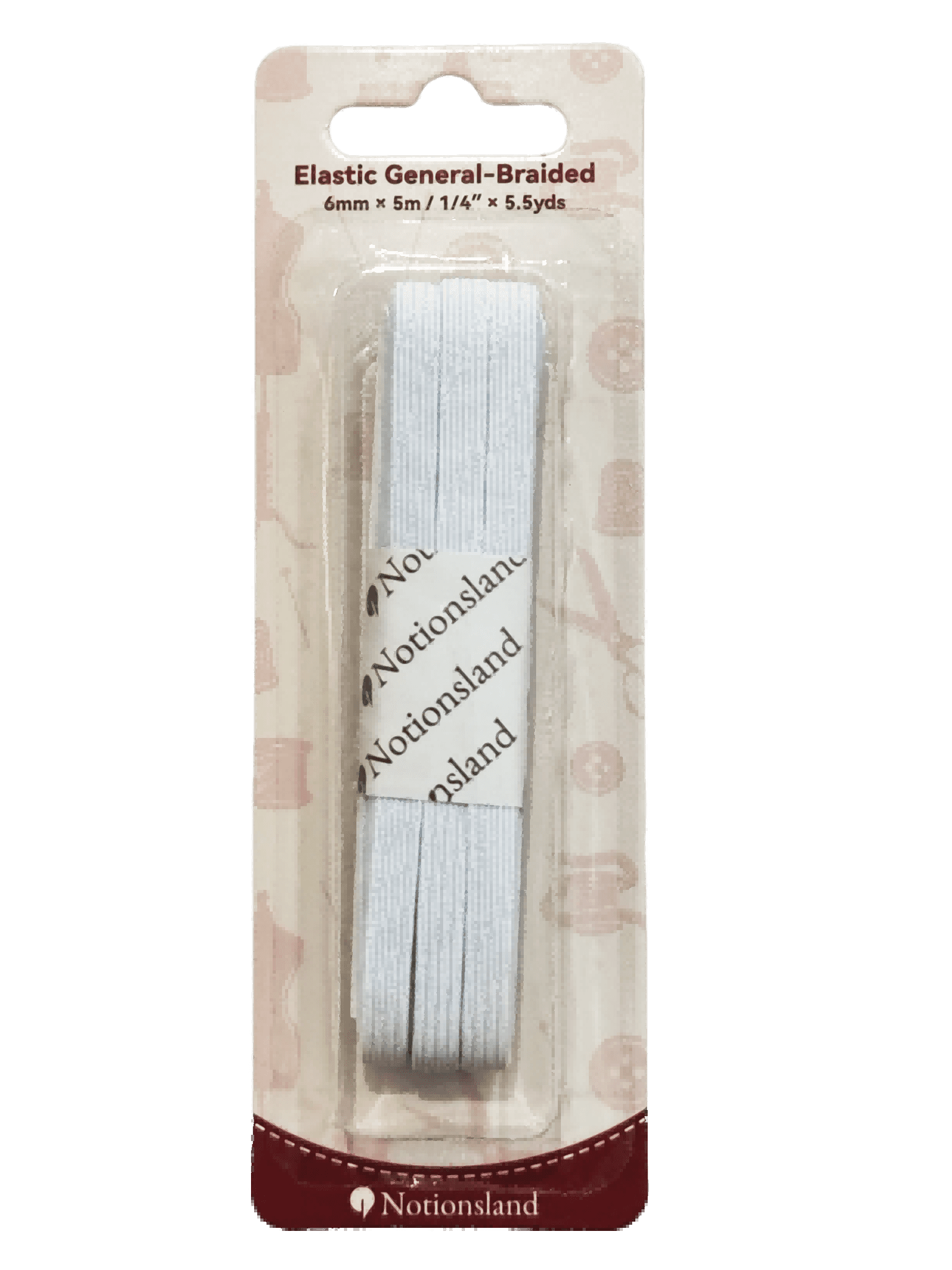
- Packaging Options: Pre-cut cards (such as 1 m / 1.1 yd packages for retail displays and rapid sampling) or continuous bulk spools for automated sewing machines.
- Surface Structure: Flat profile featuring distinct ribbed or textured surface detailing to improve fabric grip inside hemmed tunnels and minimize internal twisting.
- Elongation Range: Typically targeted between 100% and 130% stretch, though specific tension limits, elastomeric core materials, and modulus require validation against your exact fabric weights.
Note on Material Verification: Packaged goods marked as knitted elastic provide a soft hand and needle-friendly channel insertion, whereas true braided structures narrow when stretched and offer firmer crosswise rigidity. When exact synthetic or natural rubber core compositions are not stamped on retail backing packaging, lab verification for heat resistance and dry-cleaning compatibility should always precede volume commitments.
Materials, Construction, and Structural Integrity
Selecting the right narrow textile involves matching mechanical behavior to stitch type. A knitted construction creates a flat, soft-to-skin surface that does not narrow substantially when extended, making it highly forgiving during multi-needle stitching. In contrast, heavier braided configurations yield firm tension suitable for heavy cotton bottoms, workwear undergarments, and structured track pants.
For programs expanding beyond standard waistband channels into seamless hosiery or specialized knitwear, pairing standard waist webbings with Knit-In Elastic Yarn for Socks & Cuffs (Specialty Fiber) enables uniform stretch characteristics across multi-component collections. Similarly, outerwear or headwear programs may require distinct functional assemblies, where narrow soft trims yield to an Adjustable Hat Sweatband & Visor Insert (Functional Hardware) rather than flexible apparel elastic.
Manufacturing Quality Control and Needle Resistance
Direct needle strikes during industrial serging can puncture internal elastomeric strands, leading to premature tensile failure and frayed edges. Quality control protocols for these narrow fabrics prioritize:
Needle-Pierce Integrity
Ensuring that yarn looping and filament density allow ballpoint or light-ball sewing needles to displace structural fibers without severing the internal elastic core.
Tension Consistency Across the Web
Eliminating uneven cross-web tension variations that cause garment seams to curl, wave, or flare after feeding through mechanical folders.
Wash and Thermal Stability
Minimizing shrinkage and maintaining elastomeric integrity through standard domestic laundering cycles, avoiding elastomeric brittleness under commercial drying temperatures.
Strategic Buyer Considerations for Production Sourcing
When procuring narrow elastic components for commercial apparel lines, evaluate your decision against four core manufacturing realities:
- Insertion Method: Determine whether the elastic will be threaded through a closed casing or directly stitched with an overlock or coverstitch machine. Knit elastics withstand direct perforation far better than conventional braided bands.
- Skin Contact: Direct skin placement requires brushed yarn surfaces or specialized soft-edge finishes to prevent friction chafing along sensitive waistlines.
- Weight Compatibility: Pair light-to-medium fabrics with 20 mm flexible knit tapes, reserving high-power braided bands for heavy fleeces, twills, and active bottoms.
- Volume vs. Prototyping: While 1-meter retail cards serve design studios for rapid fit checks, commercial runs require consistent lot dyeing and yield-matched bulk packaging to reduce splice waste.
Optimize Your Trim Sourcing
Do not let inconsistent waistband performance undermine your garment construction. Integrate the proven stability of Braided Elastic for Waistbands & Underwear (The "Workhorse") into your product development pipeline today. Contact our technical sales team with your target garment specifications, fabric weights, and annual volume requirements to receive comprehensive laboratory test swatches and volume quotations.