
Pre threaded needles wholesale decisions should begin with a physical teardown, because the smallest pack contains several interacting controls: needle finish, thread loading, color identity, retained length, card geometry, opening behavior and sharp-item communication. A clean front image cannot show whether those controls survive handling and production variation.
Open the pack as an inspector
Photograph the unopened sample, weigh it if weight is a useful control, and record every printed claim before removing a component. Open it using the method available to an ordinary customer, without tools unless the instructions require them. Note loose needles, thread snags, sharp exposure, torn labels and pieces that migrate behind the insert.
Keep one untouched sample beside the teardown. It becomes a reference when the opened layers no longer reveal their original positions.
Layer one: the retail card
The card has four jobs: identify the item, retain the inner tray, carry required information and survive hanging. Measure board thickness, hang-hole position and blister seal area. Condition samples in the intended transit and storage environment before checking warp, delamination and print abrasion. A beautiful card that bends on the peg changes both safety and sellability.
- Product name and actual included quantity agree
- Materials and intended use do not overstate performance
- Barcode has quiet space and print contrast
- Warnings and traceability marks remain readable
- Seal perimeter is continuous without damaging the insert
Layer two: the needle-retention tray
Turn the opened tray through normal handling angles above a controlled surface. Each needle should stay in its designated channel until deliberately removed. Inspect slot width, holding features, tray cracks and the distance between point and package wall. Then return every needle. A pack intended for repeated use needs a credible re-storage method, not just good first-opening retention.
| Observation | Possible cause | Next check |
|---|---|---|
| Needle slides freely | Slot too wide or tray distorted | Measure multiple cavities and lots |
| Thread catches | Sharp edge or crowded routing | Inspect edge finish under magnification |
| Point faces opening | Orientation or retention error | Review loading fixture and work instruction |
| Tray cracks on return | Material or wall thickness issue | Repeat opening cycle at temperature limits |
Layer three: ten individual needles
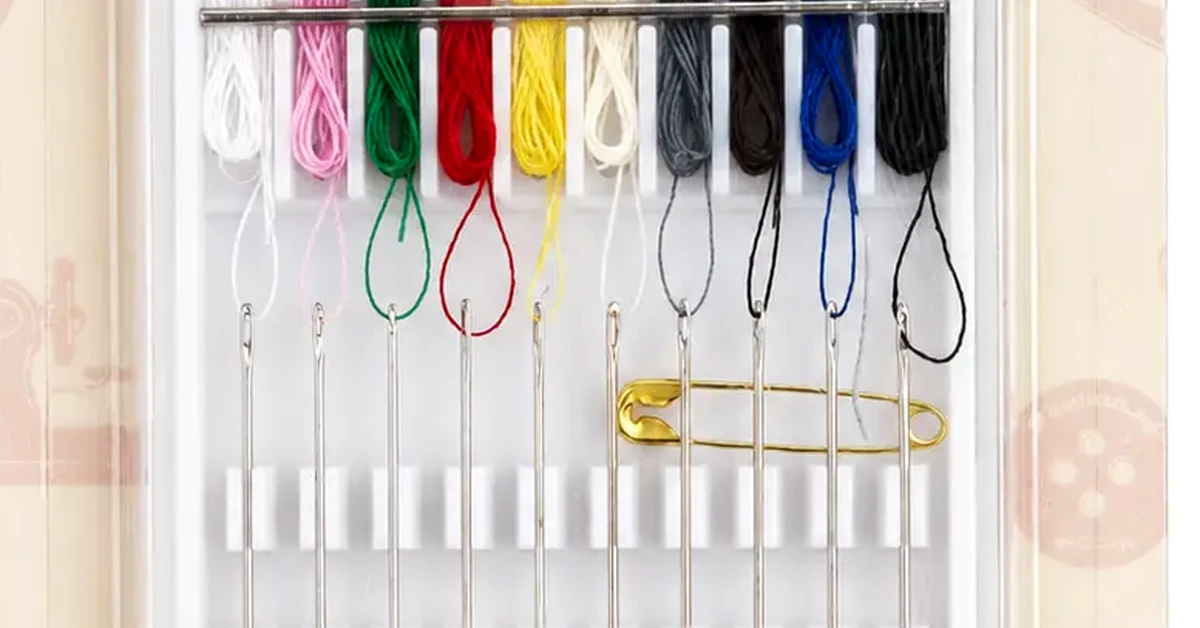
A 10 pre threaded needles set should contain ten usable units, not ten metal pieces that merely look similar. Count them, then measure overall length, diameter where practical and eye geometry across positions. Inspect points, plating, burrs, bends and surface contamination. A gold-colored or coated needle needs the same functional inspection as a plain one; appearance does not substitute for finish quality.
Separate defects by consequence. A cosmetic variation may be acceptable within a defined limit. A rough eye that damages thread or a burr that can catch fabric is functional. A loose sharp item is a packaging and safety concern.
Layer four: thread loading
Pull each color free one at a time and document how it was folded, retained and routed through the eye. Measure usable length without stretching. Inspect fraying at the eye, knots, uneven ends and color transfer. The loading method should allow removal without tightening another color into the tray.
- Assign a position number to every needle.
- Record stated color and observed color for that position.
- Measure the two free ends and total usable strand.
- Pass the thread through a basic hand-sewing trial.
- Return the needle and assess whether storage still works.
Layer five: the color sequence
Color count is easy to photograph and surprisingly easy to mispack. Define the approved sequence using physical or controlled digital references. Confirm whether neutrals are deliberately repeated and whether “assorted” permits substitutions. If exact colors matter to the retail claim, a production change needs buyer approval. If assortment varies, packaging imagery and text should not promise a fixed palette.
Record contrast between neighboring positions, because similar dark shades can create counting errors during line inspection.
Trace the failure chain backward
A defect on the shelf may begin several stations earlier. Loose thread could come from a short fold, a missed retention feature, tray distortion or vibration during transport. A missing needle may result from manual count, poor fixture design or an inspection method that cannot see every channel. Map the symptom to possible sources before prescribing more final inspection.
| Shelf failure | Upstream questions | Preventive evidence |
|---|---|---|
| Missing color | How are colors staged and replenished? | Positioned material rack and line-clearance record |
| Needle out of slot | How is retention checked? | Tray gauge and handling test |
| Short strand | How is thread cut or dispensed? | Length setting and periodic measurement |
| Wrong quantity | Can the pack be counted before sealing? | Visual standard or verified count fixture |
Reconcile the line before restart
Mixed small components require disciplined line clearance. At color or item changeover, remove the prior materials, identify open work in process and reconcile returned pieces. The pre threaded needle kit manufacturer should show how operators distinguish similar needles and threads, how partial bundles are labeled and how rework re-enters the line.
- Approved component board at the workstation
- Numbered locations matching the pack layout
- First-piece verification after setup and restart
- Frequency and sample size for in-process checks
- Quarantine route for mixed or uncertain material
Sample across cavities, operators and time
Do not take ten packs from the top of one carton and call the range represented. Spread checks across packing time, operators, tray cavities, cartons and production lots. Define critical, major and minor defects before inspection. Needle count, uncontrolled sharp exposure and incorrect warnings may carry different severity from small print shifts, depending on the specification and market.
Our threaded needle kit factory guide adds supplier-selection questions, while the sewing kit supplier quality checklist provides a broader component-control framework.
Challenge the pack before approving it
Run a controlled opening trial with intended users, a peg-hang check, distribution testing appropriate to the pack and repeated removal/return cycles if reuse is claimed. Inspect again after the test. The emergency threaded needle kit may travel in drawers, bags or glove compartments, so the agreed storage claim should match the trial. Avoid inventing extreme conditions unrelated to the actual product.
| Trial | Pass question | Common blind spot |
|---|---|---|
| Peg hang | Does the card remain secure and legible? | Testing only an empty card |
| Opening | Can the user access one needle safely? | Expert opens it differently from customer |
| Return cycle | Are needles retained after reuse? | Evaluating first opening only |
| Transit | Do pieces remain in position? | Inspecting outer carton but not tray |
Keep safety and age positioning explicit
Sharp needles and small pieces require market-specific review. The U.S. CPSC Art and Craft Safety Guide discusses hazards associated with common craft tools and materials. The CPSC also provides small-parts business guidance for toys and children's products. Classification depends on intended users, presentation and applicable rules; adult positioning should be consistent across design, imagery and sales copy.
Lock a golden pack, not loose components
The approved reference should be a complete sealed pack with signed artwork, component specifications, color sequence, thread-length limits, tray version and closing method. Loose approved needles cannot prove the final orientation or retention. Store reference photos and measurable requirements alongside the sample so teams can resolve aging or damaged physical standards.
A batch traceability checklist can help keep the pack version connected to component lots and inspection records.
The Onehourcrafts teardown record
When evaluating pre threaded needles wholesale, Onehourcrafts can structure a sample record by pack layer, position and failure consequence. Buyers can specify needle count and finish, thread palette and length, retention method, artwork, age position, destination market and inspection plan. That detail gives the supplier an approval target that can be checked on the line.
Frequently asked questions
Why inspect every needle position?
Different cavities and loading positions can produce different retention, thread routing and counting errors within the same pack.
How should thread length be measured?
Define usable length, remove the strand without stretching, and use one documented method across approval and inspection.
Can assorted colors change between orders?
Only within the approved claim and specification. Fixed imagery should not imply exact colors if substitutions are permitted.
Is a blister automatically tamper evident?
No. The structure and claims need evaluation; a sealed appearance alone does not establish a specific security performance.
What is line clearance?
It is the controlled removal and reconciliation of prior materials and work before a new item or lot begins.
Should needle points face the same direction?
The specification should define a safe, consistent orientation supported by the tray and opening method.
How many production samples should be checked?
Use a documented sampling plan based on lot structure, defect severity, process capability and buyer requirements.
Can buyers approve from photographs?
Photos help with color and layout, but physical opening, finish, retention and sewing behavior require representative samples.
What should be retained as the reference?
Keep a sealed signed pack plus its specifications, artwork version, photos and measurable acceptance criteria.
What information belongs in an inquiry?
State count, needle type, thread colors and lengths, pack format, market, age position, quantity and testing needs.
Reassemble the decision
The teardown converts an apparently simple pack into controllable evidence. Approve pre threaded needles wholesale only after checking each layer, tracing likely failures to the process and proving that the sealed configuration protects both count and opening. The useful unit of approval is the complete retail pack, not a polished photo or one perfect needle.