
A crochet organizer supplier should be evaluated by what happens after the case is moved, inverted, reopened, and used to resume a real project. Pockets that look orderly in a catalog can release hooks, mix stitch markers, crush a yarn cake, or hide a needle. Pack the proposed contents, turn the closed case upside down, then start a sixty-second recovery clock.
Close it, turn it, start the clock
Use a production-equivalent case and a defined load rather than a carefully styled sample. Photograph every item in its starting position, close the organizer as instructed, rotate it through six faces, carry it for a set route, and place it upside down. Return it upright, open it, and time how long a user needs to confirm the inventory and resume the next stitch.
- Load the smallest and largest tools promised for each position.
- Add a realistic work-in-progress piece and partially used yarn.
- Close every zipper, flap, snap or tie normally.
- Rotate through top, base, front, back and both sides.
- Open without arranging anything and start the recovery clock.
Define the load before judging the case
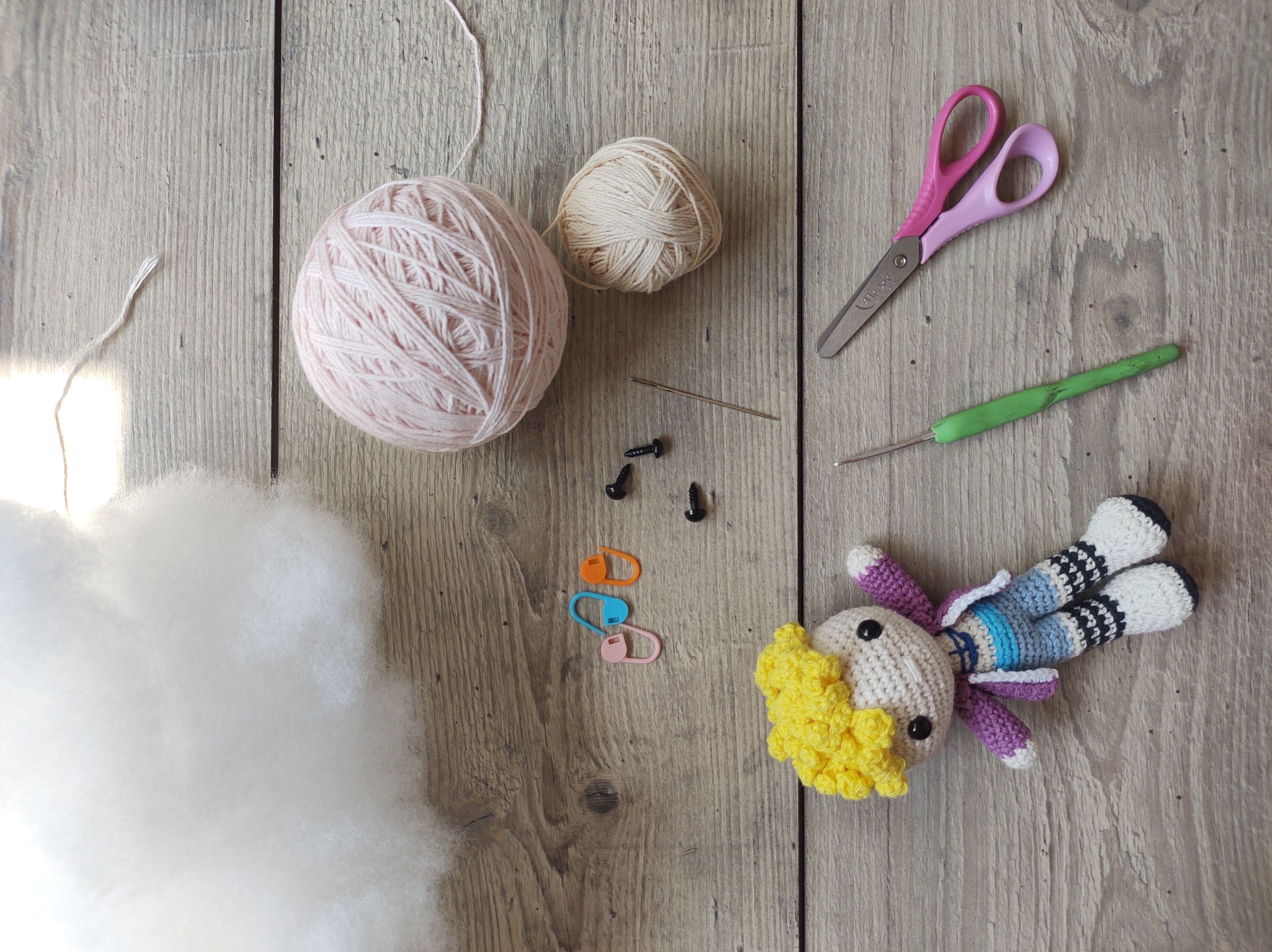
An organizer has no meaningful capacity without a load specification. List hook sizes and handle diameters, scissors dimensions, needles, markers, tape, yarn quantity, pattern format, and project size. State which items are included and which are only compatibility examples.
| Load family | Range to test | Evidence |
|---|---|---|
| Hooks | Shortest, longest and widest handles | Retention and removal time |
| Small notions | Markers, needles and counters | Migration and visibility |
| Cutting tool | Approved compact scissors | Point protection and fit |
| Yarn | Fresh and partially used shapes | Closure, compression and feed |
| Project | Representative paused work | Snagging and restart condition |
Map each item to a parking address
Give every sharp, small, and frequently used item a named position. A generic open pocket may hold yarn or a folded pattern, but needles and markers need containment that remains obvious after movement. Use diagrams or a printed map when the layout is not self-explanatory.
The crochet accessories tool-set guide helps define practical tool roles. Organizer design should follow the approved tool system instead of adding pockets first and hoping the assortment fits.
Score migration before appearance
After inversion, record where each item moved. Distinguish movement within its intended zone from crossing into another zone, leaving retention, becoming hidden, or contacting a surface it should not. A tidy photograph after manual rearrangement is not evidence.
| Migration grade | Observation | Decision |
|---|---|---|
| 0 | Item remains in its address | Pass |
| 1 | Moves within zone but stays visible | Review usability |
| 2 | Crosses zones or tangles | Revise retention |
| 3 | Escapes, hides or creates sharp exposure | Stop approval |
Make hook retention work across handle shapes
Inline elastic loops may grip plain aluminum hooks but fail with ergonomic handles. Test the narrowest shaft, broadest grip, textured surfaces, short hooks, and long hooks. Remove and return each one repeatedly to assess stretching, abrasion, and user force.
The ergonomic crochet hook test provides a method for comparing handle geometry. A case advertised for mixed collections needs honest compatibility limits.
Give needles a closed micro-zone
Yarn needles can slide behind tools or through open mesh. Use a flap, felt page, sealed pocket, tube, or another suitable solution that contains the approved sizes. The user should be able to count needles without placing a hand into an unseen pocket.
- Check point or tip protection in every orientation.
- Test the smallest needle against seam and zipper gaps.
- Confirm wet or damaged labels are not the only identifier.
- Provide a temporary parking point for a threaded needle.
- Inspect retention after repeated opening and closing.
Stop stitch markers from becoming case debris
Small markers should stay grouped and countable. A removable tin, clear pouch, divided pocket, or closed ring may work depending on the assortment. Shake and invert with the smallest marker because it finds gaps that larger tools cannot.
The crochet stitch marker wholesale guide shows how closure and finish affect use. Organizer approval should include the actual marker styles, not substitutes of convenient size.
Protect scissors without slowing retrieval
Scissors need a defined size range, closed-blade retention, and suitable point protection. Test whether elastic or pockets snag handles, whether blades can open during movement, and whether neighboring yarn or fabric contacts the cutting edges.
Time retrieval with the case on a table and in the intended portable setting. Speed is not more important than control. The user should see the tool position and remove it deliberately.
Store yarn in its used shape
A fresh skein, center-pull cake, collapsing cake, and loose leftover ball occupy different volumes. Test the case after the project has consumed part of the yarn. Dividers should prevent tangling without forcing the user to remake a perfect ball after every session.
| Yarn state | Organizer question | Failure signal |
|---|---|---|
| New skein | Does the closure strain? | Bulging or zipper load |
| Center-pull cake | Can yarn feed without collapse? | Compression and tangling |
| Partly used ball | Does it remain in its zone? | Rolling across tools |
| Short leftovers | Can colors stay identified? | Mixed unlabeled strands |
Make room for paused work
The organizer should accept the project after stitches exist. Load a representative piece with working loop secured, yarn attached, pattern marked, and tools partly used. Close the case and repeat the transport route. Inspect snags, flattened texture, lost stitch position, and yarn tension.
Do not claim capacity from external dimensions alone. The tool panel, seams, padding, zipper curve, and dividers reduce usable space. State the tested project envelope in plain terms.
Read the recovery clock by actions
Split the sixty seconds into opening, inventory confirmation, finding the working hook, locating the pattern position, freeing the yarn, and restarting. Total time alone does not show why a user is delayed.
- Open the case in the intended orientation.
- Confirm sharps remain controlled.
- Locate hook, marker and active yarn.
- Identify the next instruction or chart position.
- Resume one correct stitch without rearranging the full case.
Test the closure at maximum and minimum load
A nearly empty case can let contents move; a full case can strain zippers and seams. Run both conditions. Measure whether the organizer closes without compressing hooks, forcing scissors, or deforming the project.
For crochet storage case wholesale orders, specify zipper type, pull size, seam allowance, reinforcement, thread, lining, elastic, foam, and acceptable closed dimensions. Review normal production samples rather than only a development prototype.
Inspect the case after repeated cycles
Open, load, carry, invert, recover, and close through a defined cycle count. Inspect elastic recovery, zipper tracking, fabric abrasion, thread ends, pocket transparency, printed maps, odor, shape, and hardware. Condition separate samples for likely storage environments when relevant.
The craft kit storage stability test offers a framework for comparing fresh and conditioned materials. Claims about durability or water resistance need appropriate evidence and clear limits.
Design the retail pack around inspection
If the organizer is sold empty, show representative compatibility without implying that tools are included. If sold as a set, secure and count every component. Packaging should let receiving teams identify color, size, version, and barcode without opening each unit.
A crochet accessories supplier should map every included tool to its organizer address before pack-out. For crochet tools for craft stores, the finished unit also needs stable retail codes, accurate included-item claims, and a refill or replacement path the store can explain.
- Stable finished-goods and color codes
- Human-readable dimensions and capacity claim
- Included versus demonstration contents
- Care instructions supported by testing
- Market-specific labels and traceability
Review claims and tool safety separately
An organizer can improve control but cannot make every stored tool safe. Assess the actual included or intended items, age presentation, materials, warnings, and destination requirements. The CPSC's art and craft safety guide is an official U.S. starting point, and the EU provides a summary of the General Product Safety Regulation.
Qualified specialists should determine applicable obligations. Avoid unsupported terms such as child-safe, puncture-proof, waterproof, lifetime, or universal fit.
How Onehourcrafts turns recovery into a specification
Onehourcrafts can map an intended tool and project load to pockets, retention, closure, materials, retail packaging, and repeatable inversion trials. A useful crochet organizer supplier inquiry includes tool dimensions, yarn and project envelope, included contents, portability scenario, case size, colors, branding, quantity, markets, cycle expectations, and inspection method.
Frequently asked questions
What should a crochet organizer hold?
Define the target load explicitly: hook dimensions, small notions, cutting tool, needles, yarn state, pattern format, and work-in-progress envelope.
Why use an inversion test?
It reveals migration, hidden sharps, mixed notions and weak retention that a stationary product photograph cannot show.
Is more pocket space always better?
No. Unassigned pockets can hide items and add bulk. Each zone should support a real job, load range, and recovery path.
How should ergonomic hooks be stored?
Test the actual handle range. Loops or slots need enough retention without compressing soft grips or making removal difficult.
Should yarn feed directly from the case?
Only when the case and yarn states have been tested for drag, collapse, tangling, contamination, closure and project use.
What is a reasonable recovery time?
Use the target user and workflow to set a threshold. More important than a universal number is knowing which actions consume the time.
Can an organizer be sold with tools?
Yes, but the full set needs a controlled bill of materials, count inspection, tool-specific safety review, accurate claims and suitable packaging.
How should the case be cleaned?
Develop care guidance from actual materials, trims, printing and construction, then test appearance, dimensions, closure and retention afterward.
What should a golden sample include?
Keep the approved case, load map, representative tools, dimensions, material and color references, artwork, packaging and signed revision record.
When is the organizer ready for bulk approval?
Approve after representative samples pass load fit, migration, sharp control, recovery, closure, cycle, pack-out and required compliance reviews.
Buy the recovery path, not the pocket count
Approve a crochet organizer supplier when the case controls the specified load through carrying and inversion, lets users account for sharps, protects paused work, and supports a fast, understandable restart without turning the table into a search area.