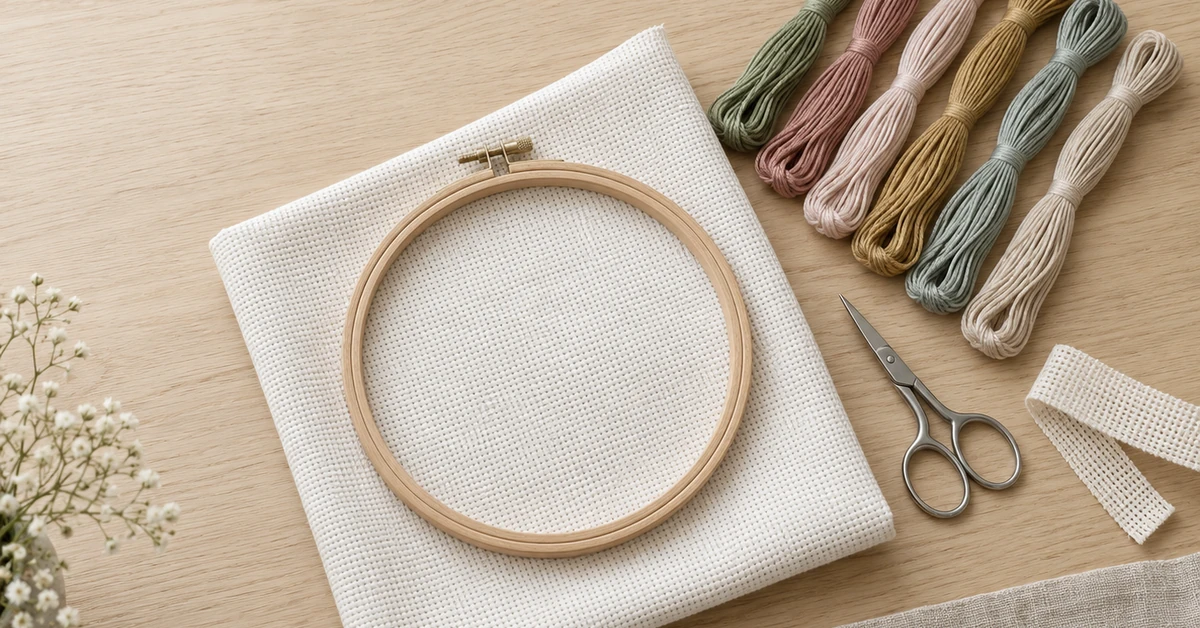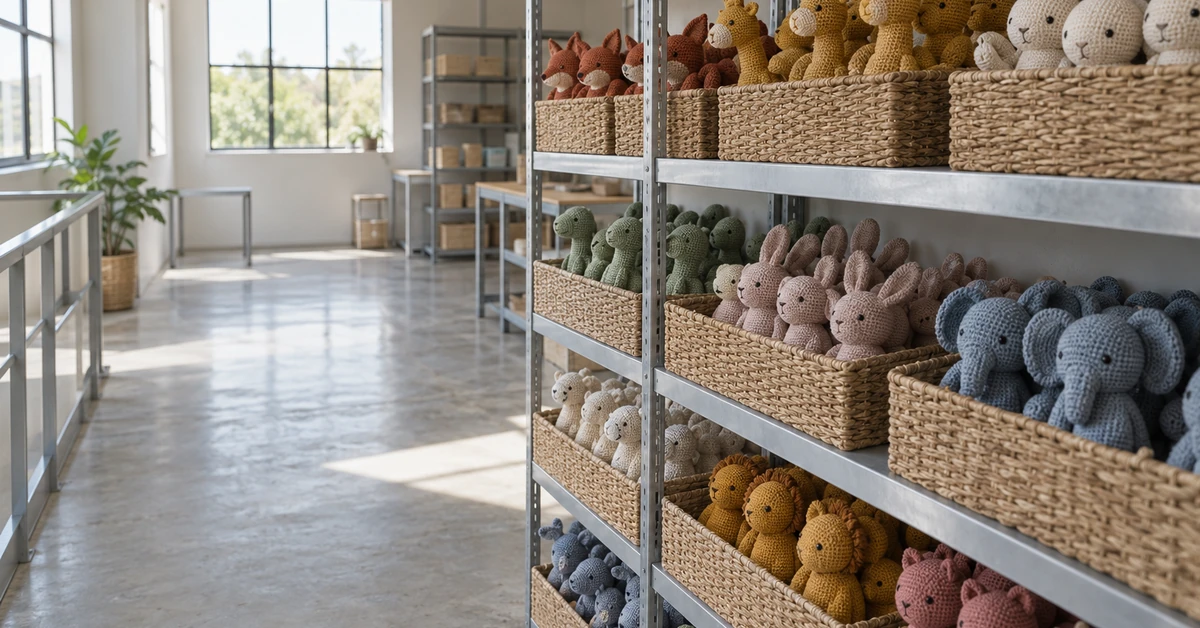

A crochet tool display stand should make the right hook easy to find, difficult to misplace and simple to replenish. Onehourcrafts recommends testing the fixture by removing one high-demand hook and tracing what shoppers and staff do next. That missing item exposes weak labels, mixed sizes, hidden back stock and unclear refill ownership faster than a perfect launch photograph ever will.

Start with the absence, not the fixture
Choose a fast-moving diameter and remove it from the display before the store team begins the exercise. Ask a shopper to locate that size, then watch whether the label, neighboring hooks and shelf logic make the gap obvious. A useful stand communicates that the size belongs there even when the product is gone. A weak stand simply looks untidy, leaving nobody certain whether the gap is a stockout, a spacing error or an intentional break.
Record the route from search to resolution. Did the shopper check a second row, read a size card, ask an employee or abandon the purchase? The sequence matters because every extra step is friction. It also tells the buyer which part of the display must carry more information without adding a wall of explanatory copy.
Write a loss event in operational language
A missing hook can come from sale, theft, customer relocation, a broken package or an incorrect refill. Those causes require different responses. The display brief should therefore describe observable events rather than vague goals such as “better organization.” A practical event log can include time, size, original facing, discovery method, likely cause and corrective action.
- Sold normally: the inventory count and empty facing agree.
- Moved: the hook appears in another diameter or brand zone.
- Package failure: the card remains while the tool is missing.
- Refill error: the wrong size occupies the correct labeled slot.
A crochet tool display stand has three jobs
The first job is selection: shoppers must compare diameter, handle and intended use. The second is custody: the fixture must keep small tools in their assigned locations during browsing. The third is recovery: staff must see gaps, locate reserve stock and restore the facing quickly. Treating the stand only as decoration usually sacrifices the last two jobs.
| Job | Evidence to request | Failure signal |
|---|---|---|
| Selection | Timed size-finding trial | Repeated handling of wrong hooks |
| Custody | Browse-and-return observation | Tools migrate between slots |
| Recovery | Staff refill simulation | Reserve stock cannot be matched |
Split the fixture into product families
Do not ask one undifferentiated field of pegs to carry every product. Separate single hooks, sets, stitch markers, yarn needles and compact cases by how shoppers compare them. Singles are chosen by precise size; sets are judged by range and presentation; small accessories need secure packs and rapid visual counting. This is where retail ready crochet accessories should behave as a coherent family without hiding the distinct decision behind each item.
A visual boundary can be a change in header, backing color, shelf depth or label format. The boundary does not need a decorative box. It needs to reduce incorrect returns. Check the family logic against the existing crochet accessory assortment guide before finalizing the fixture.
Make the size system survive an empty slot
Diameter labels should remain visible after the hook is removed. Put the size on the fixture as well as the package, use one unit system consistently and avoid ordering values by packaging color. If both millimeters and letter sizes are needed, create an approved conversion table and treat it as controlled artwork. The label must not imply equivalence where local conventions differ.
- List every carried diameter in the planned order.
- Print a temporary label strip at final size.
- Remove three adjacent products and ask someone to identify every gap.
- Correct ambiguous positions before artwork approval.
Put high-friction choices inside the strongest reach zone
Shoppers spend longer where comparisons are harder. Place common diameters and beginner sets between comfortable hand and eye levels, then put specialist sizes above or below with clear signposting. The exact heights depend on fixture type and local accessibility requirements, so a buyer should test the intended store environment rather than approve a studio mockup alone.
Use the same trial for packaged ergonomic crochet hooks. A handle that projects farther from the card can collide with the row below even when the planogram looks correct on paper.
Design labels for comparison, not narration
A label should answer the decision immediately: diameter, material, handle type, quantity and price. Long technique explanations belong on packaging or a linked guide. Small labels with dense prose slow the search and create translation risk. Keep icons limited to distinctions that shoppers can understand consistently.
- Use a stable product name across fixture, package and stock record.
- Reserve color for category or size coding, not decoration alone.
- Place price where it remains attached to the facing after stock is removed.
- Test legibility under actual aisle lighting and viewing distance.
Build the refill route before approving capacity
More facings are not automatically better. Deep stock can hide errors and make old packages difficult to rotate. Trace the refill route from reserve carton to selling position. Staff should be able to match the carton label to the fixture, identify the correct slot and fill it without removing unrelated products.
For crochet tools for craft stores, a simple location code can join carton, shelf and reorder record. The code is especially useful when similar metallic hooks differ only by a small printed diameter. Ask the supplier to include that mapping in the packing list.
Test security without punishing legitimate browsing
Small tools create shrink risk, but an over-secured display can destroy conversion. Compare hanger integrity, card tear resistance and removal effort. A shopper should be able to lift a package, read it and return it without bending the card. Security devices must not cover size or price information.
Run a controlled browse test with several people and count misplaced items afterward. If losses cluster around one package style, correct the pack or facing before adding more restrictive hardware. The goal is accountable custody, not a barrier around every hook.
Use the first 30 days as a diagnostic period
Photograph the display at opening, midday and close on selected days. Record empty facings, displaced products, damaged cards and staff refill time. Pair those observations with sales rather than treating sales as the only signal. A high-selling hook with constant placement errors may still need a wider facing or stronger label.
| Observation | Likely question | Possible response |
|---|---|---|
| One size repeatedly empty | Demand or refill delay? | Increase facing or reserve stock |
| Mixed products in one slot | Weak visual distinction? | Revise label and spacing |
| Torn cards | Pack or peg mismatch? | Change hanger geometry |
| Slow staff recovery | Location code missing? | Align carton and fixture IDs |
Give crochet accessories wholesale a replenishment unit
Crochet accessories wholesale orders often arrive by inner packs that do not match one retail facing. Define the replenishment unit explicitly: units per facing, facings per size, inner-pack quantity and minimum reserve. Otherwise, the buyer may have enough stock in total but still be unable to refill the high-demand slot cleanly.
Small coordinated products such as the options in the stitch marker guide can use a neighboring impulse zone, provided their hanger and price labels do not interrupt the diameter sequence.
What Onehourcrafts should receive with an inquiry
A useful inquiry includes the available footprint, fixture type, target assortment, package dimensions, preferred languages, expected store count, opening quantity and refill method. Add photographs of the intended retail environment when possible. This information allows the development team to discuss product packs and display logic together instead of estimating from a generic stand image.
- Front and side dimensions of the display area
- SKU list with package width, height, depth and hanging method
- Required price-label format and barcode location
- Expected first order, store allocation and reserve policy
- Any security, accessibility or local labeling constraints
Approve evidence, not an attractive rendering
Before release, request a physical or representative mockup, a populated photograph, an empty-slot photograph and a refill video. The rendering is useful for proportion, but it does not show hanger friction, package swing or label readability. A cautious buyer separates graphic approval from operational approval.
General visual-merchandising principles can provide context, but the final test must use the actual products and store conditions. Shopify offers a broad visual merchandising overview; translate relevant ideas into measurable fixture evidence.
Frequently asked questions
How many hook sizes should one display carry?
Start with the range supported by actual demand and the projects sold nearby. A smaller complete sequence is often easier to understand and replenish than a broad but frequently broken range.
Should hooks be ordered by diameter or handle style?
Use diameter as the main path when shoppers primarily replace or select a size. Separate handle styles within that path only if the visual system remains obvious after products are removed.
Are peg hooks or trays better?
Pegs expose labels and support hanging cards; trays can improve custody for loose or boxed tools. Test the actual package and refill motion before choosing.
How wide should each facing be?
Allow enough width for the package to return without catching its neighbor. Add clearance for projecting handles and for normal variation in packed dimensions.
Can color coding replace printed sizes?
No. Color can support recognition, but printed sizes should remain the controlled reference because color perception, printing and product finishes vary.
How should reserve stock be labeled?
Use the same SKU and location code shown on the selling facing. Carton descriptions should not rely only on a supplier's internal shorthand.
What should a 30-day review measure?
Track sales, empty facings, misplaced products, damaged packages, refill time and shopper questions. Together they show whether the fixture is working.
Should the display include project inspiration?
A compact finished sample can help, but it must not block comparison or price information. Keep inspiration subordinate to tool selection.
How can a buyer limit shrink?
Improve hanger integrity, package visibility, staff sightlines and location discipline first. Apply added security only where evidence shows a persistent loss pattern.
What evidence belongs in final approval?
Approve dimensions, loaded and depleted photographs, label artwork, refill steps, packaging compatibility and the responsibility for replacement parts.
Turn the missing hook into the final specification
The best crochet tool display stand is not the one that looks fullest on launch day. It is the one that still explains itself when a popular size disappears. Give Onehourcrafts the assortment, package and retail constraints, then approve the stand through selection, custody and recovery evidence before rollout.