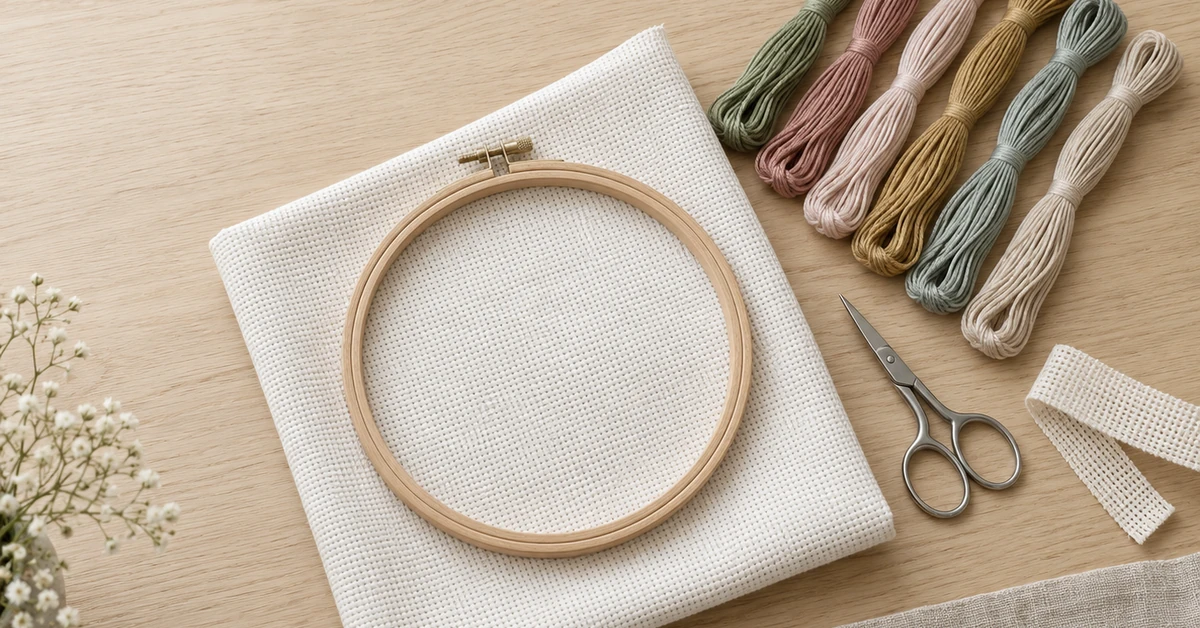

Embroidery craft kits for adults should offer an intentional skill experience, a finish worth keeping and instructions that respect the maker's time. Onehourcrafts advises buyers to define the adult promise before choosing muted colors or sophisticated packaging. A credible range is built through project decisions, not by restyling a children's assortment.
Separate adult value from adult styling
Adult does not automatically mean dark packaging, floral artwork or a high stitch count. It means the maker can understand what the project asks, choose an appropriate challenge and produce a finish that matches the promise on the box. Buyers should define value in terms of usable technique, design quality, material feel, display potential and time commitment.
Write a one-sentence promise for each planned SKU. Examples include a calm first hoop, a weekend technique study or a detailed decor piece. If several kits share the same promise, the range may be visually varied but commercially repetitive.
Build a skill curve instead of three difficulty labels
Beginner, intermediate and advanced are useful only when supported by observable tasks. Map the operations in each project: threading, transferring or reading a design, starting and ending thread, controlling tension, changing color, combining stitches and finishing the hoop. Complexity comes from the number of new decisions and their consequences, not merely the number of stitches.
| Level | New decisions | Instruction support | Finish expectation |
|---|---|---|---|
| Entry | One or two basic stitches | Large diagrams and clear starts | Presentable despite small variation |
| Progressing | Stitch combinations and color changes | Technique reminders at point of use | Visible structure and balanced coverage |
| Confident | Layering, fine detail and judgment | Reference key plus finishing notes | Display-ready close inspection |
Embroidery craft kits for adults need a reason to finish
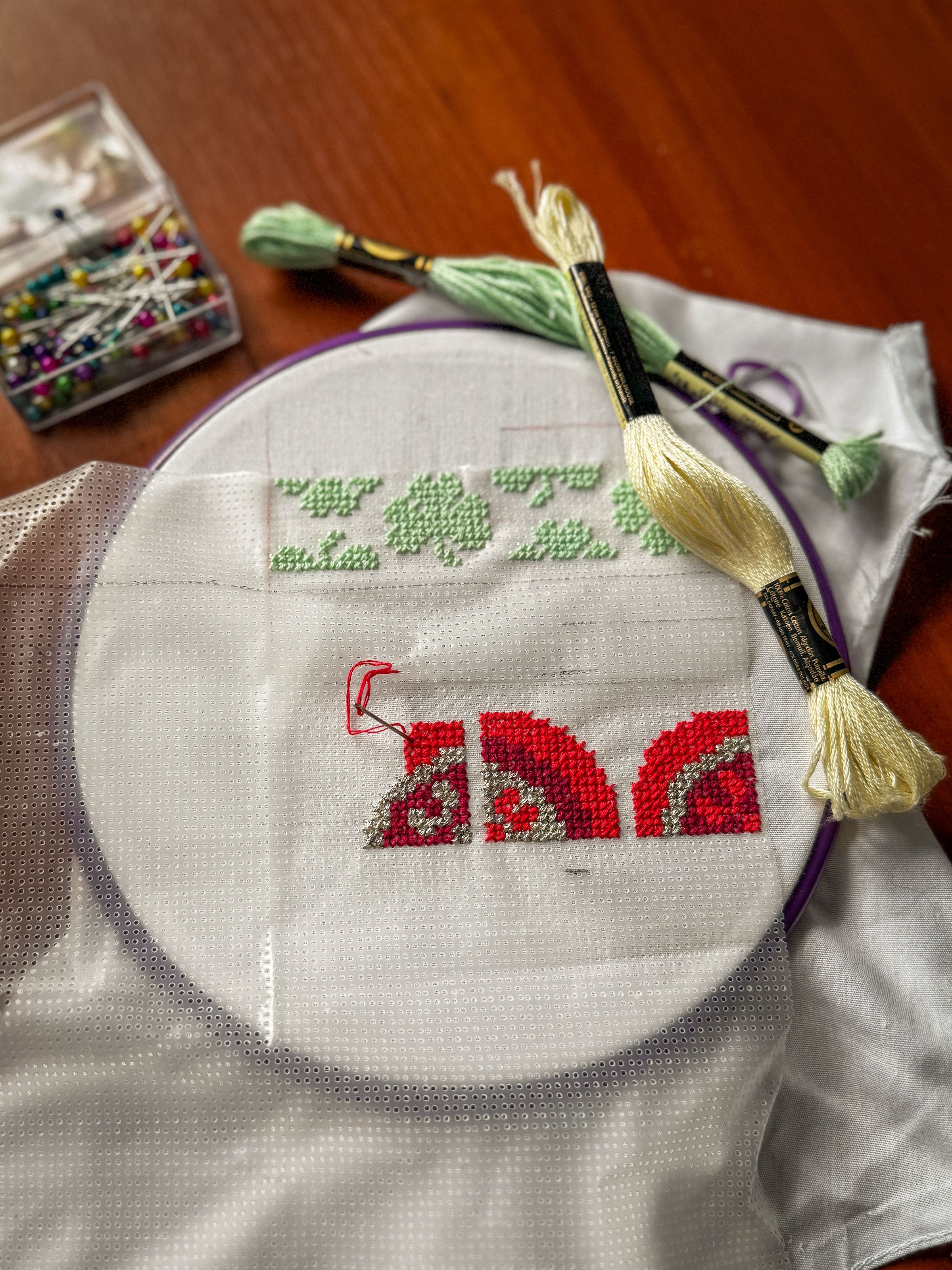
The finished object should justify the hours invested. Specify whether the hoop becomes wall decor, a patch, a framed panel, an accessory detail or a practice sampler. A project with no clear final state can feel unfinished even when every stitch is complete. Photograph the result at realistic distance as well as in close-up.
This distinguishes the range from generic beginner embroidery kits wholesale offers that compete mainly on component count. Adult customers may accept a smaller set when the design, materials and finishing route are stronger.
Price time honestly
A premium-looking front panel can create the wrong expectation if the project needs twelve concentrated hours. Estimate active stitching time with representative users, not only an experienced sample maker. Publish a broad time band and explain whether it assumes prior knowledge. Avoid promising a rapid result when dense areas or repeated thread changes make that unrealistic.
- Time one unfamiliar maker without coaching.
- Separate setup, stitching and finishing minutes.
- Record pauses caused by unclear instructions.
- Revise the project before using the result in retail copy.
Choose materials that reward close handling
Adults often evaluate fabric hand, thread sheen, needle smoothness and hoop stability before they begin. Request named material specifications and approved tolerances. A beautiful design cannot compensate for fabric that distorts, thread that separates unexpectedly or a hoop that loses tension.
Review hoop geometry with the embroidery hoop assortment guide. Test the complete combination because a hoop that works on one fabric weight may mark or slip on another.
Use a technique budget
Every new technique consumes attention. Assign a technique budget to each SKU and spend it deliberately. An entry project might introduce backstitch and satin stitch while keeping color changes simple. A progressing project may add French knots, but should not also introduce an unfamiliar transfer method without extra support.
- Count techniques that are genuinely new to the target user.
- Place the hardest operation before fatigue becomes dominant.
- Provide a practice area when failure would damage the main design.
- Show what acceptable variation looks like instead of only perfection.
Write instructions for selective reading
Adult makers do not always follow a booklet from page one to the end. They scan, begin, return to a technique and resume later. Structure the instructions so the project survives that behavior. Put material identification, stitch key, sequence and finishing in distinct zones, and repeat safety or irreversible steps where they occur.
A QR-linked video can support motion, but it should not hide essential information. The printed path must remain usable if the customer does not open a link or if the linked platform changes.
Make the pack communicate without exaggeration
Show the actual finished design, the included components and the meaningful skill level. Avoid lifestyle imagery that makes the object difficult to inspect. The back panel should state finished size, main materials, required user-supplied items and the basis of the time estimate. For retail ready embroidery kits, barcode and warning placement must be planned before the artwork becomes crowded.
Seasonal ranges can use the calendar planning method in the seasonal embroidery guide, but the project should remain useful beyond a narrow selling week whenever inventory risk matters.
Test the unboxing as a workbench setup
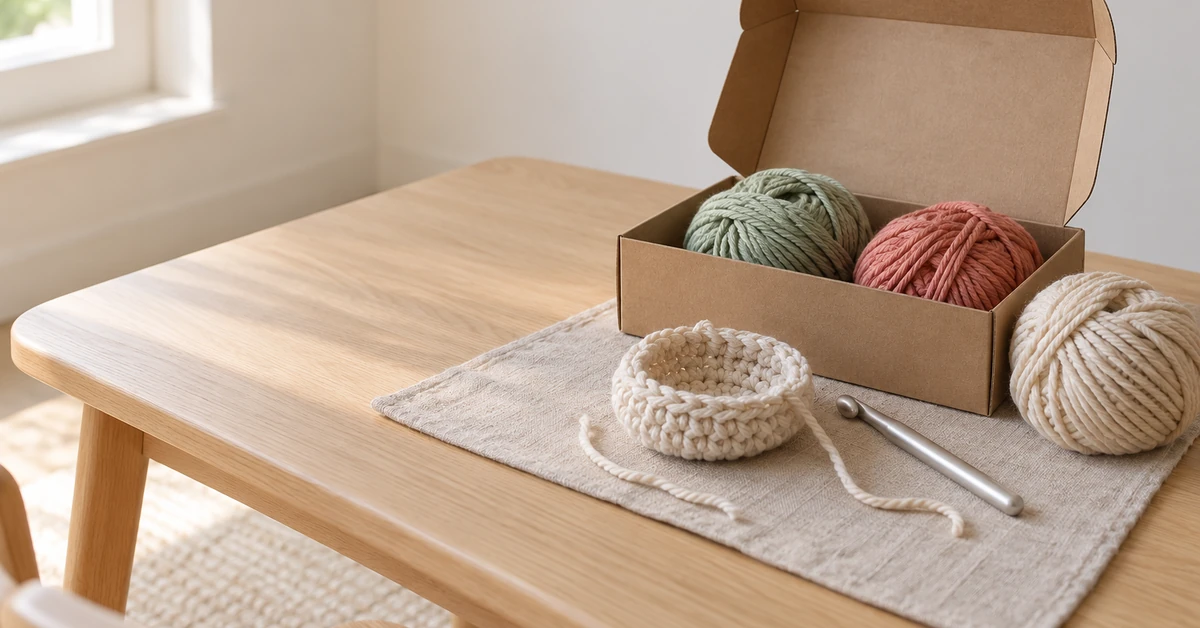
Open the pack on a normal table and measure how many loose decisions appear. Can thread colors be matched to the key? Does the needle have a controlled place? Can the user keep partly used floss separate? The internal arrangement should become a temporary workbench, not a pile that must immediately be reorganized.
| Moment | User question | Design response |
|---|---|---|
| Opening | What is included? | Visible component map |
| Starting | Where do I begin? | Numbered first action |
| Pausing | Where does the needle go? | Reusable holder or envelope |
| Finishing | What happens to the hoop? | Mounting and trimming guidance |
Let the range show progression on shelf
A shopper should see a route from the first project to the next. Use consistent level indicators, then vary design, technique and time. Do not create a false ladder where the only difference is artwork density. Each step should introduce a reason to return: a new stitch family, a different finish or a more ambitious composition.
The broader craft kit skill-level guide can help align language across categories so “intermediate” does not mean one thing in embroidery and another in adjacent ranges.
Ask an embroidery starter kit manufacturer for proof
An embroidery starter kit manufacturer should provide component specifications, artwork control, sample-making notes, packed weight and a repeatable inspection method. Request a sample sewn by someone who did not develop the instructions. Their pauses and corrections are more useful than a flawless master sample produced with unpublished knowledge.
- Approved fabric count, composition and color tolerance
- Thread map with replacement and lot-control method
- Needle and hoop specifications matched to the project
- Instruction revision record and independent use-test notes
- Packaging dieline with claims, warnings and barcode zones
What Onehourcrafts needs before sampling
Send the target customer, retail price position, desired project time, finished-use case, design references, sales channel, language set and packaging format. The development team can then discuss the relationship among artwork, technique budget, materials and pack size. Without those constraints, a sample may be attractive but commercially misaligned.
Keep claims cautious. Age, sustainability and material statements may require market-specific evidence. General standards information is available through ISO, but buyers remain responsible for defining the requirements of each destination market.
Frequently asked questions
What makes an embroidery kit suitable for adults?
It offers a credible skill promise, materials that reward handling, clear time expectations and a finish with lasting value. Styling alone does not establish suitability.
How many stitches should an entry kit teach?
Usually one or two new stitch families are enough when the user must also learn setup, tension and finishing. Count decisions, not only named techniques.
Should the design be preprinted?
Preprinting can reduce setup and uncertainty. Transfer-based designs can add flexibility, but the extra operation needs clear instructions and testing.
How should project time be estimated?
Time several representative users and separate setup, active stitching, corrections and finishing. Publish a range rather than a single exact promise.
Do adults prefer complex designs?
Not necessarily. Many value calm repetition, strong composition or a useful finished object. Complexity should serve the promised experience.
What should appear on the front of the pack?
Show the actual design, project type and a concise level cue. Keep decorative photography from obscuring the object being purchased.
Is a video tutorial required?
No, but it can clarify motion. Printed instructions still need to carry the essential path, safety information and finishing steps.
How can a range encourage repeat purchases?
Create visible progression through new techniques, formats and finishes. Avoid offering the same project difficulty under different artwork.
What should an independent sample test record?
Record completion time, pauses, instruction ambiguity, material shortages, tool problems, corrections and the quality of the final finish.
When should packaging be approved?
Approve it after the component set and use test stabilize. Early artwork approval creates risk when tool, warning or instruction requirements change.
Design the adult promise first
Successful embroidery craft kits for adults connect a clear skill curve to a finish the maker values. Define that promise, validate it with representative users and give Onehourcrafts the commercial constraints before sampling. The result should feel adult because the decisions are coherent, not because the colors are restrained.